
Materials - How to Catch Up


Every new building starts life as raw material dug, quarried or mined from the earth, and every one of those materials leaves a mark long before it becomes a wall, a beam or a window. Today we’re at a tipping point, where those marks are finally being understood – from embodied carbon and energy use to resource depletion and pollution creation. Finally, action is being taken – but that action now needs to speed up, and soon.
Dangerously behind
In March, the UKGBC published its latest progress report on the Whole Life Carbon Roadmap. The message was blunt: embodied carbon emissions actually increased by 5%, despite the roadmap trajectory requiring a near 30% reduction over the same period.
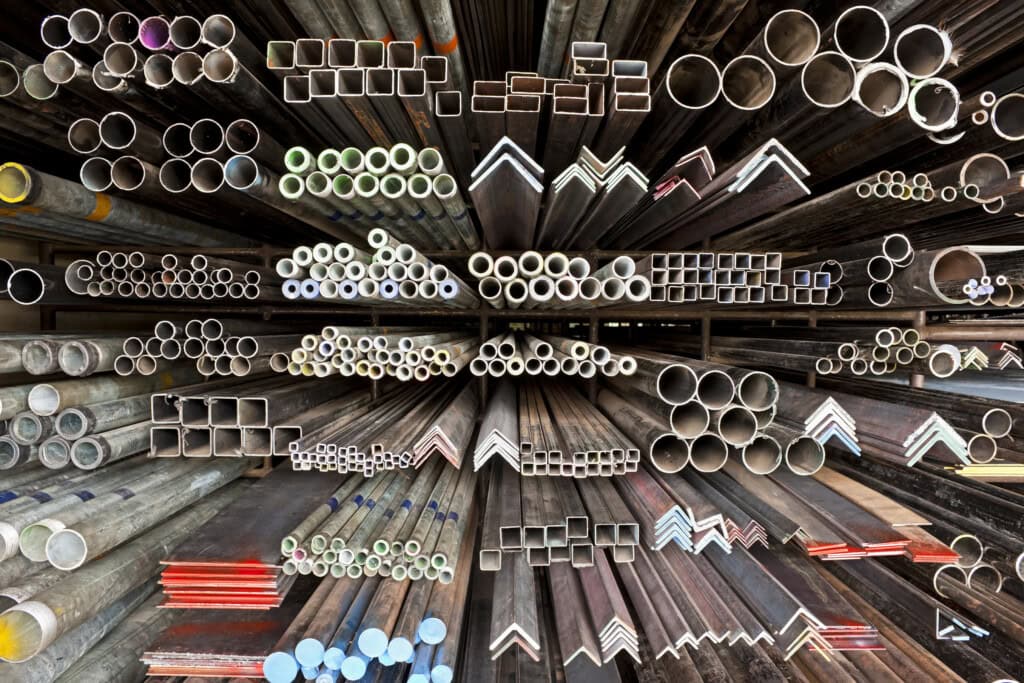
Most of that problem comes down to what I call “the big five”: concrete, steel, glass, aluminium and brick. Between them, they’re responsible for most of the embodied carbon in what we build. In my book, Future Build: How Construction Can Heal Our Planet, I dig into how the making of these materials requires levels of heat akin to the flames under a space rocket, and how almost all of it comes from fossil fuels – coal and gas, mostly. Worse, the heat never lets up, and the furnaces and kilns behind these processes run 24-7 throughout the year: a glass furnace will stay switched on for nearly 20 years, running day and night to pour out a constant stream of the see-through shiny stuff.
Carbon isn’t the only issue, either. These materials account for around half of all extraction and 30% of all waste worldwide, and the knock-on effects for nature are serious. Our research at the Useful Simple Trust on the embodied biodiversity impacts of construction materials supports the UKGBC’s parallel work on embodied ecological impacts, showing how far-reaching those impacts are, and how rarely they come up in conversations about what we build with.
Catching up
The good news is that all five are changing. In the last five years, the UK is scaling up the world’s first process for fully-electric cement recycling. Steelmakers are building hydrogen-based furnaces to make steel without fossil fuels. Bricks are being made from waste that would otherwise end up in landfill. Meanwhile, timber, bamboo, earth, stone and other natural materials keep growing in popularity, and many of them avoid the big five’s problems in the first place.
So we’re heading in the right direction.
But the problem is that we’re just not doing any of this quickly enough, and the WLC Roadmap progress report makes it clear the gap won’t close on its own. As the roadmap shows, the challenge isn’t a lack of knowledge – it’s a lack of scaling.
This is really crucial – the data behind upfront carbon limits in the UK Net Zero Carbon Buildings Standard demonstrates the urgent need we have for material decarbonisation as a key part of our industry’s net zero plans
Finding the accelerator
An innovation that works in a trial isn’t the same as one you can specify and get to fit within a cost-plan – and, as such, many good ideas get stuck somewhere just outside of a lab. In a climate emergency, we must not allow that to keep happening.
In our firm’s Useful Materials service, I lead work that we undertake with developers, public sector, contractors and designers, to use a range of projects to push the best material innovations into the mainstream. We find the best horses to back – ones we can use today, and ones that can scale – and work out how to use them in a way that works for our clients. The more projects that commit to these innovations, the more confident those suppliers will become. Volume brings the price down, and once the low-carbon option is also the cheaper option, it becomes the default for the whole industry.
We’re also working with UKGBC and others, with funding from the Happold Foundation, to get embodied carbon limits into UK regulation – another way to drive demand to speed up change. Clear limits tell manufacturers that demand for lower-carbon products is coming and is here to stay, which gives them the confidence to invest.
The UKGBC’s roadmaps show where the industry needs to get to, and many of the materials that will get us there already exist. So the message that we need to get to industry and government – through this campaign and in our daily work – is that we need to work with our supply chains to step up and get these innovations onto site, at scale, many years sooner than they’d otherwise arrive.
Will Arnold’s new book, Future Build: How Construction Can Heal Our Planet, is out now.
Related
BuildingLife Campaign: Beyond 1.5°C: Climate Resilience Can Wait No Longer


BuildingLife Campaign: Could a Circular View Square Industry and Government Priorities?


BuildingLife Campaign: How to Move from Climate Risk to Climate Resilience


BuildingLife Campaign: The Other Side of the Climate Coin: Making Climate Resilience Investible

