
Beyond 1.5°C. Climate Resilience Can Wait No Longer


As I reflect on the recent announcement from the UN Environment Programme that exceeding 1.5°C of global warming is now likely, I am struck by how quickly climate change has shifted from a future challenge to a present-day reality. The prolonged heatwaves, dry conditions and pressure on our communities this summer are not isolated events. They are exactly the changes scientists have been warning us about for decades.
The uncomfortable truth is that the summers we are living through today could soon become the norm, and future generations may look back on 2026 as a relatively mild year. That may sound extreme, but the evidence is already emerging before our eyes. Summer 2026 was provisionally the hottest summer ever recorded in the UK, with an average temperature of 16.5°C, surpassing both the renowned heatwave summer of 2006 and the previous record set in 2025. It was also a very dry summer for many parts of the country, highlighting how rising temperatures and pressure on water resources increasingly need to be considered together. Remarkably, the five warmest UK summers on record have all occurred since 2003.
These are not isolated anomalies. They are part of a long-term trend that is reshaping the climate our homes, communities and infrastructure must be designed to withstand.
While many of us working in the built environment sector have been preparing for this scenario for some time, this latest announcement does bring it into sharper focus. What is clear is that development has a critical role to play in supporting the delivery of net zero, adapting to a changing climate and creating places that restore rather than deplete the natural environment. These objectives are often considered separately, yet the most successful developments will be those that address them together.
The response to this summer’s heat has often centred on how we keep cool. Air conditioning is often presented as the solution, and over the summer, sales of fans rose 2,500%. While these solutions may provide immediate relief, they do not address the underlying challenge. As built environment professionals, we have a responsibility to think beyond short-term fixes and instead create homes and communities that are inherently resilient, energy efficient and capable of supporting healthier lives.
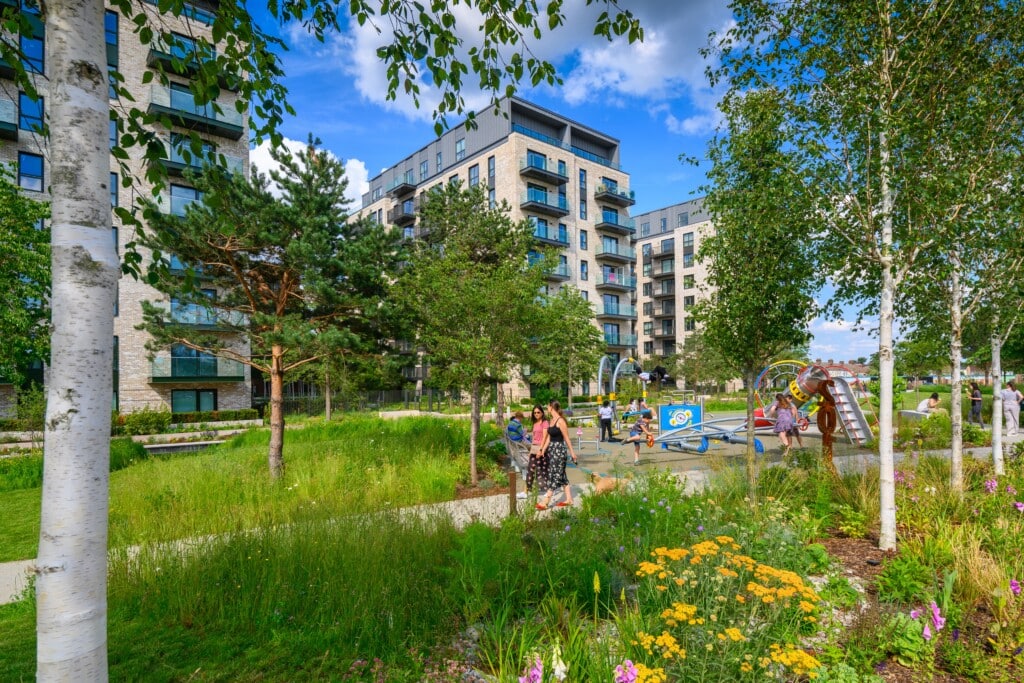
Climate resilience requires us to take a long-term view. The homes, neighbourhoods and infrastructure we design today will need to perform in the climate conditions of the 2050s, 2060s and beyond. That means considering not only overheating, but also drought, water scarcity, flooding, biodiversity loss and the wider impacts of climate change on health and wellbeing. If we get this right, we can avoid creating new risks while delivering the low-carbon homes needed to achieve net zero.
At Berkeley Group, we have been working to bring these agendas together for some time. Whilst our focus has been on improving the energy efficiency of our homes and transitioning away from gas to electric-led systems, we have been incorporating adaptation into the design of our developments since 2016, when we launch our climate change adaptation checklist. Our approach has evolved and we are now using dynamic thermal modelling to understand how homes will perform under future climate scenarios, helping us reduce overheating. At the same time, we are embedding urban greening, sustainable drainage, biodiversity enhancements and water-sensitive design into our developments. These measures help to cool places naturally, manage rainfall, support nature recovery and improve residents’ wellbeing. Importantly, they demonstrate that climate resilience, net zero and nature-positive outcomes do not need to compete. When considered holistically, they can reinforce one another.
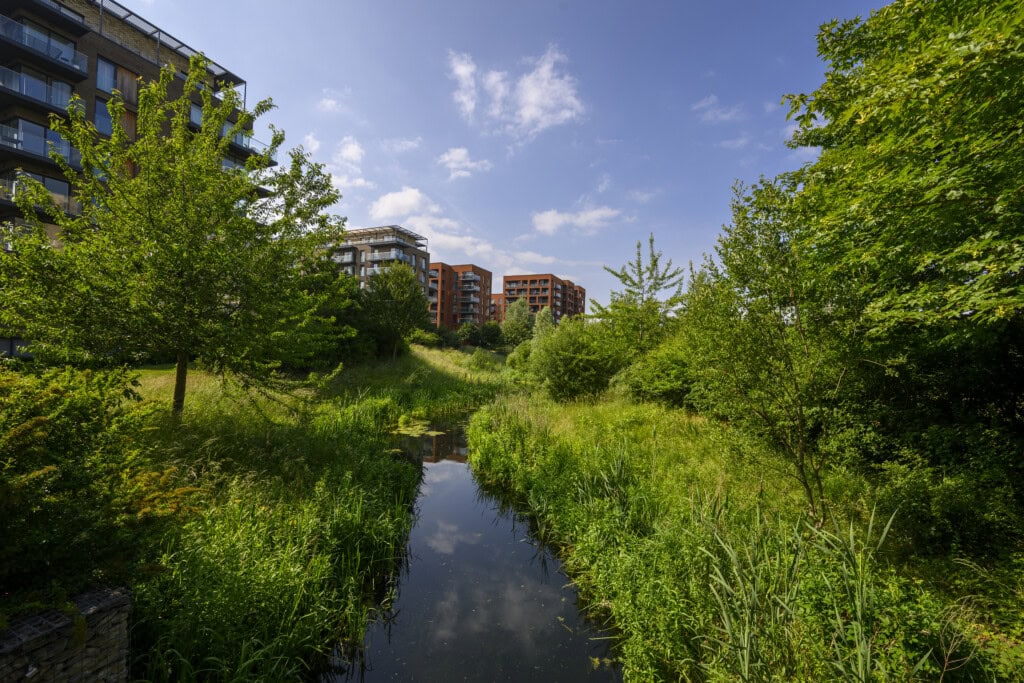
This is where the concept of regenerative development becomes increasingly important. The ambition should no longer be simply to minimise harm or reduce impacts. Instead, we should be creating places that actively improve the environment and leave communities better equipped to thrive in a changing climate. Tree canopies that provide shading and that reduce overheating landscapes that manage water naturally, habitats that support biodiversity, and energy-efficient homes that reduce emissions all contribute to this vision.
It is time to shift the conversation, we need to move beyond reacting to extreme weather events and instead embed resilience, net zero and regenerative thinking into the way we plan, design and manage our built environment. The climate is changing faster than many expected. Our response must be equally ambitious. The challenge is no longer preparing for the future climate. It is creating the homes and places that can thrive within it.
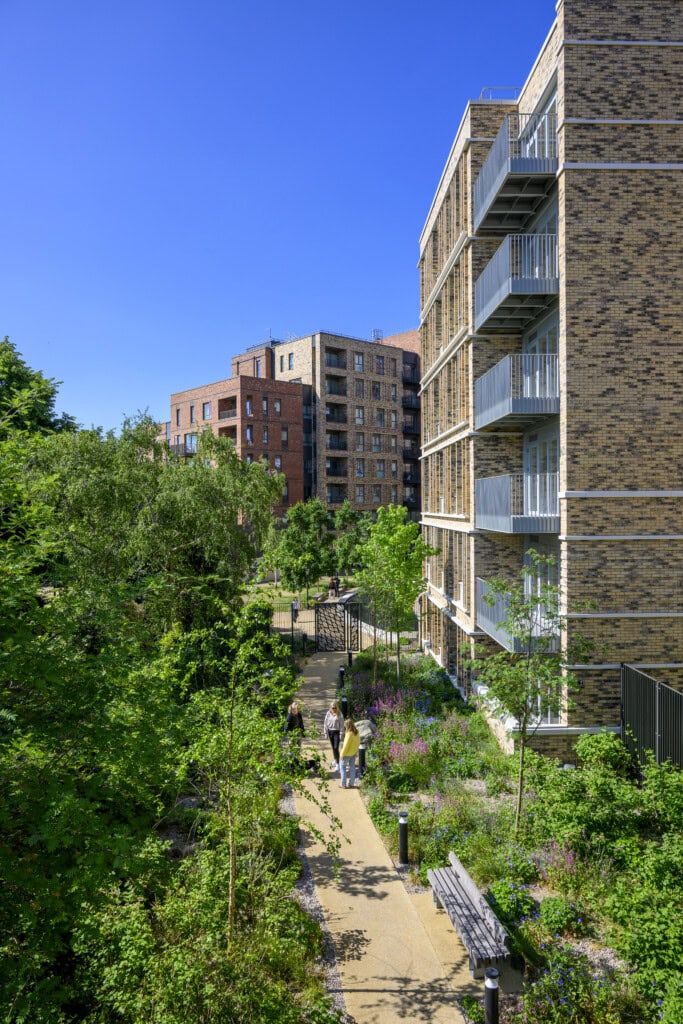
*The images shown in this blog are owned by the Berkeley Group.
Related
BuildingLife Campaign: Could a Circular View Square Industry and Government Priorities?


Shaping Change Together: Collaboration and Leadership in the Built Environment


Lessons from Conference Season 2026


AGM 2026 Results

