
Enabling a Circular Economy


The shift from a linear economy to a circular economy is a considerable transition, one that requires concerted efforts from all parts of society and collaboration across industries. The circular economy can reduce whole life carbon emissions, impacts on nature, and waste. There are many actions we can take now to increase the circularity of built assets, from planning and design to in-use management and how we treat buildings and materials at their end-of-life. The reports and guidance below all provide actions to support the transition to a circular economy.
Systems Enablers for a Circular Economy
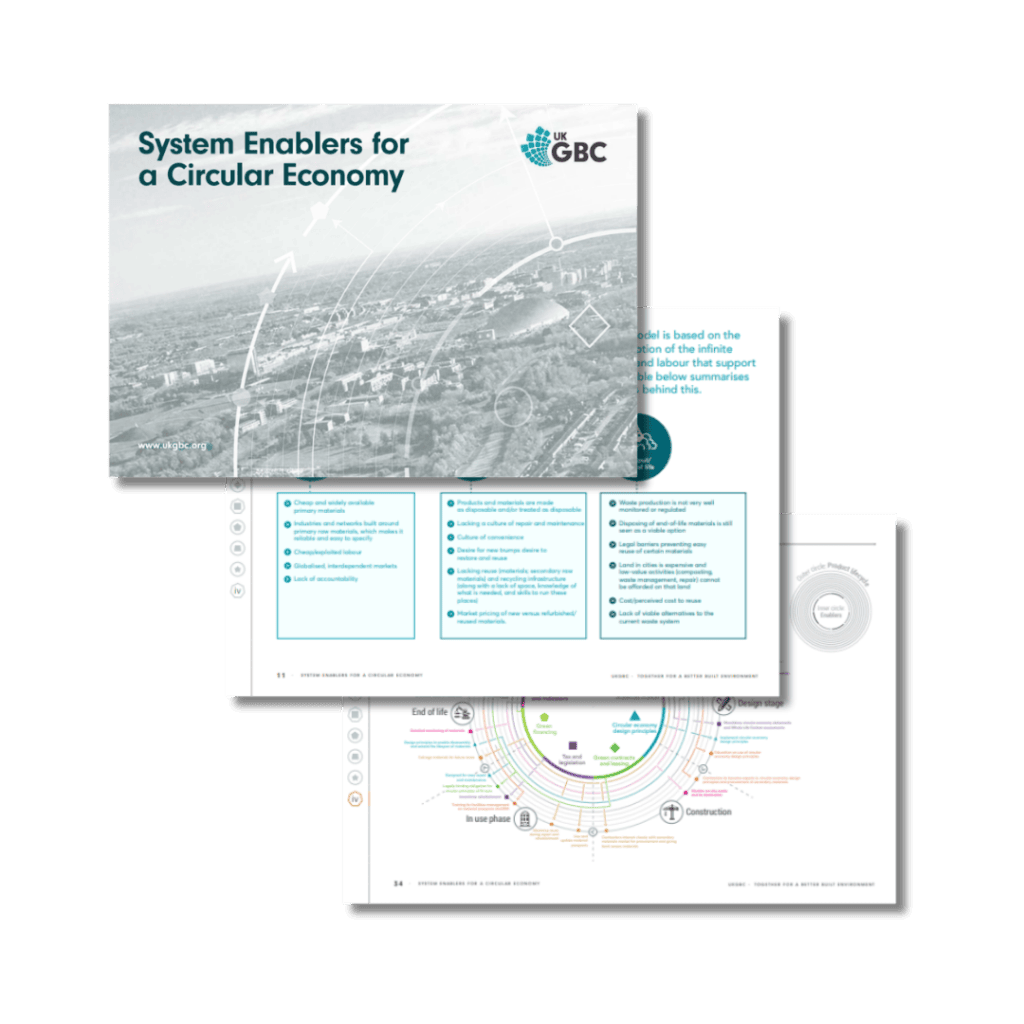
System Enablers for a Circular Economy highlights systemic barriers and the policy and market-based solutions to enable the built environment industry to shift from a linear to a circular system. The eight enablers identified provide a toolkit to support the transition.
These resources build on the eight enablers to support action:
Blogs
Secondary Materials Markets: where are we now?


Embracing Circular Economy Design principles and interconnected enablers for Sustainability


What does it mean to be 100% circular? Metrics, Benchmarks and Indicators for the Circular Economy


Collaboration and Early Engagement to Enable a Circular Economy: Opportunities and Barriers


Events
Resource Use Forum x Supply Chain


Innovation Showcase – Low Impact Construction Materials and Systems


Circular Economy

