How can we adapt our buildings to climate change?


As the climate crisis intensifies and extreme weather events become more common, the UK’s buildings, cities and critical infrastructure are in increasing danger. We must transform our communities, so they are resilient to these hazards and remain safe and able to thrive in this changing climate.
Impacts of climate change on buildings
Our weather is becoming increasingly volatile. Extreme weather events resulting from climate change have intensified over the last decade, posing significant challenges to the resilience of the built environment.
Buildings in the UK are at risk from a variety of climate-related hazards. These can be divided into two areas. First, chronic hazards, which are slow to progress and cover long term changes to hazards such as changes to temperature, wind, precipitation, and soil erosion.
The second element comprises acute hazards. These are extreme in nature, occur quickly, and can include hazards such as heatwaves, storms and blizzards, droughts, floods and subsidence.
These hazards can cause damage to our buildings, in the worst cases making them uninhabitable. Adapting our buildings to climate change allows our cities to be less negatively impacted by these hazards, making it safer for those who live and work in them.


What can you do to improve the resilience of a building?
On an individual building level, there are a number of changes you can make to improve its resilience to climate hazards.
The specific climate hazards that need to be addressed will depend on a building’s location and before any adaptations are made, resources like the Climate Risk Indicators map should be consulted. This ensures all adaptations have a positive benefit on the resilience of the building and don’t lead to maladaptation.
In 2022 UKGBC launched a report that walks you through understanding and reporting on the physical risks that are facing a building.


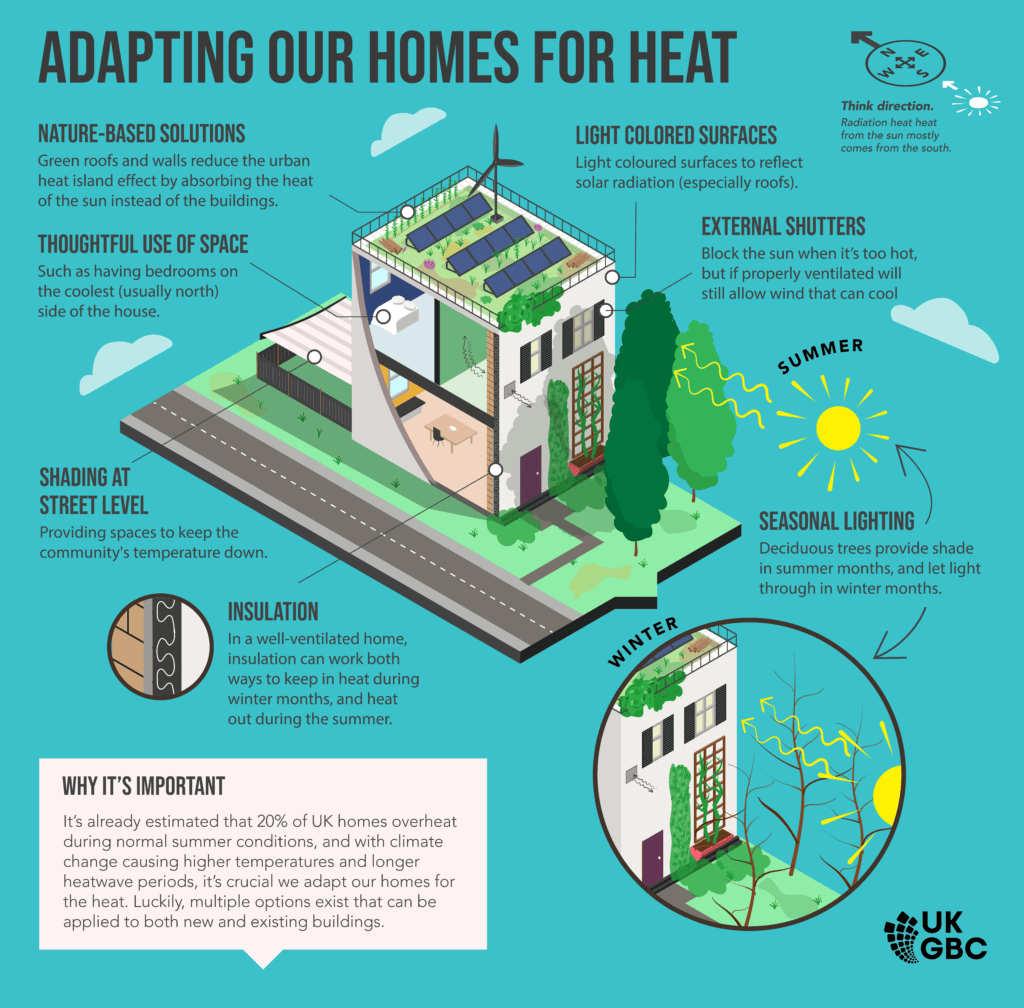
How can we adapt our homes for heat?
It’s already estimated that 20% of UK homes overheat during normal summer conditions. With climate change causing more severe and frequent heatwave periods, it’s crucial we adapt our homes for the heat. Luckily, multiple options exist that can be applied to both new and existing buildings.
Adaptation for Climate Resilience: Non-Domestic Buildings
This guide builds upon stage three of the four-stage model presented in the UK Climate Resilience Roadmap: prepare and adapt. It explores practical adaptation measures that can be applied to non-domestic buildings now to combat overheating, drought, flooding and storms.

What can built environment professionals do to promote more resilient buildings?
Designers and architects
Insurers
What policies should be implemented to drive more climate adaptation?
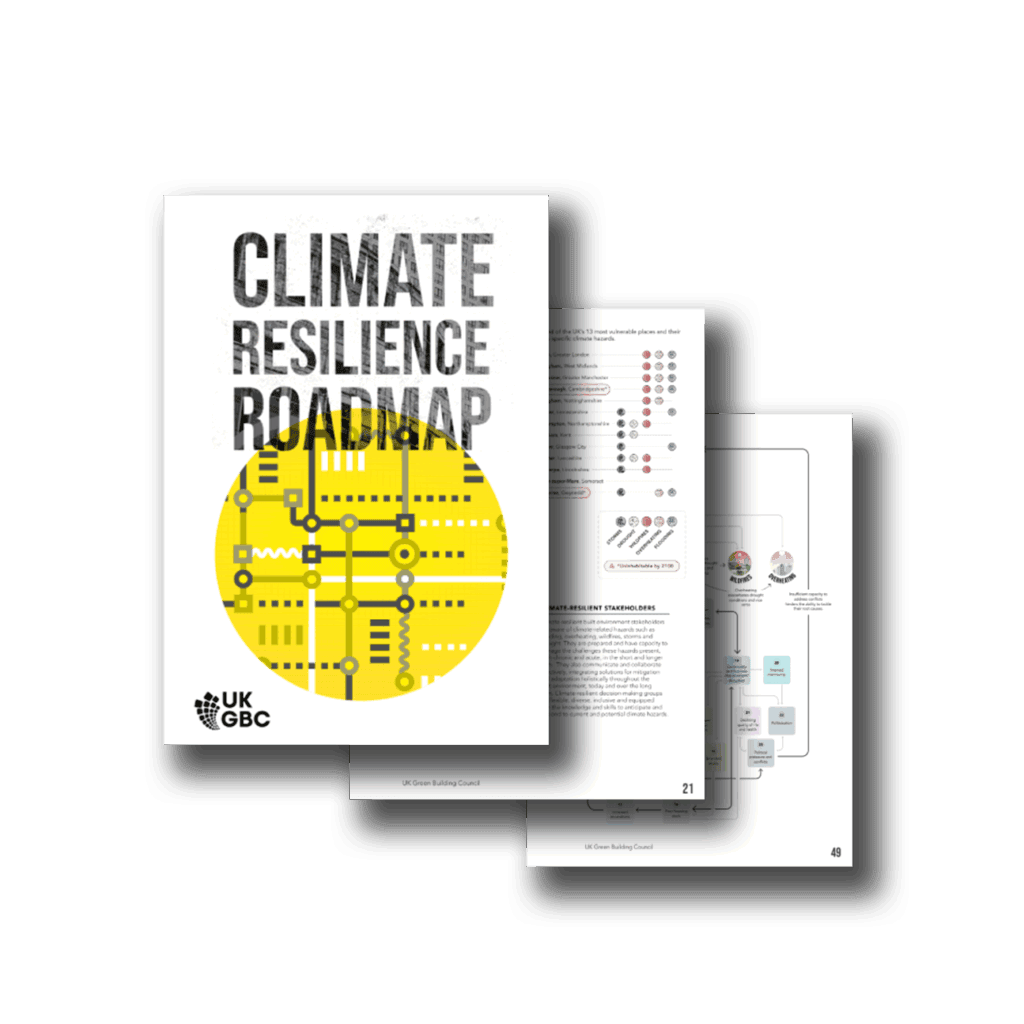
As part of developing our UK Climate Resilience Roadmap, UKGBC has developed eight key policy recommendations for government to accelerate ambition of climate adaptation across the UK.

UK Climate Resilience Roadmap
Climate Change Adaptation