
Joined-up by Design: Closing the Gap between Evidence and Action


The built environment is increasingly being asked to deliver on climate mitigation, resilience and nature recovery at the same time. At a macro level, our current ways of working are not yet set up to do that, but this summer’s prolonged heatwaves and wildfires across the UK show that we can’t wait for some future crisis to act; the impacts are already here, and we’re suffering nationally from our unpreparedness.
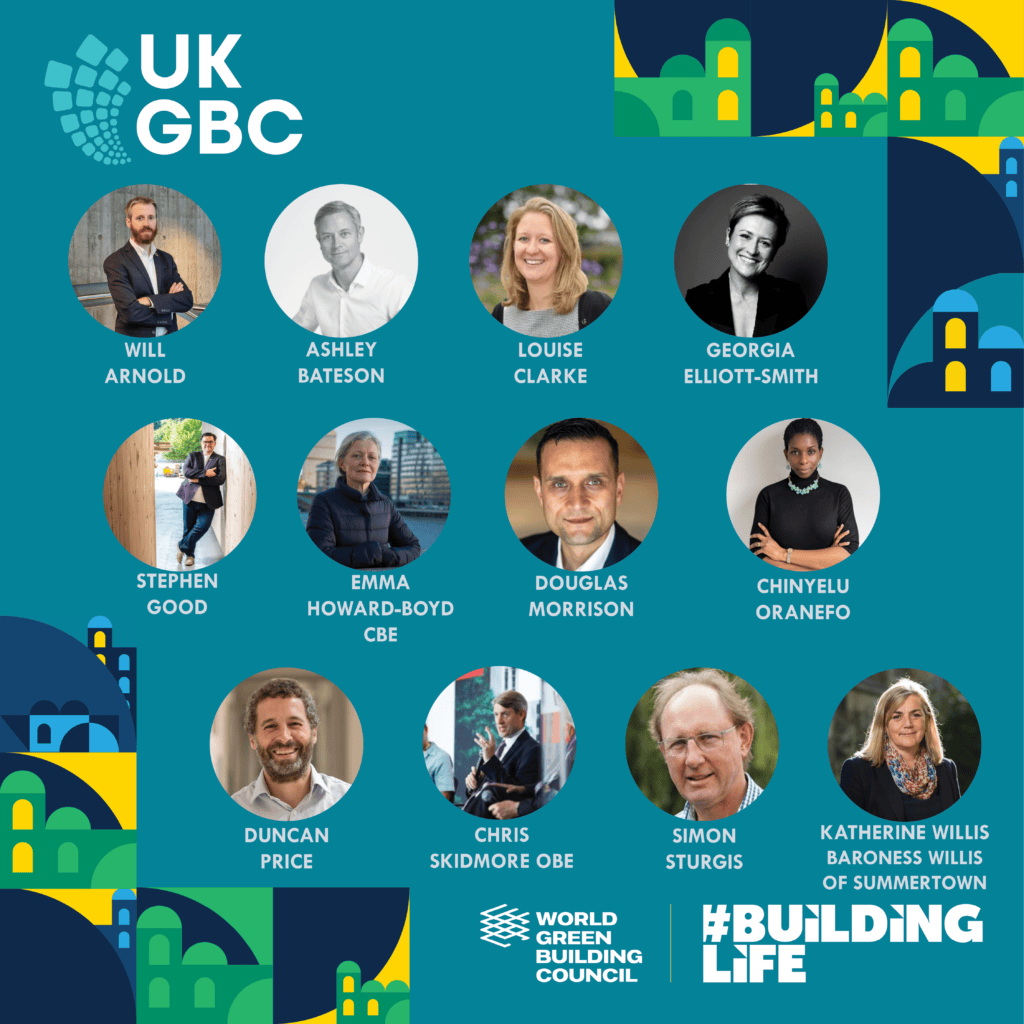
It is this urgency that makes our BuildingLife Ambassadors campaign so important. Bringing together expert practitioners and policy advocates from across the sector, it gives industry and politicians a crucial message: that decarbonisation, resilience, and nature are interdependent, and demand a joined-up response.
Across the sector, the evidence base has strengthened considerably in recent years. Through UKGBC’s own work, via our four pillars – of our UK Net Zero Whole Life Carbon and Climate Resilience Roadmaps, alongside our Nature Positive Framework and our forthcoming Regenerative Places Framework. Enlivened by insight from industry, academia and policymakers, we now have a far clearer picture of both the risks we face and the actions required.
What we now face is not primarily a knowledge problem, but an implementation and coordination problem.
From evidence to integration
The direction set by that evidence is consistent. Decarbonisation, climate resilience and nature recovery are not separate agendas, but interdependent outcomes of the same system.
However, much of our delivery model still treats them independently, with old-school, siloed thinking and acting. Embodied carbon action remains largely voluntary and is applied inconsistently. Investment in resilience continues to lag behind mitigation. Nature recovery is gaining visibility but is not yet embedded in core decision-making or long-term financing, investment, and asset strategies.
This fragmentation is holding us back. It creates unnecessary trade-offs and, in some cases, locks in poor outcomes.
A building that meets a carbon target but cannot cope with heat or flood risk is not fit for the future. A development that supports nature but does not account for changing climate conditions will not deliver lasting value. Treating these issues separately leads to outcomes that fall short.
The reality we’re navigating
There are clear examples of leadership across the sector. Parts of industry, finance and local government are demonstrating what more integrated approaches can achieve.
At the same time, there are significant political and economic challenges that continue to affect the pace and consistency of climate action, particularly in the UK. Policy signals remain uneven, especially for existing buildings, where greater clarity is still needed.
Progress is real, but it is patchy and too dependent on individual leadership rather than being built into how the system operates.

A broader coalition
It is in this context that our BuildingLife Ambassadors sit. The campaign brings together practitioners, policymakers, investors and advocates from across the built environment. What connects them is a shared willingness to work across the boundaries that still shape much of our sector.
Their role is to reflect and reinforce that way of thinking. To show what it looks like to treat the built environment as a system, and to work across the interfaces that too often hold progress back.
The next phase of the built environment’s transition must be about aligning the entire industry behind the evidence we now have. Voluntary action across the industry has played a critical role in demonstrating what is possible, with many organisations already taking a more integrated approach to carbon, resilience and nature. The priority now is to build on that leadership by translating it into policy frameworks and ways of working that enable consistent, whole-system outcomes across the market, rather than siloed compliance. This also requires far stronger coordination across the value chain, from national policy through to project delivery.
Over the coming months, including through the perspectives of our Ambassadors, we will continue to explore what this looks like in practice.
The task ahead is straightforward to describe, but harder to deliver. A built environment that is low carbon, resilient and supports nature will only be achieved if we treat it as a single system and act accordingly.
Related
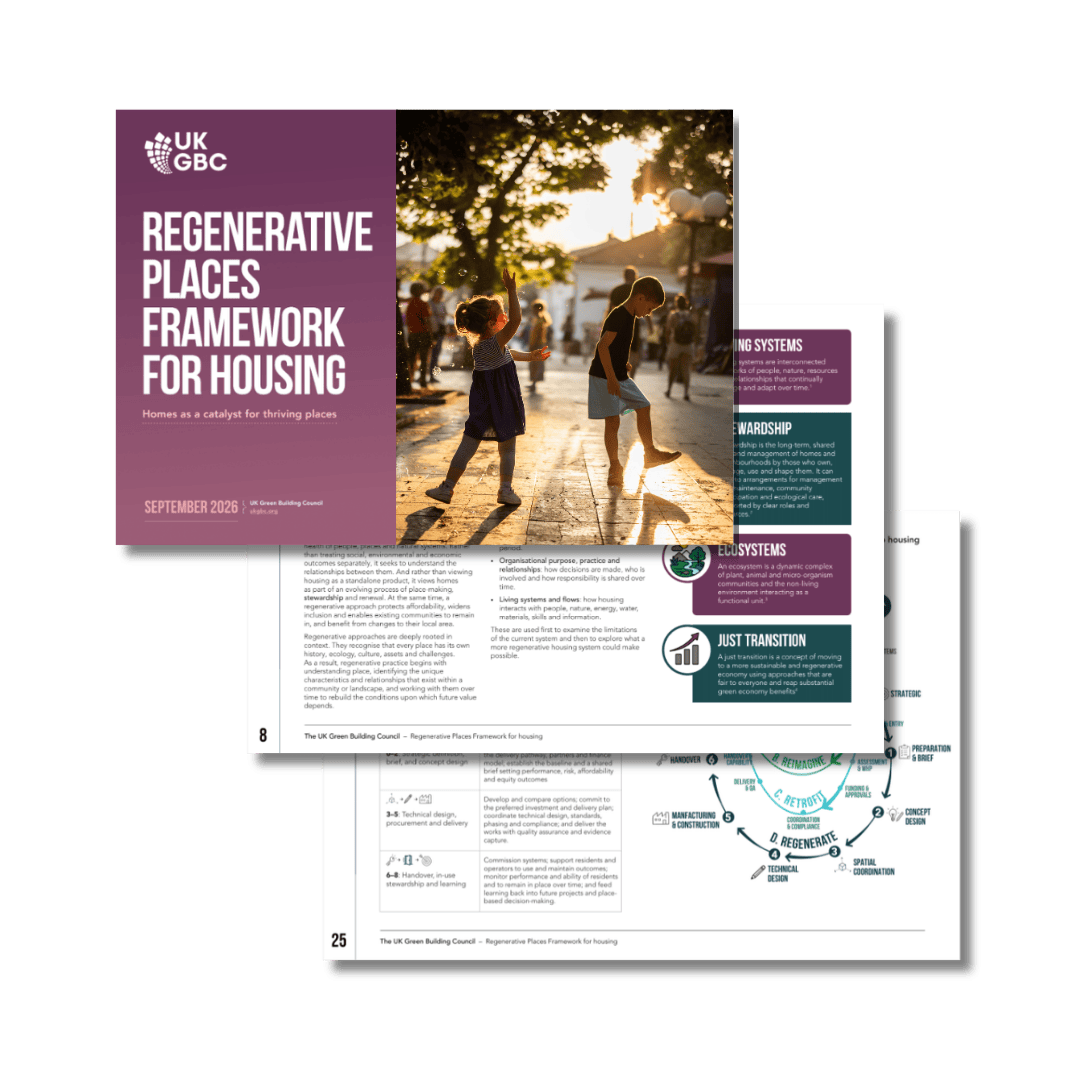
UKGBC launches Regenerative Places Framework for Housing

New Term, Fresh Start: What we need from the new government’s first year


BuildingLife Campaign: Whole Life Carbon: From Standards to Action


How is flagship climate policy shaping UK construction?

