Skills, Resilience and Whole Life Carbon: Turning Roadmaps into Delivery

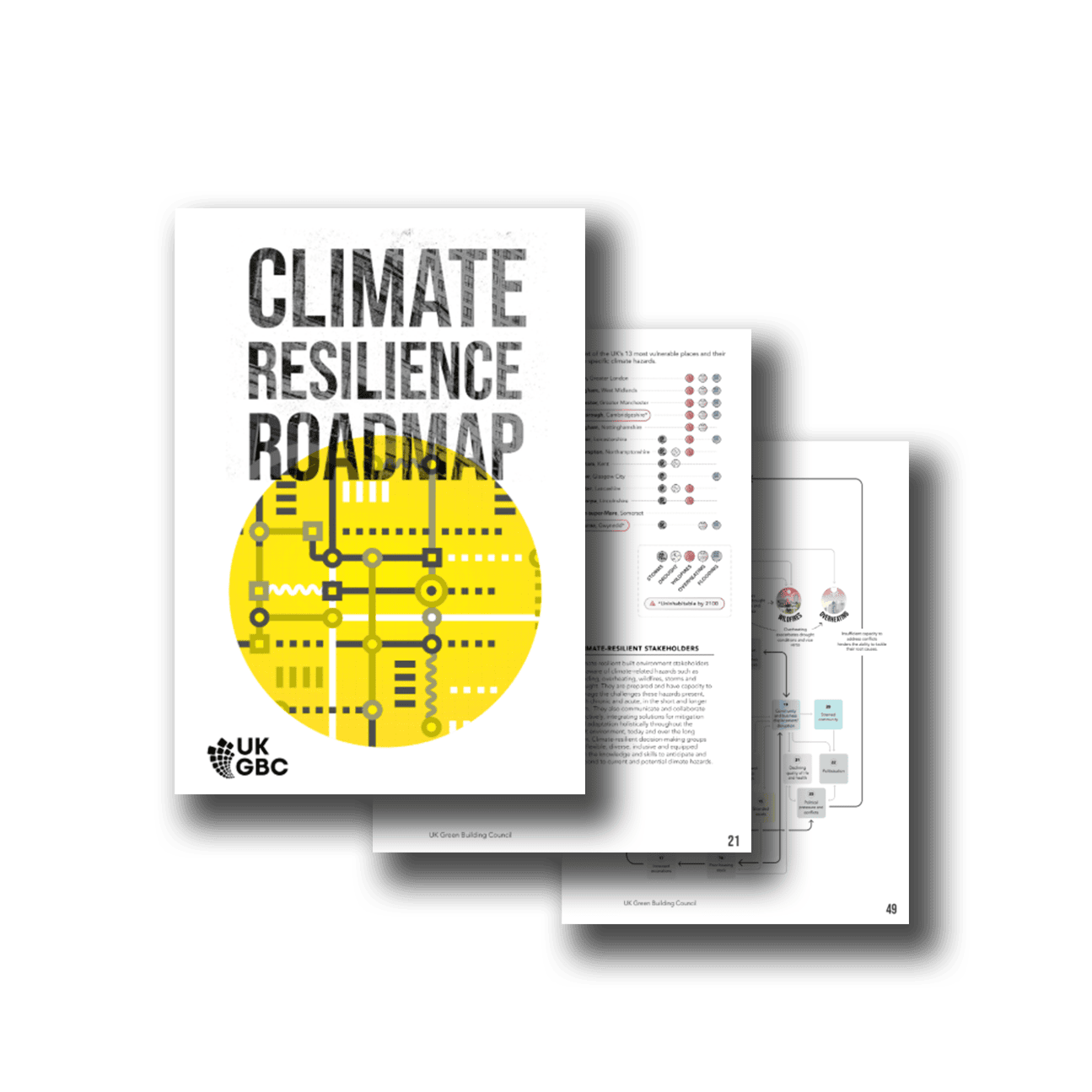
The UK Green Building Council’s UK Climate Resilience Roadmap and Net Zero Whole Life Carbon Roadmap provide two important reminders for our sector.
The first is that the transition to a low carbon built environment is not an abstract future challenge. It is already here. The second is that our ability to respond depends not only on regulation, technology, finance or innovation, but on people. More specifically, it depends on whether our skills system can equip new entrants, existing workers, educators, employers and clients with the confidence and competence to turn ambition into delivery.
“That is not a small task”.
As a Building Life Ambassador and through our work at BE-ST, our recent Pathways to Productivity work reinforced the scale and complexity of the challenge. The construction skills system is substantial. It includes colleges, universities, private training providers, employers, manufacturers, professional bodies and community organisations. It supports apprentices, students, graduates, existing workers, career changes and specialist practitioners. However, scale should not be confused with coherence.
If we want the sector to respond effectively to the UKGBC roadmaps, we need a skills system that is better aligned with the outcomes we are asking industry to deliver. Climate resilience and whole life carbon literacy can no longer sit at the edge of mainstream provision. They need to be embedded in further and higher education programmes, apprenticeships, professional development and workforce upskilling in ways that are practical, applied and relevant to real work.

This matters because competence is not simply the possession of knowledge. It is the product of knowledge, skills, behaviours and experience. Understanding whole life carbon as a theoretical construct is important, but is not enough. Learners and workers need to understand how design choices, procurement decisions, material selection, sequencing, installation quality, maintenance, reuse and adaptation affect performance in real settings. The same is true of climate resilience. It is not enough to know that heat, flood, wind, water scarcity and other hazards are increasing. We need the capability to assess risk, make decisions, deliver interventions and learn from practice.
That requires a more iterative approach to curriculum and qualification design. Our understanding of climate resilience and whole life carbon is evolving rapidly. So too are technologies, standards, procurement models and client expectations. Training pathways cannot be allowed to lag years behind practice. They need a clearer core of mandatory competence, supported by flexible, responsive elements that can adapt to employer, regional and programme needs without undermining quality, safety or portability.

We need policy certainty, but not policy rigidity.”
Policy has a central role in enabling that shift. Industry cannot invest confidently in people, facilities, equipment and curriculum reform if the signals it receives are uncertain, fragmented or short term. We need policy certainty, but not policy rigidity. The aim should be iterative, purposeful and sustained policy development that gives the sector consistency, direction and assurance, while still allowing evidence, innovation and practice to shape implementation over time.
There is also more we can do to align approaches across the four nations. The construction workforce does not operate neatly within administrative boundaries. Employers, supply chains and professional standards move across the UK, yet qualification structures, funding models and curriculum arrangements are often disaggregated. Devolution rightly allows different nations to respond to their own economic, social and policy context, but divergence should not become an unnecessary barrier to efficiency, workforce mobility or shared improvement. Greater alignment around competence, evidence and outcomes would help the sector respond more effectively to common challenges.
We should also be honest about the support educators need. Colleges, universities and training providers are being asked to prepare learners for a sector that is changing quickly. That cannot be achieved through curriculum documentation alone. Educators need exposure to emerging practice, live projects, manufacturers, design teams, contractors, clients and researchers. They need time and support to remain current. They also need stronger mechanisms for knowledge exchange with industry, particularly in areas where practice is developing faster than formal standards.

This is where the work of UKGBC and its members is so valuable. The roadmaps demonstrate the collective capability that exists across our industry. They also show the importance of collaboration, openness and humility. We should celebrate best practice, but we should also be prepared to acknowledge what is not working. There remains much we do not know, and an almost limitless number of ways in which we can improve.
At BE-ST, we firmly believe in the power of multidisciplinary collaboration. It is central to our skills and training programmes, our innovation activity and our work with partners across industry, academia and the public sector. It will also be central to this year’s BE-ST Fest, focused on driving delivery.

My Call to Action in Simple
Engage with the UKGBC roadmaps. Actively highlight the work you and your organisation are doing that demonstrates best practice. Be open and honest about the barriers, gaps and unintended consequences you are experiencing. Seek support where you need it, and offer collaboration where you can. Most importantly, support your local colleges, universities and training providers to embed the principles of climate resilience and whole life carbon literacy into their curriculum.
Roadmaps matter because they help us see the route ahead. But delivery depends on people. If we want a built environment that is low carbon, resilient and fit for the future, we need to invest in the competence, confidence and capability of the people who will make it real.

Related
Resilient by Design: Putting Adaptation Back into the Climate Equation

Joined-up by Design: Closing the Gap between Evidence and Action


UKGBC Launches #BuildingLife Roadmap Ambassadors Campaign


UKGBC launches the UK Climate Resilience Roadmap