
Leave a Legacy: Thoughts on Recalibrate's Night at the Museum


There is never a dull moment being a part of the UKGBC leadership programmes and it is not just because of the star-studded keynote speakers but also thanks to the insight that all our participants bring to the conversations. We had the opportunity to host one such event in mid-July with our Recalibrate 2026 cohort.
Recalibrate is our leadership programme for C-Suite execs and board members. The first in-person touchpoint of this programme is called ‘Night at the Museum’. Do not put too much emphasis on the title- it is an evening in a heritage space – so neither a night nor a museum makes a debut in this event. If you did think about the movie though, you might be getting warmer, very much like our planet. I did find myself in Ben Stiller’s shoes because very much like the plot of the movie, I did not really know what I had signed up for until the sun went down and Jonathon Porritt took the spotlight and brought to life all the characters playing a role in climate change. Before he takes the stage, we open with an exercise on sharing what is the legacy the cohort wants to leave behind. A thought-provoking talk and a gripping conversation later, we close the evening with a lovely dinner to mark the beginning of a six-month journey they will all be embarking on from that point.
Leave a Legacy
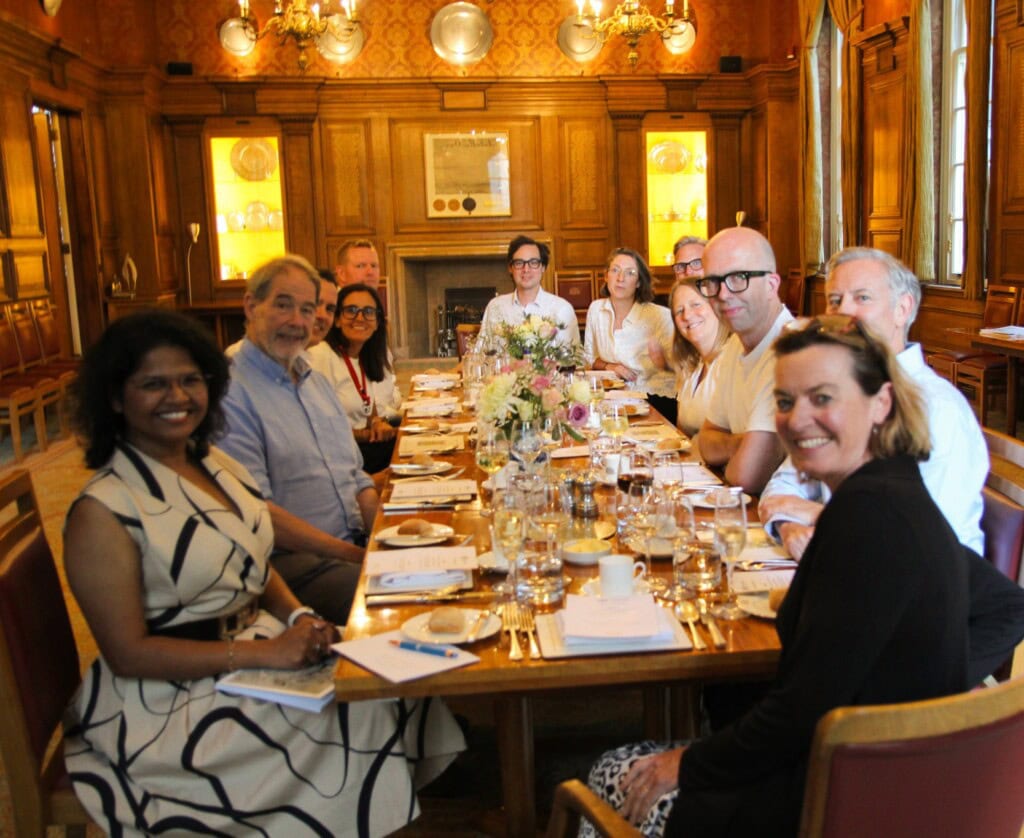
This July evening, set against the backdrop of the Pewterer’s Hall with its 17th century panelling and Georgian chandeliers, opens with a small activity set up in the kick off call with the cohort a week before. Each delegate is asked to bring along, given that it is transportable, an object that symbolises the legacy they want to leave behind.
Every year we have a cornucopia of the most unexpected items but surprisingly what lies at the core of all of them is the hope and optimism it represents. This year the themes covered the desire to ‘becoming a better global citizen, working through the system rather than being bogged down by it, and helping create a built environment by it housing, infrastructure or the natural ecosystem that contains it all’. What stood out for me was how much, directly or indirectly, all the professionals on an individual level hold themselves accountable for what we are creating and leaving behind on this planet.
I used to think I understood climate change until i heard jonathon’s talk. i think it’s the shock of understanding the magnitude of the problem we are in that leaves everyone feeling slightly discombulated every year.”
I have always related to the feeling mostly because that might have been the first thing taught to me in architecture school. I recall scribbling in my notebook, ‘Be mindful of what you draw, because a couple of lines on a roll of paper will end up becoming something that you cannot erase as easily as the line that started it.’ However, when one enters the professional world and unintentionally, albeit inevitably, becomes a teeny tiny cog in a huge machine, it is hard to experience any kind of connection between one’s decisions and the impact of the eventual result again. This connection will be brought to the forefront as we hand over the mic to our guest speaker.
Jonathon Porritt
Jonathon has an impressive background in climate change and built environment sustainability, but all of his accolades cannot put into words what he adds to this programme. I have always found his talk gripping for the balance that he strikes between the urgent and desperate need for action, against the ‘toxic hope’ he says he holds within himself to be able to continue striving for the change we need to galvanise if we have any chance of making sure that the planet does not shake us off.
He paints a picture of the quagmire we have managed to trap ourselves into. This year he explained how the manifestation of extractive capitalism that let the market forces run without proper control until now is more durable and shockproof than us and the ‘Goldilocks climate’ that has actualised humanity and the rest of the living planet. Drawing on the words of Jeremy Lent from his book Ecocivilisation, Jonathon compared this manifestation to a wendigo, a mythical cannibalistic creature from indigenous folklore, whose insatiable appetite isn’t for its nourishment but for the sake of it.
What’s worse, he adds, is that it has remoulded humans into happy well-behaved consumers with a psychological pattern to accumulate with barely to no regard for anyone or anything else. There is something emotional about listening to these fast approaching tipping points in a centuries old room that may have stood the test of time until now, but is approaching a bleak future with every passing day of inaction. For me it makes these tipping points seem closer and unavoidable than ever.
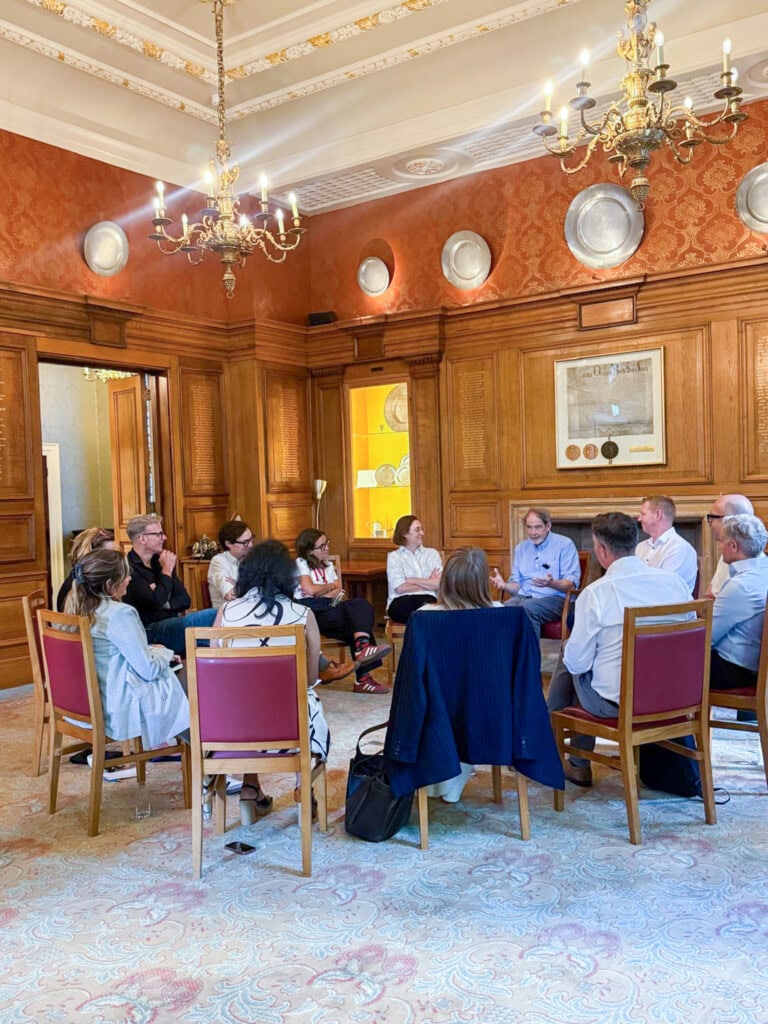
After a very heart breaking reality check on the gradual decline of the sustainability agenda against a soaring graph of population and GDP, he brings that aforementioned hope by sharing some very interesting mini-revolutions emerging across the globe, be it Australia’s Solar Sharer offer or Pakistani farmers’ grass roots movement of replacing diesel engines with solar panels. Against dusky skies, it dawned on all of us sitting in that circle, that though there is hope for the future with such brilliant initiatives, the scale of change is nowhere close to being enough leaving the room in an almost eerie silence.
Allowing the group a couple of moments of reflection, Jonathon brought the onus back to the people in the room and what role they can play in swerving us off this path we are on. Everyone discussed how the lack of technical knowledge among politicians builds a barrier for the industry to make short term trade-offs in sacrifice of a better future but the question still remains – what can be done ‘by us’ to support what needs to be done.
As professionals, we indeed find ourselves so bogged into the day to day and the languages of business model. Some days it’s all about carbon, others is about circularity, only to realise that biodiversity net gain has not been mentioned at all. A couple years ago we called it sustainability, these days we cannot get enough regenerative design. However, as Jonathon puts it, whatever language we decide to use – sustainability, resilience, regeneration, it needs to be out there, talked about. The business-as-usual side is winning not just because they might not understand what we are asking for but mostly due to lack of understandable and relatable narrative from our end. One of the delegate’s closing example really stayed with me – we might get more folks on board with renewables if we change the narrative associated to solar panels as an energy security measure, rather than a sustainability measure.
More Food for Thought
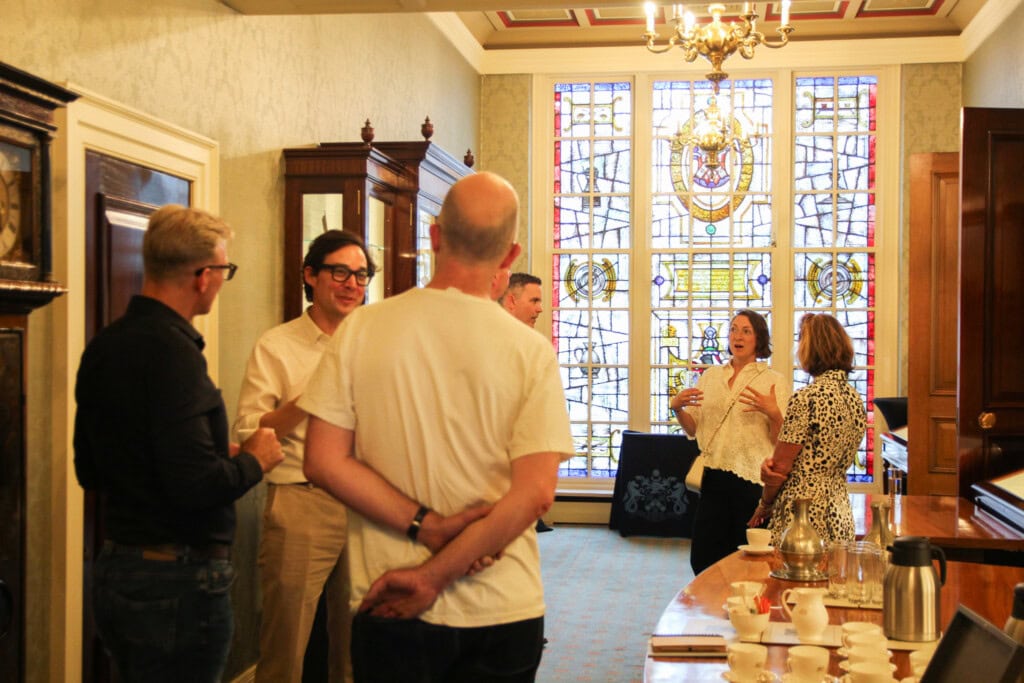
After such an engaging conversation, it is only right to move to a convivial close. The group went on to get to know each other and unpack what stood out for them. The topics spanned everything from plans for the upcoming summer holidays to the possibilities for the fossil fuel industry set against the unshakable Trump administration alongside UK’s (yet again) new administration. Jonathon left the group with the words, ‘collectively the question we need to raise is how can we find ways of living that are compatible with the natural world, support justice and fairness for humanity and future generations to come.’
The table closed with the feeling I shared from the very beginning – by acknowledging the privilege of being in this room, around this table and celebrate the opportunity of having these conversations. I am looking forward to hearing more such discussions and what this group of individuals go on to do in materialising the legacy they want to leave behind.

Related
High Hopes, Half Built: Starmer’s Built Environment Legacy


The 5 policies UKGBC wants to see in the King’s Speech


Lessons from Conference Season 2026


AGM 2026 Results

