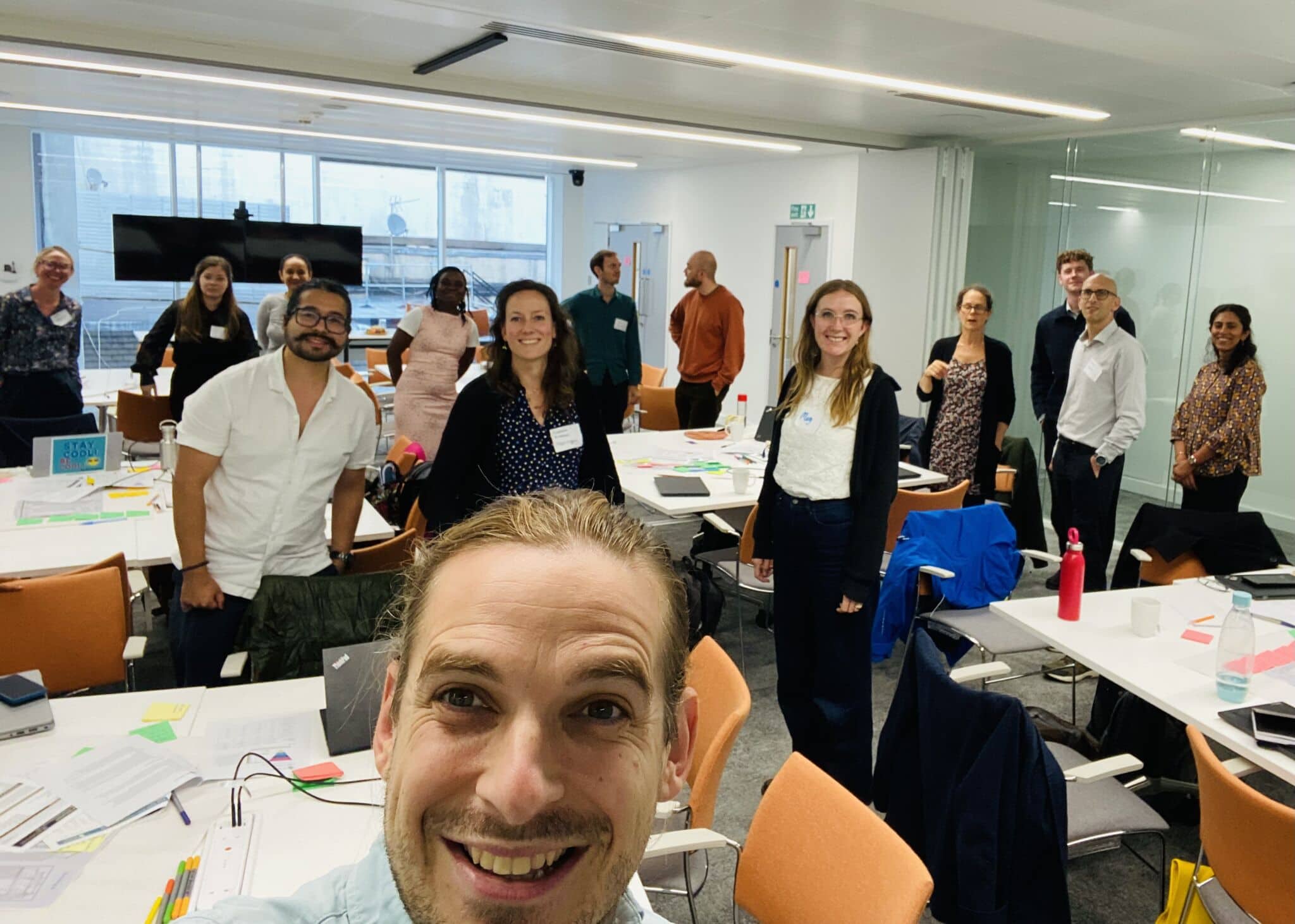
Beyond the Brief: Rethinking the Architect's Role in the Net Zero Transition
Can i build and shape in a way that a space is created while nothing is destroyed?”
It’s been exactly ten years since I stepped into the diverse, timeless world that is the building industry. Half a decade in India, the second half in the UK. My first orientation into this world came with hyperbolic statements – architects shape the future of how people live, move, and thrive. The influence of an architect extends across lifetimes. I remember hearing that and thinking, okay, sure, but also – me?
Since then, often my role was minuscule in the grand scheme of things, but it never felt insignificant. There’s always been a kind of responsibility in it, hope, and a stubborn optimism I can’t quite explain, which pulled me toward whatever came next. Across this decade I have learnt to really interrogate every decision I make. Quite soon into it, I started to question what “zero impact” on the environment translates into. Can I build and shape in a way that a space is created while nothing is destroyed? Or is that against the law of nature itself?
Coming from India and spending my first five years entrenched in what vernacular construction actually means – timber shacks in the Himalayas, mud houses in subtropical southern India to now working at a Scandinavian firm where climate-positive thinking is built into the ethos of everyday life; I have been lucky enough to look closely into two very resilient societies of its time: an India from a few hundred years ago that stood the test of time, and the Scandinavia of today.
That question ‘what does zero really mean’ – has followed me for a decade. Last year it followed me straight into a taskforce.
From drawings to decisions
As designers, we are trained to draw, model, calculate, and optimise. We are good at solving problems once the brief is set. At White Arkitekter, that brief is already framed by a strong, value-led approach- one that is firmly rooted in designing with a climate-positive lens and an understanding of architecture as a social and environmental act.
Through my time at UKGBC, I began to understand that the brief itself may be one of the most powerful design tools we have.
Working on the update of the 2019 Net Zero Framework meant stepping upstream away from individual projects and towards the rules, principles, and expectations that shape all projects. It meant asking the same questions I had always wrestled with but now, out loud: What does “net zero” really mean? Who decides? Who benefits? Who defines it, and what does it include? Hearing how differently stakeholders interpret net zero, in terms of scope and timelines, was revealing.
These questions directly shape what gets built, what cities become and the quality of the environment our lives unfold in.
Sitting at the table
One of the most defining aspects of this work at UKGBC was the people. The task group brought together experts from fifty organisations across the sector: architects, engineers, developers, contractors, academics and working with them was deeply inspiring.
It felt, at times, like being in a room of guardians. Stewards – people who care about doing the right thing, even when “the right thing” is harder, slower, or less convenient. Disagreement and tension were inevitable and necessary. Net zero is no longer a fringe ambition; it is technical, political, and even cultural. Reaching consensus required listening as much as leading.
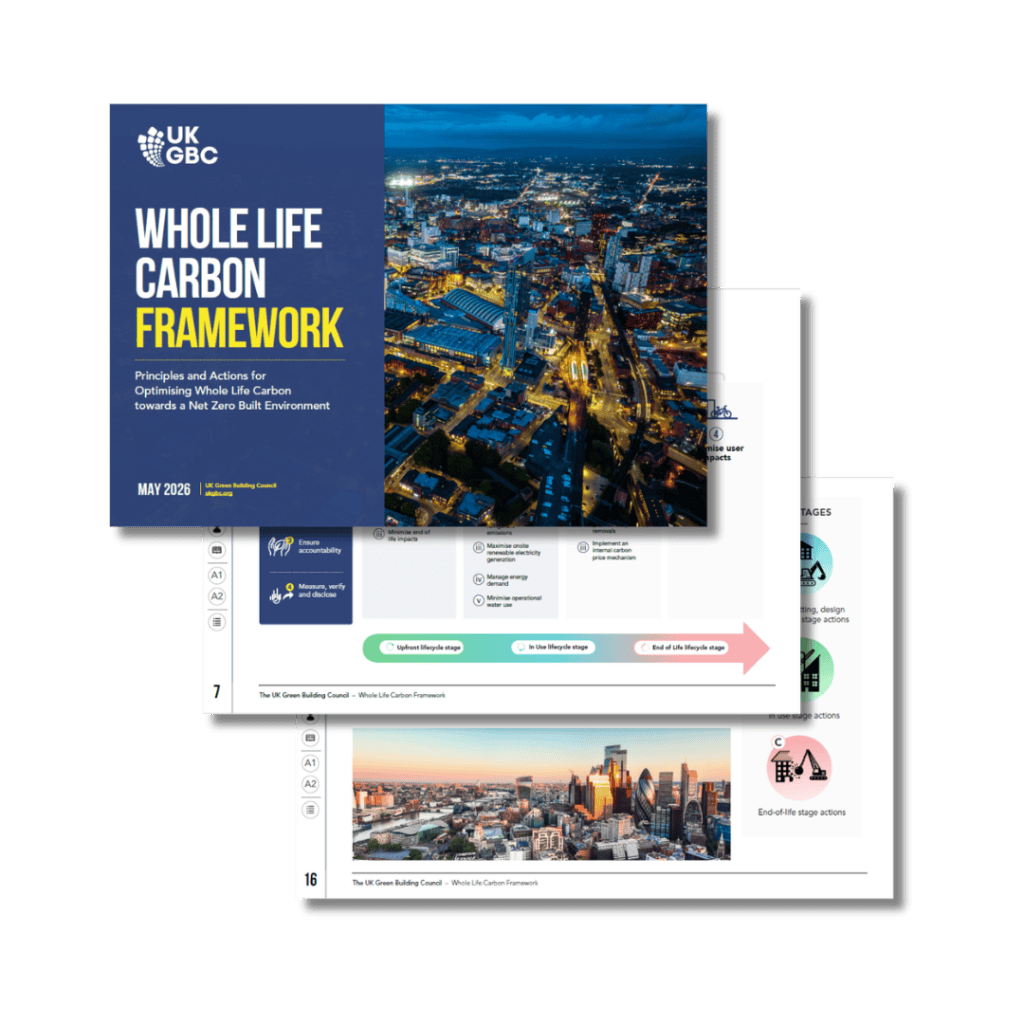
One of the earliest and most telling disagreements amongst the group was over the name itself. The framework began life as an update to ‘’Net Zero Framework’’ from 2019 but as everyone worked through it, that title felt amiss. Net zero implies a single, calculable endpoint; the reality we were shaping was broader and messier: from the carbon locked into materials before a building opens its doors, to how it performs in use, to what happens to it decades later. We eventually landed on Whole Life Carbon, because it could hold all of that, and because it sat more honestly alongside the UKNZCBS it is meant to work with.
What we ended up with is structured around four delivery principles- minimising embodied carbon, optimising operational energy and water performance, managing residual emissions, and optimising the impact on the people who use these buildings: mapped against a building’s whole lifecycle, from upfront construction through to end of life. It also has a set of overarching principles: act now but stay adaptable, set clear objectives, hold ourselves accountable, and measure and disclose honestly. Instead of working as a checklist, it’s supposed to be a way of thinking.
Learning to speak policy
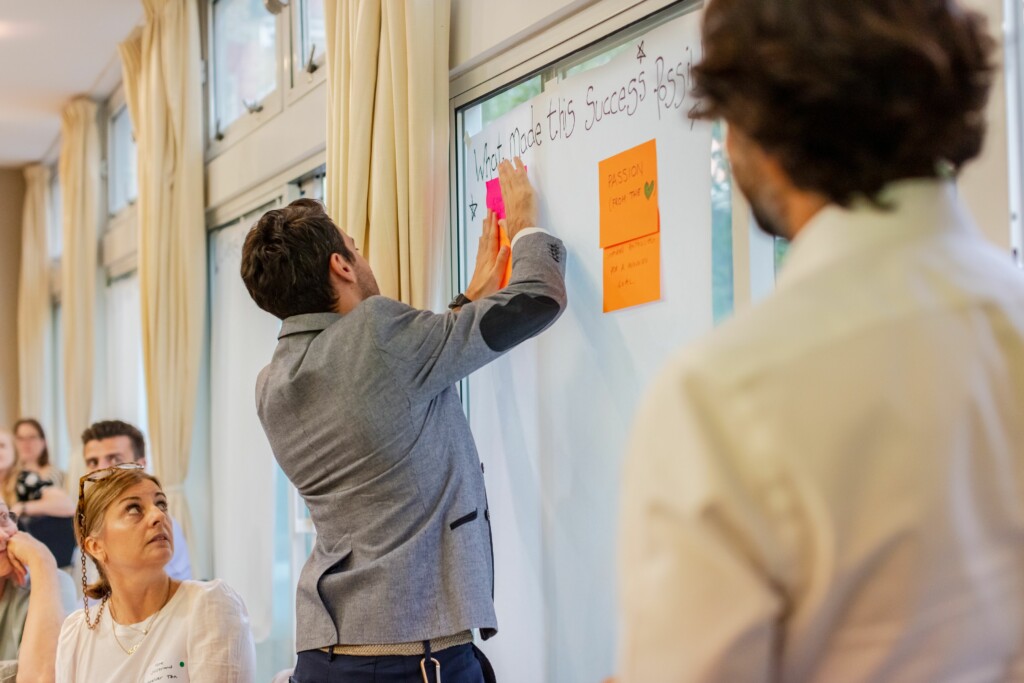
As an architectural designer and sustainability specialist, the learning curve was steep and exhilarating. I had to shed the comfort of project-specific thinking and adopt the skin of a policy writer. Someone who zooms out. Someone who understands that language matters. That a single word can open doors or close them for years. The work itself involved leading, writing, editing, coordinating, chairing discussions.
I learned that good policy is not about perfection, but about clarity, ambition, and usability. A framework that cannot be applied will be ignored. One that is too vague will be misused. Walking that line is what often kept me up at night questioning certain word choices.
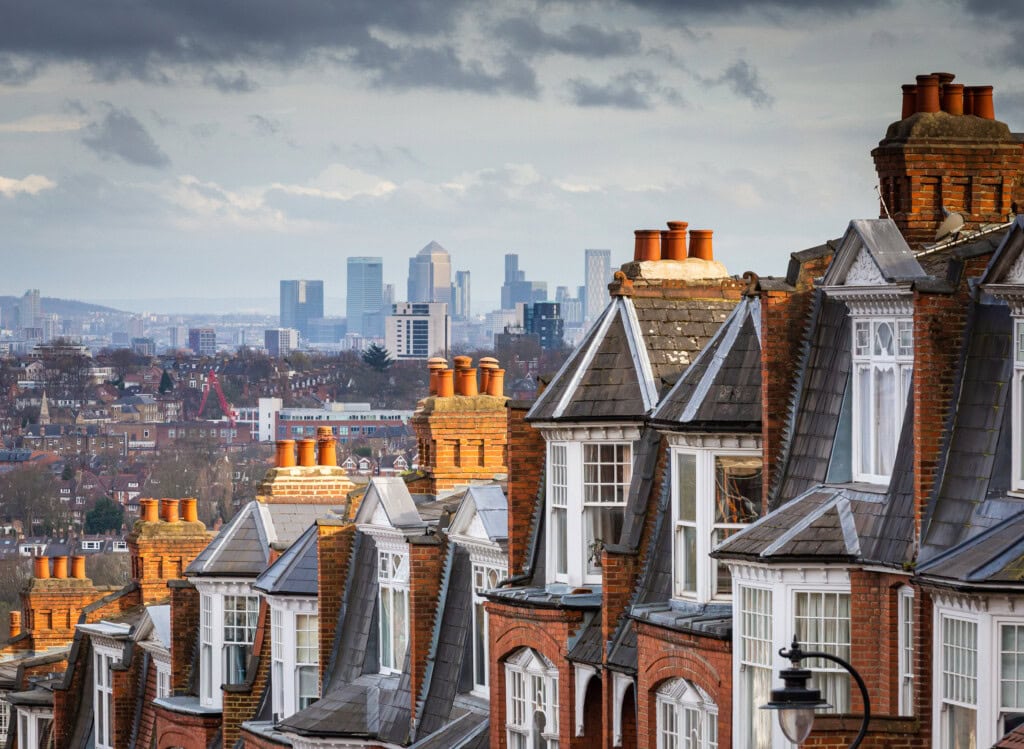
Perhaps the biggest question that surfaced for me through this process was: how can we do better as a society? Not just through conversations that sit safely within professional echo chambers, but by reaching the clients, investors, and builders who make decisions every day and encouraging them to think beyond the next two years. This reframing feels critical, especially in cities like London, where the pressure to build quickly risks flattening identity, performance, and care.
The architect’s expanding role
the future of the built environment hinges on asking the right questions and answering them through a mix of policy, practice and collective responsibility.”
This experience has also reshaped how I see the role of architects in the climate transition. We are implementers of policy, but we can be co-authors of it too. We understand the consequences of decisions on the ground. We see where frameworks succeed, where they fail, and where they are quietly worked around. Architects are uniquely positioned to translate abstract targets into spatial, material, and human consequences.
Working with UKGBC has reaffirmed something I have long believed: that the future of the built environment hinges on asking the right questions and answering them through a mix of policy, practice, and collective responsibility.
It has been a privilege to contribute, even if in a small way – to a piece of work that asks the industry to do better, be braver, and think longer-term and to walk in the footsteps of the global movement led by the World Green Building Council.
I have gained sharper tools, a broader perspective and a deeper sense of responsibility now – which sit alongside my studio work, not just for the projects I work on, but to the systems that shape them.
I’m looking forward to watching people adopt the framework, stress-test it, and eventually build with it.
Explore the Whole Life Carbon Framework
Related
High Hopes, Half Built: Starmer’s Built Environment Legacy


Joined-up by Design: Closing the Gap between Evidence and Action


Equipping Local Authorities to Drive Action Through Low Carbon Training