
Trends in Sustainable Solutions for the Built Environment 2025
The conversation on sustainability in the built environment is shifting, from defining what needs to change to figuring out how we deliver it. How we deliver meaningful carbon reductions, accelerate retrofit, enhance nature, build climate resilience, and prove that sustainable solutions can scale – all whilst ensuring a fair and equitable transition.
This year, that desire for delivery sits against a complex backdrop. The net zero narrative is under strain, challenged by shifting political winds, misinformation and economic challenges, making trust, clarity and transparency more critical than ever.
This context is shifting the conversation from one of carbon and ‘sustainability’ to one of resilience. This can mean climate resilience of buildings, communities and supply chains, but also financial resilience. A sense of vulnerability is one of the driving forces in the face of the cost of living, housing, climate and ecological crises, but also the sense of vulnerability in the net zero narrative itself, meaning resilience feels more essential than ever. In a world that feels more volatile, uncertain and complex the built environment must be designed not only to decarbonise, but to endure.

However, in the face of this vulnerability, whilst some are turning to protectionism, others are realising the interconnectedness of everything, and the need to think in systems and break down silos. This comes with growing narratives and mindset shifts around our need to move towards a more regenerative built environment that has an actively positive impact, and seeing ourselves as part of nature, with a lens of abundance rather than scarcity.
UKGBC’s annual Trends Report highlights and explores a range of themes, topics and solutions that have been prevalent throughout 2025. It covers overarching topics from AI and the importance of place, through to material innovation and financial products. The analysis is based on engagement with innovation-focused UKGBC members (including input from UKGBC’s Solutions & Innovation Advisory Group), interviews with UKGBC topic leads, desktop research and reviews by topic experts across industry.
The insights in this report act as a temperature check on the theme of sustainability in the built environment, and capture a collective pivot – from planning to implementation, from values to value, and from sustainability to resilience and regeneration.
Sections
Overarching insights and adoption context
This report is intended as a signpost for industry to key developments and reflect what UKGBC is hearing from industry and in research by others. While this is a summary of some of the notable trends, solutions and examples of which UKGBC has become aware, there are likely to be others that are not mentioned. UKGBC does not formally endorse any of the individual solutions listed.
Move towards action
There is growing sentiment about the need for a greater focus on action and implementation. The ‘Action Agenda’ launched at COP30 is explicitly designed to shift focus from target-setting to tangible delivery, accelerating the implementation of what has already been negotiated. Within this ‘sustainable and resilient constructions and buildings’ is one of the key objectives, highlighting the important role of the built environment on the international stage.
To act at the pace and scale required, there is growing recognition of the need to make progress even as data and consensus continue to develop, especially in areas such as nature, circularity, and embodied ecological impacts where robust and standardised metrics are still emerging.
Finance is essential for driving tangible decarbonisation and resilience in the UK built environment. While often called ‘green finance’, the focus is shifting to ‘transition finance’, which supports high-carbon sectors and existing infrastructure in moving toward net-zero outcomes. This is reflected in the launch of the Transition Finance Council by the City of London Corporation and HM Government, and the Green Finance Institute’s recent ‘Transactions to Transitions’ initiative. The latter explicitly aims to deliver transition at scale and drive systemic change through coordinating action.
At the organisational level, many companies are deep into the implementation phase of their transition plans, creating new opportunities for the adoption of sustainable solutions. However, this phase often exposes the tension between the vision of sustainability strategies and the realities of organisational change when it comes to implementation. This can lead to what some have called an ‘activation gap’ – the space between knowing what needs to be done and being able to execute it effectively. Whilst many organisations have tackled the low hanging fruit (such as lower effort energy efficiency measures or recycling), the next stage of transformation demands more complex, system-wide shifts. This is reinforced by Bain & Company’s Research showing that many UK-based companies are failing to maintain the pace of decarbonisation needed to align with 1.5°, proposing the easiest emission reductions may have already been achieved and companies now need to address more challenging areas.
The business case – from values to value
Market valuation must catch up with sustainability performance if low-carbon and resilient buildings are to scale. This is reinforced by the increased stranded assets risk, where buildings that cannot economically meet future standards (or sit in locations with high hazard risks) lose value. Recent industry and policy research (for example by Deepki) frames asset stranding not just as a theoretical risk but as a near-term financial problem for lenders, insurers and owners. Morgan Stanley’s recent ‘Sustainable Signals 2025’ survey found that 84% of institutional investors expect growth in the number of sustainable assets under management in the next two years.
Professional standards are changing to reflect this: RICS has reinforced sustainability and ESG requirements within Red Book valuation guidance and is updating its valuation standards to make sustainability-related disclosure and investigation a routine part of professional valuation advice. That change pushes valuers to treat energy, carbon and resilience attributes as valuation inputs rather than optional commentary. Evidence for a green premium in the UK is growing, however the evidence varies as valuation depends on wider factors like the location, other building improvements, market saturation and asset class. In areas where there is greater availability of buildings with sustainability credentials, a brown discount is more likely. PwC’s Emergent Trends 2025 report states that valuation practice fully reflecting ESG credentials and stranding risk still lags.
Valuers are also beginning to fold climate resilience into models – not only downside risk (flood, heat, wildfire exposure) but the cost and value implications of adaptation and retrofit. JLL’s framing of From climate risk to climate resilience stresses that climate risk is already affecting underwriting, insurance and capital allocation in real estate. According to Morgan Stanley’s ‘Sustainable Signals 2025’ report, over 75% of institutional investors expect physical risks to have a major impact on asset prices in the next five years.
Another side of this coin is how we embed externalities into our definition of value to factor true costs into decision making – this includes pricing in embodied carbon, water, nature and other factors. Many organisations have already set internal carbon prices, and innovators are developing methodologies for other areas of sustainability (for example Watermarq). However, as industry attempts to price in negative externalities, other challenges arise like how we weight value and respond to context.
However, as Government doubles down on economic growth and industry grapples with project viability, there remains a wider counter movement due to the environmental impacts of our current system. The Doughnut Economics Action Lab has released a new update showing the level of ecological overshoot and social shortfalls demonstrating a ‘world out of balance’. In response to these narratives, there is a growing body of research around alternative models and systems that seek to address this imbalance and their implications for the built environment (for example UCL’s Bartlett has a cluster on ‘Post-Growth Planning’).
Capacity challenges and the proliferation of solutions
This move towards action and value scrutiny is feeding into already existing capacity challenges across industry and government. With lack of capacity comes a lack of ability to manage change, a key part of embedding sustainability effectively. Alongside this challenge is also the fact that there is a proliferation of solutions in this space, with many being technical and taking time to understand. For individuals to advocate for sustainability solutions internally or on projects, they need to feel confident in their understanding.
Further, there is duplication in solutions, with energy and investment going into development of tools and platforms that already exist on the market. This is especially true in the software space, reinforcing solution fatigue and concerns over the number of software interfaces and their ability to interoperate. This is not the most efficient use of resources and creates more market confusion as practitioners grapple with how different solutions compare. Proper understanding of the existing innovation landscape is important to understand needs, gaps and overlaps – which resources like the Commercial Retrofit Innovation Map seek to support with.
Collaboration and supply chain engagement
To accelerate sustainability action, collaboration across the value chain is a critical enabler. This means not only working with immediate suppliers but forming partnerships with other solution-providers, and even with competitors and across sectors. One example where this is becoming increasingly evident is in organisations seeking to address their scope 3 emissions and consequently needing to engage with, and sometimes invest in, the decarbonisation of their supply chains. In response to this, UKGBC launched a workstream on Supply Chain Decarbonisation in 2024, one of the outputs from this looking at supply chain engagement. UKGBC is also collaborating with the Supply Chain Sustainability School to strengthen sustainability practices and upskill across the supply chain.
As this work gains traction there is opportunity to group resources for a coordinated approach to supply chain engagement and investment, rather than a fragmented approach, for example collective insetting as being explored by The Reduction Network. This becomes more important as there are increasing reporting challenges on the supply chain, with different organisations asking for different data (not to mention the varying requirements of different countries). Simplification of this data capture is important, especially for smaller suppliers with limited resources. To support this, platforms like Firstplanit, 2050 Materials and One Click LCA’s Material Compass enable easy comparison of products and materials; and platforms like EcoVadis rate suppliers according to their sustainability information, and facilitate supplier engagement.
There are also calls for carbon and ESG targets being included in contracts (as being explored by The Chancery Lane Project) to be more widespread, as this is our legal language of collaboration and holds organisations to account.
The importance of place and context
The call for greater attention to context has been accompanied by an increased focus on the importance of ‘place’. In line with this, UKGBC has recently launched the Regenerative Places Framework project. This explores how moving beyond business-as-usual, fragmented and linear ways of working to take a more regenerative approach can provide tangible and interconnected benefits for local people and places. These include health and social value benefits, improved biodiversity and green space, strengthened climate resilience and decarbonised energy systems. Approached through the lens of both new housing and home retrofit, this work emphasises the importance of including the people and organisations who know their places best. It comes as recognition of the role of community in the long-term stewardship of our built environment is also becoming more mainstream. Projects are also more likely to be successful when there is trust, and when local people are part of a process from the start, rather than a project being imposed on them. Co-design and good engagement isn’t just about a tick box, it is about people being able to contribute, and for their voices to be heard.
The Phoenix Project is one such example. This mixed-use development on a brownfield site in Lewes, East Sussex, is working with communities to galvanise their aspirations for the area, an approach that saw local people protesting in favour of the project going ahead. The scheme also seeks to enhance local supply chains for construction timber, boosting the local economy beyond the duration of the construction of the project.
Further, investment in place is seen by some to have more direct and tangible benefits, for example when looking at funding for social value creation or nature and biodiversity, compared to some of the more global-scale and seemingly intangible benefits of carbon savings.
Thinking beyond carbon and making sense of complexity
A consistent theme in the sentiment expressed is the growing recognition that sustainability challenges cannot be understood through isolated lenses. Carbon, nature, health and wellbeing, climate resilience, resource use and social value are deeply interconnected, even if we often see, discuss and manage them in silos. And there is an increasing awareness of this interdependence across the built environment sector. At the same time, the knowledge, tools, and education needed to operate confidently within an integrated systems perspective are still developing.
Many organisations are already struggling with carbon reporting, ESG requirements, the growing number of certification schemes, policy compliance, and additional layers of interconnected considerations which can feel overwhelming. However, third-party standards and certifications still play a vital role in building trust and enabling comparable, portfolio-level insights, but they should be treated as tools as part of a holistic strategy rather than end goals in themselves. There is a clear demand for platforms and tools that can support with the simplification and alignment of the various schemes, make the data collection easier, and support with the identification of the most meaningful interventions that maximise co-benefits.
The opportunity lies in approaches (and supporting technologies) that help make sense of these relationships, connect siloed areas, and enable clearer decision-making. This aligns with broader themes in this report, including regenerative design and systems thinking, and connects with UKGBC’s Systems Change work and Regenerative Places Programme.
The role of AI
It would be remiss not to mention one of the most significant technological developments in recent years – the rise of artificial intelligence. In 2025, AI has simultaneously been condemned for its environmental impact to potentially thwart wider sustainability efforts and celebrated for its potential at solving complex problems when it comes to sustainability and systems thinking.
The evidence for the former paints a challenging picture. It is well known that AI uses a greater amount of energy than other technologies – a query through ChatGPT uses on average 10x more energy than a Google search. When you aggregate this the impacts are clear: indirect carbon emissions from AI-focussed technology companies rose by 150% from 2020-23. Forecasts suggest spending on data centres will exceed $30 billion by 2029, and that AI could be responsible for nearly half of datacentre power usage by the end of the year. If the growth of AI isn’t managed, it could cancel out the benefits of the boom in renewable energy deployment and curb decarbonisation efforts.
Energy consumption isn’t the only challenge – AI also uses a substantial amount of water. A recent report from the Government Digital Sustainability Alliance (GDSA), highlights that AI’s water demand could reach billions of cubic metres annually. To make matters worse, nearly 68% of data centres are near protected areas or Key Biodiversity Areas which rely on clean water supplies for ecosystem health. Mining for rare earth materials required to make the hardware to run AI also exacerbate environmental and biodiversity impacts. At the other end of the value chain, datacentres produce vast quantities of e-waste (like discarded servers and GPUs) which often contain hazardous substances like mercury and lead.
Nevertheless, there are many opportunities in AI’s application to improve efficiency, resilience, and sustainability across the built environment. Some of these include:
– Decarbonisation strategy optimisation for assets and portfolios (for example Optiml)
– Advances in material science (for example the use of AI to create a paint that can help cool buildings)
– Autonomous control of buildings systems for optimised energy performance (for example BrainBox AI, Trigrr, Attain, and Optimise AI) as well as solutions that enable users to ‘talk’ to their building (for example 75F and KODE Labs)
– Generative design for optimised layouts of systems to minimise whole life carbon (for example Consigli for HVAC layouts, Laiout for floor plans, Structure Pal for structure layouts and Preoptima for early-stage building design)
– Heat mapping and analytics to identify leaky homes (for example Kestrix)
– Nature and biodiversity mapping, reporting and monitoring (for example Gentian)
However, some contributors expressed the need to ensure we have got the basics right in terms of data quality and structuring before we start trying to apply AI across the board, as AI is only as good as the data its trained on. Further, there is growing demand for AI that can clearly add value, with innovators struggling that rely too heavily on a large language model ‘gold wrapper’ as many corporates are now realising they can do this themselves. It is also worth noting that most of the environmental impacts are caused by a sub-category of AI called generative AI and its training (including large language models like ChatGPT). There have been forms of traditional AI that have been around and used in industry for longer that have lower environmental impact.
Balancing these risks and opportunities is required to make informed decisions. The push for “net zero AI” reflects the urgency of ensuring that efficiency gains can balance out energy requirements. There are growing calls for standardised frameworks to measure AI’s true environmental footprint and apportion responsibility. However, recent research shows the complexity of this when you start to take into account direct as well as indirect impacts (carbon emission for training models, mineral supply chains, energy and water consumption and e-waste) with indirect impacts (ways AI supports reduced or increased resource consumption and the rebound effect of savings, known as Jevons Paradox).
Another angle when it comes to AI is the fear of it replacing jobs and resulting in ‘cognitive offloading’, but as it currently stands, AI still needs to have humans in the loop to be trusted, and organisations don’t want to risk a claim against their Professional Indemnity Insurance. The CIOB’s Artificial Intelligence (AI) Playbook 2024 concludes that AI can be more complementary than substitutive to human jobs, which could be especially critical in a time of stretched capacity. However there are concerns about AI replacing junior positions, and the skills gap and social impacts that could have, however it remains to be seen how this will balance against the potential new jobs created as a result of AI.
If the potential of AI is fully realised responsibly, there is a huge potential in its ability to radically transform the sustainability of the built environment, in ways we might not have even imagined. However, we must ensure AI values sustainability, not just efficiency. Embedding AI responsibly into the built environment will demand both innovation, accountability and a clearer picture of environmental cost benefit analyses for different use cases. Even if we can identify which AI applications offer genuine sustainability benefits, mitigating negative impacts remains challenging, as the technology (and its associated environmental and societal effects) is already becoming deeply embedded across all sectors and wider society.
Topic trends
Climate mitigation
Climate mitigation

There is concern over the prioritisation of climate change mitigation efforts in the face of increasingly politicised conversations around net zero in the UK and US. In the UK, policy uncertainty and mixed signals is causing challenges for industry, slowing investment decisions and supply chain decarbonisation. This is particularly challenging in areas requiring urgent action, like home retrofit, where funding and delivery capacity are stalling progress.
However, evidence suggests many organisations are still ploughing ahead with efforts, even if under new positioning. An example of this is industry starting to work with the UK Net Zero Carbon Building Standard pilot, released in 2024. The Standard is aligned with the UK’s carbon and energy budgets, and as such sets out rigorous and ambitious performance targets for buildings for operational and embodied carbon. In 2025 industry is testing the criteria in practice and awaiting confirmation on verification requirements and speculating on how high the barrier to entry will be.
Optimising operation energy use and addressing the performance gap
Many buildings have a gap between design aspirations and in-use performance. This often arises from factors such as incomplete handover information, occupants not using systems as intended, construction defects, or commissioning and maintenance issues that prevent the building from performing as designed. This is a well known challenge in the industry, and efforts to address it are now becoming more mainstream.
Certification and benchmarking schemes that take into account in–use performance are gaining traction. For example NABERS UK, which relaunched in July 2024 under CIBSE’s administration with strong uptake, including 42 new Design for Performance projects. Developers including British Land, Grosvenor, and Landsec have publicly committed to expanding NABERS certification across their office assets. The RIBA is also requiring operational energy data in their awards submission for the first time in 2026, further marking this shift and creating yet another driver for addressing the performance gap.
Advances in technology can also support, for example digital twins and TM54 energy simulations which are helping teams see how design intent matches operational performance. Technology can also enable optimised energy consumption whilst in–use, through smart energy management, analytics and autonomous control platforms. A range of these solutions exist, and are highlighted in the ‘energy use management and optimisation section’ of the Commercial Retrofit Innovation Map. As this area of innovation matures, costs are also coming down, with cheaper IoT solutions that can monitor and manage the energy use of buildings. This technology doesn’t have to be for high tech buildings alone: it is becoming much more affordable to implement smart demand control in ‘low tech’ buildings, without a Building Management System (BMS) or data layer.
Grid capacity and energy systems
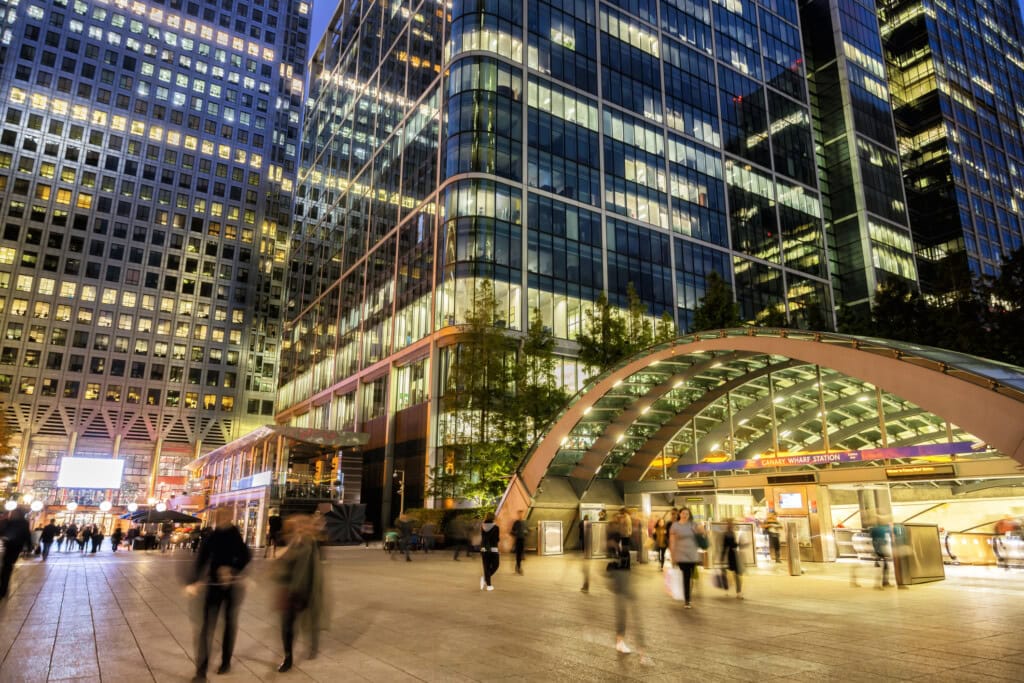
There are growing concerns that demands of AI, datacentres and air con threaten to limit the effects of decarbonisation efforts. Others argue that the demand for datacentres could help drive innovation in energy systems, as providers work to supply their own energy and connect to local heat networks, however it is critical we consider the net effects.
Meanwhile, the pace and scale of grid-modernisation has stepped up significantly. In 2025, the regulator Ofgem accelerated more than £4 billion of investment into the transmission network to help tackle supply‐chain and connectivity bottlenecks ahead of the 2030 decarbonisation deadline. However, it’s worth noting that the larger strategic grid investments won’t address local capacity constraints in the short term. Ofgem has also provisionally approved some £24 billion of investment for the 2026-31 period, the largest wave of grid upgrade funding since the 1960s. For the built environment, this means that the grid is (slowly) becoming more capable of accommodating higher loads, greater intermittency and more dynamic demand management. Battery storage is key to storing renewable energy and balancing supply and demand for UK decarbonisation, and there has been a 509% increase in UK battery storage from 2020-2025.
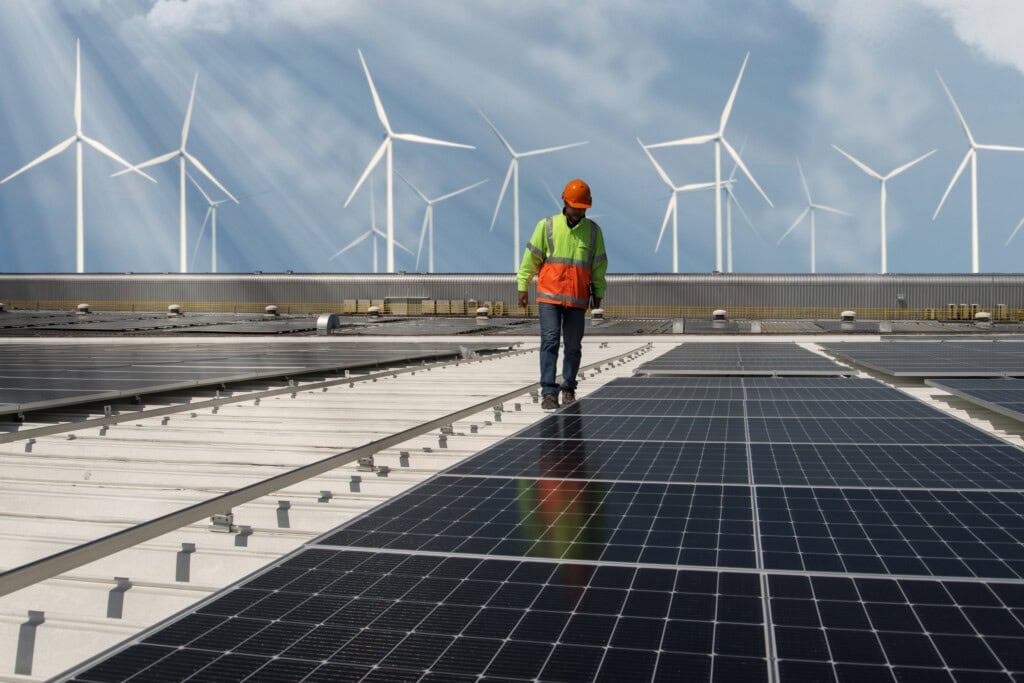
The role of the built environment is therefore becoming increasingly critical, which is why UKGBC has launched a new project around Energy Distribution Systems. In 2025, commentary from Energy Systems Catapult says work is ‘moving beyond national-scale pathway charts’ into the ‘nuts and bolts’ of how much demand flexibility, what kinds of storage, and where exactly in the system innovation yields most value.
To support this work, buildings must become assets in the electricity system, capable of providing flexibility and system value. This means that buildings are valued not just for the space they provide, but also for their potential as active assets within the energy system. Some innovators are developing AI tools to support with optimising the potential of buildings as energy assets to unlock value (for example QGEMS and Camion Energy). Many wider technology innovations are highlighted in UKGBC’s 2024 Trends Report.
Innovative projects have been moving ahead in 2025, with one example being the VOLT microgrid project led by Newcastle University, a discovery phase project exploring multi-vector microgrids (electricity, hydrogen, storage) across the North East of England. Octopus & gs8 also unveiled the UK’s largest ‘Zero Bills’ development with a ‘revolutionary microgrid’.
However, despite the investment momentum, grid capacity and queuing remain a major barrier, which is having direct implications for new developments and electrification of our building stock. Recently published research by Savills indicated that 27GW of built environment projects are caught in connection queues and unable to connect to the grid. The research also highlights that grid capacity does exist, just often not in the required places. The Government is already looking to address the issue of long connection queues and a lack of project prioritisation.
The 2025 landscape also reinforces that procurement, collaboration and system-engagement in the built environment are no longer optional extras but strategic levers for grid transition. ITNZ 24 highlights that simply deploying low-carbon technologies is insufficient and that a whole systems approach is required where markets, regulation, infrastructure and business models are aligned. For built environment stakeholders this means that procurement choices must account for time-matching, additionality and flexibility attributes (aligning with UKGBC’s Renewable Energy Procurement Guidance).
Retrofit
In 2025, retrofit remains one of the most important frontiers in decarbonising the UK built environment. The Labour Government has signalled that retrofit will play a central role in meeting national carbon reduction and energy security targets, yet delivery, and funding, continue to lag behind the scale of ambition required. Further, in the most recent Budget, the Government confirmed it would be ending the ECO scheme, designed to tackle fuel poverty and help reduce emissions. Alongside this the Government also allocated £1.5 billion of Treasury funding for fuel-poor households and seeks to support home upgrades through the upcoming Warm Homes Plan.
In response, local authorities are becoming increasingly pivotal actors, using devolved powers and regional partnerships to establish place-based retrofit pipelines. This includes Westminster Council’s new Retrofit First Policy that follows the City of London and Camden to prioritise retrofit over redevelopment. UKGBC’s Regenerative Places Programme is exploring how these local strategies can demonstrate how retrofit can drive not just decarbonisation, but also wider benefits such as community resilience, health, and employment outcomes. The Healthy Homes Hub is also leading a ‘movement’ looking at how to create healthier living environments within housing.
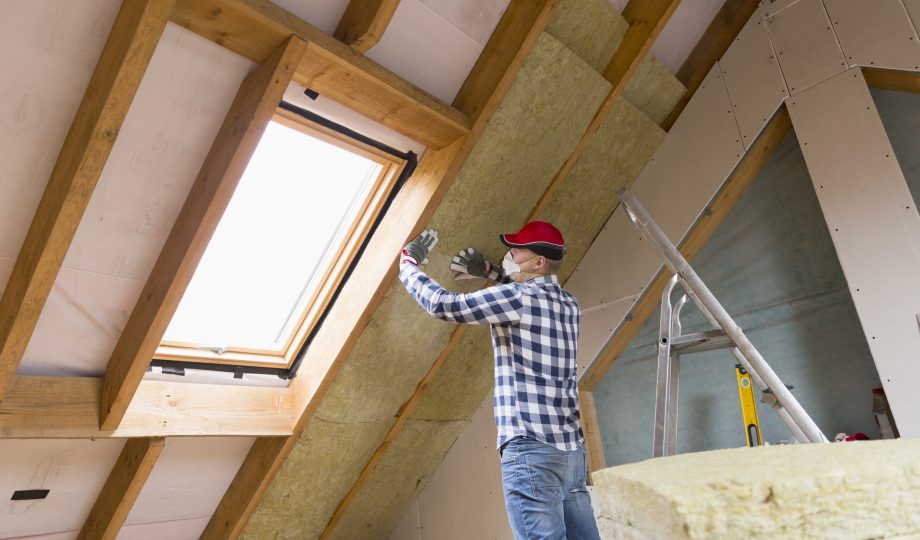
EPCs are increasingly criticised for their ability to inform retrofit decisions as they are based on standardised models rather than actual energy consumption, which is why some are using other approaches to identify the most effective retrofit measures. A recent collaborative pilot study using real-time sensor data from 121 social homes shows that relying on measured performance (rather than modelled estimates) can more precisely target retrofit works, potentially saving tens of thousands of pounds per property while reducing carbon emissions.
Momentum is also growing around innovative funding and delivery models. Building on work pioneered by UKGBC, Property Linked Finance is gaining momentum, and the Green Finance Institute is working with market participants to develop a commercial property pilot in the UK. Ecology Building Society has launched a new ‘Renovation Mortgage’ where homeowners’ interest rates reduces after energy efficiency measures are introduced, and Virgin Money and Hive’s ‘The Retrofit Boost’ mortgage provides cashback when works are complete. Outside of mortgages there are also interest free green loan products for retrofit. Large energy providers continue to refine bundled retrofit offers that combine on-site renewable generation with smart energy management, building on the success of Octopus Energy’s “Zero Bills” model. However, an overarching problem here is not the shortage of retrofit finance products, but a lack of incentives to take them – particularly in the owner occupier able to pay sector. The Government’s Warm Homes Plan is also committed to upgrading up to 5 million homes over the next 5 years.
Skills and supply chain constraints remain significant bottlenecks, particularly in domestic retrofit. Initiatives and programmes exist to support this and increase capacity, for example the Heat Training Grant, The Warm Homes Skills Programme, The Retrofit Academy, Greenworkx and GetZero. However, with 100,000 more trained workers required in this area, this is still a huge challenge. The sector is also seeing increased attention to social value, with programmes targeting local apprenticeships and retraining pathways linked to retrofit investment (for example Ashden’s Retrofit Futures project UKGBC is collaborating on).
In the commercial property sector, retrofit is becoming a strategic priority rather than a compliance exercise. Despite the delay with updated Minimum Energy Efficiency Standards, anticipation of these along with corporate decarbonisation targets means owners are accelerating asset-level transition plans. Many are leveraging digital twins, advanced energy modelling, and materials innovation to balance cost, carbon, and disruption. A variety of innovative solutions in this area can be seen in UKGBC’s Commercial Retrofit Innovation Map. At the same time, growing awareness of the embodied carbon trade-offs associated with demolition and new build is reinforcing a ‘retrofit-first’ mindset across portfolios. The sector is increasingly aligning retrofit decisions with system-level thinking, recognising that improving building fabric and efficiency reduces grid strain, enables renewable integration, and supports broader climate resilience.
Whole life carbon thinking
Embodied carbon and circularity continue to rise in prominence and become part of mainstream conversations. Consideration of whole life carbon can address both, ensuring long–term impacts are factored into decision making and requiring greater levels of supply chain engagement and early design stage consideration. However, tensions remain between short–term embodied (upfront) carbon wins (e.g. maximum material efficiency to minimise material use) and long–term considerations (e.g. resilience buffers to ensure future changes of use to avoid demolition).
Other challenges include benchmark setting, and reliable comparison between whole life carbon calculations. In order to address existing challenges in consistency and quality of Whole Life Carbon Assessments CIBSE and Construction Carbon have joined forces to launch a Training Programme in 2025. Another method to increase trust is the new RICS whole life carbon assessment software validation programme to provide confidence to industry professionals, and One Click LCA were the first to be verified in 2025.
Anecdotal evidence from our Advisory Group suggests there has been an increase in the number of infrastructure projects conducting whole life carbon assessments, and £30bn of the UK’s future infrastructure projects have pledged to decarbonise – providing another strong market signal to industry.

Consistency of embodied carbon assessment and standards could be addressed by clear national guidance and regulation. Part Z is an industry-backed proposal to amend the UK Building Regulations to tackle the challenge of embodied carbon in construction. It proposes a staged process where developers will be required to report on the whole-life carbon emissions of new developments, and later comply with embodied carbon limits. This would shift embodied carbon accounting from a voluntary best practice to a legal requirement.
Some local authorities are already taking action in this area by beginning to require whole-life carbon assessments, however they are under pressure to review these submissions without sufficient time, high-quality data, or in-house expertise. Tools like PACER by Preoptima are emerging to address this gap, helping planners automate reviews and enforce consistent carbon standards.
One contributor highlighted that there has been an increase in the number of infrastructure projects conducting whole life carbon assessments, and £30bn of the UK’s future infrastructure projects have pledged to decarbonise – providing another strong market signal to industry.
Climate resilience

During 2025, there is increasing recognition that decarbonisation efforts alone are not sufficient to create a sustainable and thriving built environment – adaptation and climate resilience have become urgent priorities, and should be addressed as part of a joined-up response. Climate hazards are increasingly disrupting the UK, and there is clear evidence of their impacts across the industry UK wide. As people and organisations become more aware of their risks and vulnerability to climate hazards, the scale of the risk becomes undeniable, especially when considering the susceptibility of supply chains and the interconnectedness and dependencies of our industry.
Organisations’ awareness has also grown due to the TCFD’s recommendations becoming embedded into the ISSB standards, requiring organisations to consider their climate-related risks in a structured way.
In response, in 2025 UKGBC spearheaded the UK Climate Resilience Roadmap – an evidence-backed roadmap that outlines how the UK built environment can adapt and become resilient to climate hazards and equipping stakeholders with the tools needed to achieve long-term resilience.
As an overarching theme of this section, a key approach to addressing different climate hazards simultaneously is through nature-based solutions and their associated co-benefits. UKGBC recommends a 3:30:300 approach: everyone should be able to see three trees from their dwelling, urban areas should strive for 30% tree canopy cover, and no one should live more than 300 metres from a biodiverse green space or park. Various innovative projects and initiatives are going on in relation to this, for example Westminster Council started work on London’s largest inner city micro-forest in Westbourne Green.
Risk mapping
Growing awareness of climate hazards and their impacts has led to the seemingly accelerated development of innovative risk mapping tools and approaches, now increasingly used both for organisations’ own assets and within supply chains (for example Smart Resilience). This also considers modelling and risks mapping by insurance sector-related businesses, sometimes developed in-house.
Partnerships around risk management platforms are gaining traction. Announcements include for example, Climate X and Equans, and Jupiter Intelligence and Arcadis. These aim to combine advanced climate-risk analytics with engineering and asset-management services to help organisations assess, mitigate, and plan for physical climate risks. Understanding of the complex mix of factors that affect risk and the preparation and response required has already been advanced through mapping tools that highlight these interconnections. Examples include ClimateJust, which overlays climate hazards with other factors such as social vulnerability information, and the Natcap – Jupiter partnership, which aims to look at physical and nature risks.
Overheating
The UK’s housing stock is largely not prepared for overheating, with buildings not designed to deal with extreme heat like in other parts of the world. A risk here is that as a result many turn to air conditioning which has significant energy requirements, which not only puts increased pressure on an already strained grid, but is also not an option for many vulnerable households. Passive solutions, as well as education and behaviour change are therefore much more favourable and avoid these challenges.
One alternative option to air conditioning which uses much less energy is evaporative cooling – for example Eco Cooling’s solutions for large scale commercial buildings. Radiative cooling can also be used to improve the efficiency or replace air conditioning, like SkyCool’s roof mounted panel technologies, or radiative cooling paints like Emissiv.
Mitigating high solar thermal gains is a key step in reducing overheating, either through flexible or temporary solutions like shutters or window films, or through preventing high summer sun, for example brise du soleil. Shaded is one example of a start-up experimenting with external awning design. Using innovative technologies that make facades responsive can also help, for example electrochromic glazing (see CoverLight), dynamic solar facades (see SolSkin), insulating window coatings (see Window Insulation) or window coatings that change opacity in response to temperature changes (see Albotherm).

Beyond innovation for windows and glazing, improving wall insulation can also help keep heat out in hot weather. Switchable Insulation has developed a reversible insulation solution which can change thermal conductivity depending on conditions to expel or retain heat.
The overheating modelling done for the CRR clearly shows that even with appropriate passive measures applied, there may be some buildings where overheating will continue to be a challenge and therefore air conditioning may be required, particularly for most vulnerable occupants. Ministers are now subsidising the installation of air conditioning in the UK for the first time, through allowing air-to-air heat pumps through the Boiler Upgrade Scheme (which can both heat and cool).
Flooding
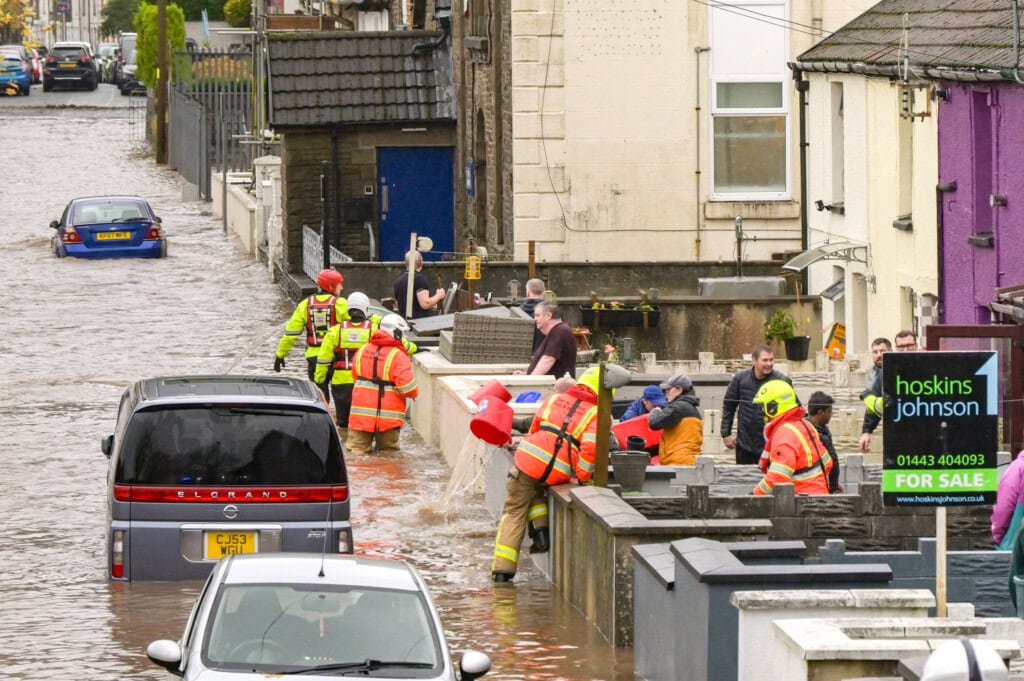
Flooding has been one of the more well-known hazards, particularly in the UK, with 1 in 4 homes at risk of flooding. In 2025, new National Flood Risk Assessment (NaFRA) Data was released by the EA followed by an updated Flood Map for Planning, and another map which looks at long-term risk.
There are ongoing efforts to develop new and innovative approaches to managing flood risk and mitigate its impact. For example, self-raising platforms, such as the Flood Adaptive Platform and the FloodSafe House, and smart water butts, which can act as a primary form of flooding defence. Innovators are also exploring ways to align flood-resilience measures with decarbonisation and resource-efficiency goals, for example, by utilising sustainable materials to make flood defences. An example of this is Andel’s FloodWall, which is made from post-industrial plastic waste and has been used as a flood defence for UK Power Networks.
As mentioned earlier in the report, nature-based solutions should be prioritised when it comes to flood prevention and mitigation measures, for example SUDs ability to manage surface water run-off and increased vegetation raising a local ecosystem’s water storage capacity.


Prevention, preparation, response, and recovery efforts from flooding can all be strengthened by effective early warning systems, which give people and organisations time to act before flooding occurs. Previsco has developed a platform that enables alerts 48 hours in advanced providing property level detail using a variety of datasets including lidar, the EA and satellite imagery.
Drought and water efficiency
Water-related risks are an increasing concern and are identified as a key hazard in the Climate Resilience Roadmap, and drought is expected to get worse with a UK-wide predicted water deficit by 2050. Built-environment professionals highlight drought, while vulnerable public services, such as healthcare and education, remain particularly exposed. In August this year, five large English regions (covering at least 16 local authorities and seven metropolitan boroughs) were officially declared to be in drought, contributing to the government’s classification of water crisis in England as a significant event.
To address this challenge, Ofwat has published its £104bn plan to upgrade the water sector. Further, in September 2025 the Government released a consultation around strengthened water efficiency standards that could see new homes fitted with water saving technologies, whilst also lifting the requirement for water neutrality to accelerate house building in water stressed areas. In the consultation the Government is also calling for innovative solutions in this area that can be used to meet water efficiency standards. There are growing calls for greater considerations of embodied water impacts and scope 3 water use.

Innovation already exists for water management and mitigation. Solutions include smart metering and ‘Internet of Things’ integration, including valves that automatically detect and shut off leaks (for example, Watergate, Wint and Quensus). For larger water systems, such as those used for flushing to control Legionella, innovative solutions can reduce water consumption by monitoring temperature and stagnation. One example is Aguardio, which optimises flushing schedules and minimises unnecessary water use. Nature-based solutions, paralleled with onsite water recycling solutions for irrigation, and smart irrigation controls (for example WeatherTRAK), can help with this.
Wildfire
Wildfires are an increasingly significant hazard that the UK must now contend with. While we continue to experience wetter winters, dryer and hotter summers are key factors for this hazard to become common. In 2025 a major incident was declared in the North York Moors national park, with 20 fire engines deployed to tackle at least 5 sq km of moorland. As of September, there had been 996 wildfire incidents in England and Wales, which marks the worst on record. This includes 83 in London, showing they are not just a rural challenge.
The built environment needs to start considering wildfire as a real risk and prepare and plan to prevent and manage. Key aspects for increasing adaptation to wildfire risks are based on urban design and planning (e.g., defensible space, vegetation management); emergency preparedness and response planning; choice of construction materials (fire-resistant cladding and roofing); landscape and vegetation management around buildings; community awareness and education; and integration of early warning systems. Organisations of all sizes must be aware and take part on future design of urban areas and creating emergency and awareness plans for existing urban landscapes.

Wildfire, alongside drought, are the most damaging hazards that impact natural ecosystems. Wildfire can cause fundamentals changes to biodiversity and ecosystem health, and if it is not properly managed, can undermine wider sustainability efforts, as well as human health and business prosperity. Mapping wildfire risk is the first step to identify the risks and come up with plans to prevent and manage wildfire risk, an example of this is the digital Technosylva.
Nature and Biodiversity

The environmental crisis puts nature and the biodiversity it supports under severe threat. Healthy ecosystems are essential for human wellbeing, economic stability, and the functioning of the built environment. Without them, a resilient and sustainable future is at risk. Nature also underpins critical services (clean water, air, food security, and climate regulation) making its protection central to life, business, and society.
There has been significant progress to mitigate and halt the damage done to nature around the world, and the built environment is key to nature recovery. In 2025, the Task Force for Nature Related Financial Disclosures published guidance aimed specifically at ‘engineering, construction and real estate’ and ‘construction materials’. Over 500 organisations have now committed to adopt (or align with) the TNFD recommendations. To support with this, some digital tools are looking at nature related risks across direct operations and supply chains (for example Natcap).
In terms of regulation, whilst there have been methodological challenges with Biodiversity Net Gain (BNG) regulation leading to the potential rollback for small sites, it does mark the first iteration towards having a strategic mechanism for nature recovery in the UK. As a result of the BNG rollout, the wider BNG market has grown with over 200 habitat banks in development, showing that the supply of nature recovery initiatives can scale to meet demand, and reinforcing that government should not reverse previous action to link nature recovery with development. Overall, we need interconnected nature strategies that look beyond individual companies or sites, for example strategic wildlife corridors and interconnected habitats.
Biodiversity is one metric that gives an indication of the health of an ecosystem, but there are other important factors to consider, adding weight to the need for a Nature Positive Framework for the Built Environment, which is currently being developed by UKGBC in collaboration with industry experts. This is further reinforced by the Construction Leadership Council’s Biodiversity Roadmap which sets out the ultimate aim to be ‘nature positive’.
Exemplary practices through partnerships are emerging. One example is the partnership between a construction company and environmental organisation, BAM UK and the Eden Project, who are working together to embed nature in every stage of BAM’s construction project.

Technological innovation can also play an important role in enabling nature recovery. This role has been delivered by tools for automated habitat mapping and condition assessments using a variety of datasets and satellite imagery (for example Gentian, Map Impact and AiDash), as well as tools to support with BNG compliance and monitoring (for example Joe’s Blooms). Sensors that detect sounds in nature to identify biodiversity in an area (for example AgriSound), and the Earth Species Project is using AI to try and decode communication between other species, which has the potential to shift our perspective when it comes to our relationship with nature more broadly.
A core aspect for thriving industry, nature and communities is balancing a building’s resource needs with the recovery required to maintain the ecosystem services it depends on. Monitoring impacts and dependencies on nature has now become regulatory in some countries and is increasingly adopted voluntarily in the UK. The development of comprehensive methodologies to assess these impacts – onsite, offsite, and embodied – has been under discussion for a few years, for example through UKGBC’s work on Embodied Ecological Impacts. For example, the Planetary Responsibility Foundation is building a methodology to quantify a building’s biodiversity impacts across the full value chain. Nevertheless, while attempting to embed biodiversity metrics into LCA software tools, challenges such as the lack of biodiversity data within EPDs and global data not representing regional or local impacts, and overall need for supply chain level data, continue to be a key barrier to robust monitoring of impacts by business.
Health, wellbeing and social value

In 2025, the Government’s updated Social Value Model (PPN 002) is embedding social value into public-sector procurement as a standard requirement, mandating a minimum 10% weighting for social value in award criteria. This acts as a strong market signal, accelerating social impact frameworks (such as the National TOMs) becoming integral to bids. Alongside this, rising attention to housing quality, cold homes and inequalities in access to nature is reframing wellbeing as a critical resilience issue, with direct links to public health costs and community stability.
These drivers are prompting widespread adoption of people-centred design and operational standards, reflected in the rapid growth of WELL Certification across commercial, education and health facilities. There is growing guidance and pilots that integrate health-focused standards into social housing retrofit and new build (ventilation, IAQ, thermal comfort). Government schemes like the Warm Homes plan and retrofit finance initiatives explicitly target both energy and health/wellbeing outcomes.
Innovation in the health space includes smart air quality and temperature sensors, which can be integrated with smart ventilation systems (for example Urecsys and Rensair). Some innovators are developing ways to filter air that requires lower energy consumption, for example by using acoustics like Vox Aeris. Others are focussing on materials, like air purification paint (for example Graphenstone), as well as using healthy, low VOC and bio-based materials. There are also solutions which help capture data from users directly so they can flag issues with their property relating to health, for example Alix.
Across the UK, place-based projects are demonstrating what this shift looks like in practice. Regeneration schemes such as Manchester’s age-friendly neighbourhood around North Manchester General Hospital illustrate a new model of collaboration between health services, local authorities, developers and community groups, with wellbeing outcomes embedded from concept stage. Local planning authorities are likewise strengthening expectations around green space, active travel and community benefit, supported by new London and regional guidance on integrating social value into planning and regeneration.

Materials and Construction Techniques

Overcoming challenges and scaling up
With the built environment’s inherently resource intensive nature, it is imperative we find alternative materials with reduced embodied carbon and ecological impacts. Built environment practitioners are always looking for new and creative solutions, but challenges around certification, risk, cost and perception remain, which is limiting the ability for innovators in this space to scale. In response to these challenges, Innovate UK has launched a new innovation network focussing on ‘Emergent Sustainable Built Environment Materials’ to try and support innovators in this space scale. UKGBC’s Scaling Initiative is seeking to identify and coordinate efforts to support with the scaling of solutions, including building materials and construction systems.
Materials
Circularity
The circular economy continues to gain profile, reinforced through the Governments recent Circular Economy Taskforce for England and Scotland’s circular economy and waste routemap published December 2024. We have already seen the steel reuse market facing some challenges, but for the circular economy to scale in construction, we need more established and reliable secondary material markets with a better timing and balance of supply and demand. This is challenging when there are such varying needs of different materials to enable their reuse, which is why material brokerage services like Material Index and Circotrade are gaining traction. Various marketplaces exist to try and automate this brokerage, but these need to scale and better integrate with each other in order to aggregate the reused material data. CIRCuIT explored this through the creation of the Material Reuse Portal, and ENKE uses AI to connect fragmented reuse hubs into an accessible interface. Pilot project have also explored at city scale reuse hubs, with the first year of the Romulus project in London and a Circular Construction Hub in Scotland aiming to overcome some of the barriers to materials reuse. Similarly the FIS Project Reuse have tackled the issue of storage by finding a facility in east London to help move the market on the reuse of ceiling tiles and light fittings.
There is also discussion of how technology can be used to match supply of reused materials to BIM model data, which is being explored for steel reuse for example HTS stock matcher. In order to maximise the benefits of this there is still growing interest in pre-demolition audits and material passport generation to create the data sets from which to identify reuse potential.
There also needs to be attention paid to how to reuse elements that were not designed to be reused, as the benefits of design for deconstruction will only be felt (if properly realised) in the future.
Beyond trying to maximise reuse, innovators have been exploring ways they can develop novel materials out of waste streams to keep materials in use. This includes recovery process innovation to extract highest value outputs from waste materials. Examples include MDF Recovery which recovers high quality wood fibres from waste MDF, turning it into nature fibre insulation. UK CLT (a UCL spin out) manufacturers cross-laminated secondary timber and glulam secondary timber from reclaimed wood, enabling long-lived structural use of surplus timber.
Agricultural waste is another area where many innovative products are emerging, for example Agreka Build, which creates an energy efficient thermal and acoustic insulation. Mycelium is another material which can utilise a range of bio-based feedstocks to create a range of built environment products, most commonly insulation through manufacturers like Biohm and Mykor.
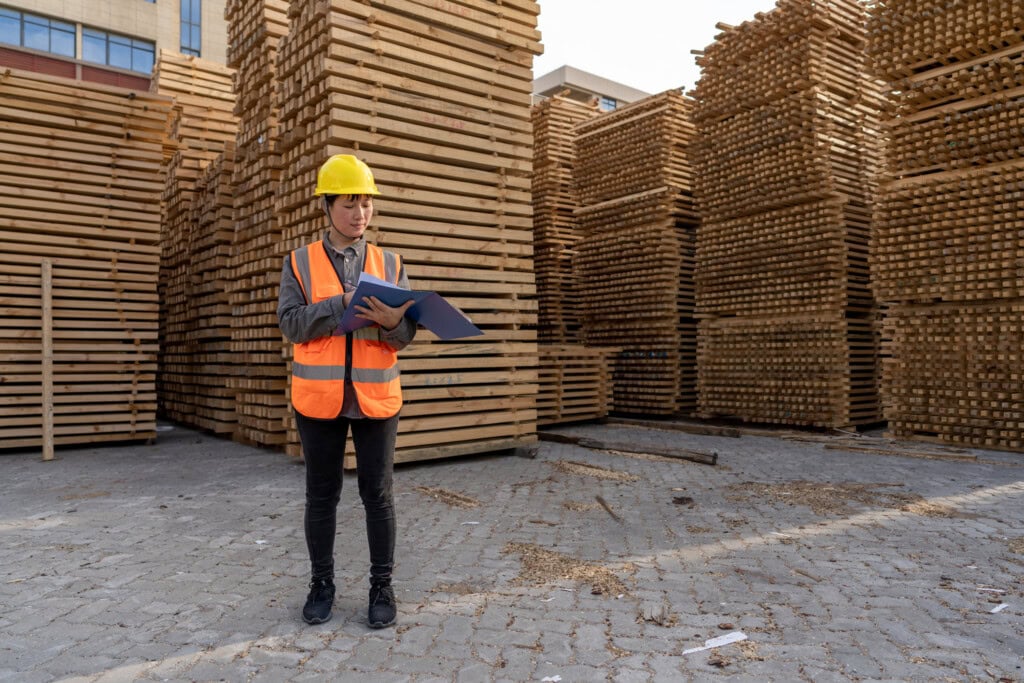
Timber
The UK Government’s Timber in Construction Roadmap 2025 is driving increase interest in home-grown wood, and Grown in Britain has also been recognised as ‘Category A’ in Government procurement. BE-ST has also been working on reshoring timber supply chains in Scotland, including the launch of a Mass Timber Centre of Excellence.
Cross-laminated timber (CLT) and glued-laminated (glulam) wood allow multi-storey mass-timber buildings with high strength. Companies like Buckland Timber (Devon) now produce UK-grown glulam beams as an alternative to imports. Notable projects have been constructed in the UK using timber, for example the newly completed Paradise 11 and the Black and White Building, which also won the Built By Nature Prize 2025.
On this topic, it is critical we use timber in the right cases and consider its use early in the design process to ensure its efficient use.
Hemp
Hemp is gaining popularity in UK construction due to its embodied carbon benefits, fast growth, climate resilience and good thermal performance. In 2025 the UK is seeing hemp move from small scale demonstrators to early commercial supply chains, supported by the UK Government reforms to support hemp farmers which are coming into effect. Recent research, led by Unyte Hemp, is also exploring the carbon capture potential for hemp and flax, including looking at how these crops improve soil heath and contribute to long term carbon sequestration within construction materials.
Organisations are looking at scaling supply, for example Indinature and East Yorkshire hemp signing a long term supply agreement for industrial hemp. Innovators, like Fibra, are also looking at simplifying the process of growing industrial hemp for farmers by acting as the intermediary between them and industry.
Hempcrete and hemp blocks are examples of use cases that area already scaling. With this growth in supply comes more opportunities for innovation, for example hemp is being used by BioTwin to create wall studs that are lower in carbon than steel studs, and is being incorporated into construction systems like Natural Building Systems and Bio-SIP.

Biochar
Biochar is made from heating biomass (like food or agricultural waste) in an oxygen free environment. From a sustainability perspective, it also locks in carbon from organic materials that would otherwise have decomposed and released carbon dioxide in the process. The IPCC estimates that biochar has a global potentially to remove 2.6 billion tonnes of CO2 a year. Momentum is growing around scaling this innovative material, as reflected in the UK Governments investment in Aston University’s Biochar CleanTech Accelerator and the announcement of the UK’s largest biochar production facility. It has a variety of uses in construction due to its insulating properties and ability to regulate humidity.
Specific use cases include:
– Biochar as concrete additive to reduce its embodied carbon and improve thermal performance, for example ecoLocked and Holcim’s biochar technology.
– Biochar is also being explore as an insulation material by Carbon Cell to reduce reliance on plastic foam insulations.
– Using biochar to reduce carbon in UK road surface, as is being explored by UK construction firm Miles Macadam.
– Biochar is also being incorporated into bio-based panel systems, for example Durra Panel.
– There is also growing interest from built environment organisations in purchasing biochar related carbon offsets, for example Bennetts Associates being the first to purchase Restord’s carbon dioxide removal through its on-farm biochar solution.

Construction systems and robotics
Companies are also looking at how they can use multiple sustainable materials and combine them into innovative construction systems to enable their simplified scaling. One example is Natural Building Systems, who act as a ‘systems integrator’ for multiple bio-based low carbon materials into a panelised system.
Despite challenges, there seems to be growing interest in Modern Methods of Construction (MMC) 2.0, and how we can do things different and learn from past experiences. In 2025, the BSI published a standard to build confidence in MMC for residential developments. There is growing realisation that the benefits of this can only be realised through building it in to designs early and making best use of digital integration.
By utilising new technologies like 3D printing and robotic fabrication, new opportunities are also opened up to enhance efficiency whilst reducing waste and transport emissions. This includes decentralised manufacturing using robotics, like Augmented Architecture which has created a MasterBuilder platform to turn home designs into ‘build-ready data’ that can then by constructed by microfactories, and in 2025 has partnered with ABB Robotics to accelerate robotic automation. Minimass is looking at ways in which concrete and steel use can reduced by using 3D printing to make prefabricated structural elements. Further, innovators are looking at novel applications of traditional materials, like the Stone Demonstrator by the Design Museum’s Future Observatory demonstrating the low carbon credentials of pre-tensioned stone, and 3D printed earth buildings by WASP.

This report has highlighted the overarching trends we are observing when it comes to sustainability in the built environment, along with associated announcements, projects and solutions. The choices we make today in design, procurement, and operation will define not only the sustainability of buildings today, but the resilience and liveability of our cities for decades to come.
It is important that industry moves into a period of solution implementation in the second half of this decade of action. As innovation without adoption and ambition without delivery is not going to result in the radical transformation we require. UKGBC is in a strong position to help support this and facilitate collaboration, for example through its new Scaling Sustainable Solutions initiative. This seeks to work with members to identify opportunities, break down barriers to implementation, more proactively connect innovators with challenge holders and share learnings from previous examples.
If you are interested in any of the above trends, want to work with us on any of the UKGBC projects mentioned, or have feedback or questions, then please do get in touch.
Acknowledgements
Authors:
– Emily-Rose Garnett, Senior Solutions & Innovation Senior Advisor, UKGBC
Editors
– Yetunde Abdul, Director of Industry Transformation, UKGBC
Contributors
– Dr Aleksandra Przydrozna, Global Retrofit Lead, Mace Group
– Alex Benstead, Senior Partnerships & Programme Manager, UKGBC
– Andres Guzman, Senior Director & Head of ESG, Europe, Tishman Speyer
– Anna Hollyman, Co-Head of Policy & Places, UKGBC
– Ankita Dwivedi, CEO & Founder, Firstplanit
– Brogan MacDonald, Head of Sustainability – Building Structures, Ramboll
– Ceri Mugford, Senior Membership Engagement Manager, UKGBC
– Clare Wilde, Sustainability Officer, UKGBC
– David Steen, Policy & Places Senior Advisor, UKGBC
– Elfrida Hamilton-Russell, Chief Impact Officer, UKGBC
– Eliot Powell, Senior Sustainability Consultant, Ramboll
– Elliot Marsden, UKIMEA Region Manager, Arup
– Emily Scoones, Head of Digital & Innovation, Ramboll
– Professor Francesco Pomponi, York School of Architecture, University of York
– Gesine Kippenberg, Senior Sustainability Advisor, UKGBC
– Gilles Alvarenga, Sustainability Associate, Cundall
– Harshita Mathur, Sustainability Designer and Researcher
– Ian Fuller, Director, BL3 Consulting
– Jack Wardale, Director, Terra Instinct
– James Warne, Building Environments Director, Buro Happold
– Jamie Bartley, CEO & Founder, Unyte Hemp
– Joanne Wheeler, Co-Head of Policy & Places, UKGBC
– Joe Pitts-Cunningham, Senior Experiential Learning & Events Manager, UKGBC
– Kirsten Fletcher, Sustainability Coordinator, UKGBC
– Kirsty Girvan, Policy & Public Affairs Senior Advisor, UKGBC
– Macarena Cardenas, Resilience & Nature Senior Advisor, UKGBC
– Marianne Juca, Digital Content & Media Officer, UKGBC
– Marta Cerdá Martínez, Marketing Officer, UKGBC
– Maria Rozanova, Marketing and Communications Manager, UKGBC
– Mike Pitts, Deputy Director – Heat and Buildings, Innovate UK
– Monica Donaldson-Balan, Senior Sustainability Consultant, Mott MacDonald
– Monisha Selvaraju, Architect & Sustainability Consultant, Envision
– Narguess Khatami, Associate Director, AtkinsRealis
– Neil Granger, Head of Sustainability, TFT Consultants
– Philippa Birch-Wood, Head of Climate Action, UKGBC
– Richard Wilson, Associate, Turner & Townsend Alinea
– Ross Boulton, Interim Sustainability Director, Landsec
– Sam Szczurek, Innovation Lead, Places for London
– Shruti Ganesh, Sustainability Consultant, SWECO UK
– Simon Matthews, Former Advisor – Advancing Net Zero, UKGBC
– Stabrag Fadil, Design Consultant, Hilson Moran
– Steven Zijlstra, Product Marketing Manager, One Click LCA
– Tom Previte, Founder, Restord
– Tosca Herson, Project Manager, UKGBC
– Yetunde Abdul, Director of Industry Transformation, UKGBC
Solutions & Advisory