Cost and carbon calculator to inform design decisions
Problem Addressed
As operational energy use in buildings continues to decrease, embodied carbon is becoming a dominant contributor to whole life carbon emissions.
However, project teams often lack:
- Early-stage visibility of embodied carbon impacts
- Tools to link carbon performance with cost decisions
- Consistent, data-driven methods to influence design at RIBA Stages 2–3
This results in:
- Missed opportunities to reduce carbon when design flexibility is highest
- Carbon treated as a secondary consideration rather than a core project driver
- Difficulty balancing sustainability ambitions with commercial viability
Case study
Faculty of Health, University of Sheffield
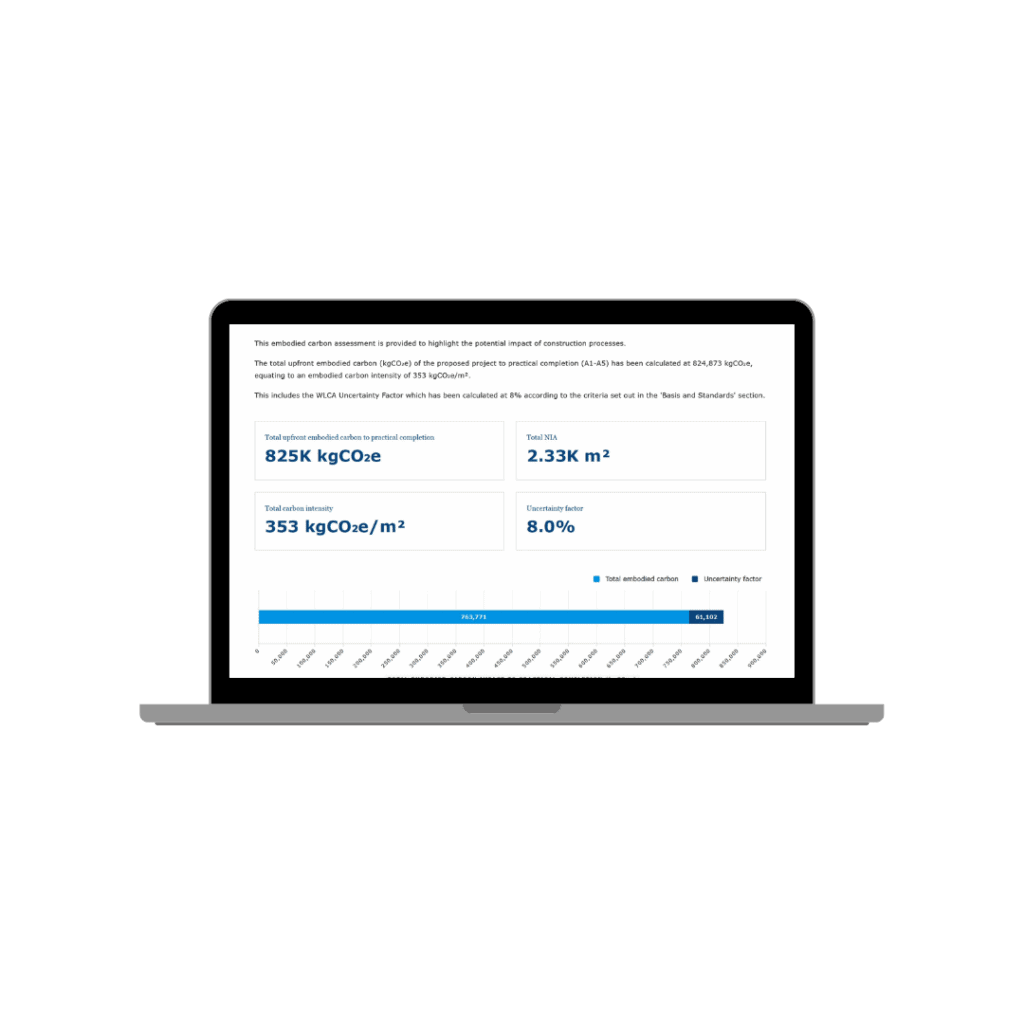
Embodied carbon assessments were undertaken at RIBA Stages 2 and 3 to inform design development and align with the client’s sustainability targets. The initial Stage 2 assessment identified an embodied carbon intensity of 844 kgCO₂e/m², alongside key carbon hotspots within the design.
In particular, the lowest floor construction accounted for approximately 25% of upfront embodied carbon despite representing only a small proportion of project cost, while concrete upper floors contributed over 10% of total embodied carbon. These insights enabled the project team to challenge design assumptions and prioritise areas with the greatest opportunity for improvement.
Through collaborative workshops, alternative design solutions were developed and implemented at Stage 3. This included rationalising the groundworks strategy and identifying more efficient fill solutions, as well as optimising the structural design of upper floors.
As a result, significant carbon and cost savings were achieved. The lowest floor construction was reduced from 535,000 kgCO₂e to 153,000 kgCO₂e, delivering a saving of 382,000 kgCO₂e and approximately £125,000. Concrete upper floors were reduced from 229,000 kgCO₂e to 113,000 kgCO₂e, saving a further 116,000 kgCO₂e and around £50,000.
Overall, the approach enabled a reduction of 121 kgCO₂e/m² between Stage 2 and Stage 3, demonstrating how early-stage embodied carbon analysis can drive meaningful reductions while improving project value.
Facts and Figures
Related
Materials Passports Platforms


Online registry of materials used in buildings


A Better Built Environment with the UK Green Building Council