
Problem Addressed
 The construction and demolition sector accounts for around 60% of total UK waste by weight. Whilst a large portion of this material is diverted from landfill, only a small proportion of building materials are directly reused, with estimates typically ranging from 2-6%. Increasing the recovery and reuse of materials ensures they are kept in use at their highest possible value, rather than being downcycled, and can provide low-carbon resources for new developments. Identification of building materials at the component level is uncommon in the industry, with most large developers and landlords lacking visibility into their assets – and therefore the value and carbon of the materials within their buildings. Our audit tool, combined with an integrated three-sided marketplace, connects the supply and demand of building materials, helping to digitalise the construction industry while reducing waste, costs, and carbon emissions at scale. One challenge is the timing, availability and sourcing of reused materials, and difficulties in joining up sites with material availability and needs.
Case Study
Material Index was instructed by Avison Young to carry out a Pre-demolition Audit of 1 Plough Place and 55 Fetter Lane. The objective was to identify and maximise opportunities for material reuse as part of the wider demolition and pre-strip-out works across three floors.
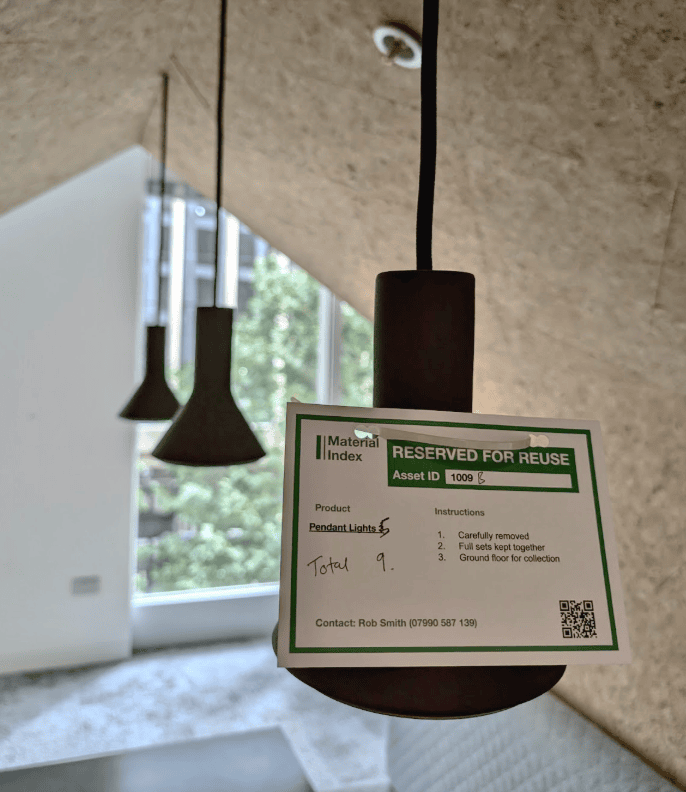
68.43 tonnes of material was identified for reuse during the audit and subsequently uploaded to the Material Index Marketplace. With support from Avison Young and the building management at 1 Plough Place, the Material Index team coordinated the sale of 23 different material types through eight reuse partners, generating total sales revenue of
over £17,000. These assets included task chairs, desks, meeting room and reception furniture to an office refi t in Leeds, ironmongery to a residential development in London and assisting a Youth Club to furnish their space via furniture donation.
The early audit and listing of these assets on the marketplace provided additional time to establish reuse pathways. This early intervention also ensured that items were removed and stored without damage – a common occurrence on construction sites due to the nature of demolition works.
__
Material Index was instructed by LLDC to undertake environmental reporting, to recoup value, and reduce waste from their ‘Old Ford’ Wastewater Recycling Centre in Queen Elizabeth Olympic Park.
MI performed a detailed audit, prepared the necessary appointment documents for the deconstruction contractor, and successfully managed the asset brokerage. This process resulted in a large volume of technical equipment being resold to eight different trade partners, generating over £12,000 in net revenue. Furthermore, a substantial number of components originally designated for waste or scrap were successfully diverted for reuse.
Facts and Figures
Learn more about Material Index

Related
Low-embodied carbon steel cladding


Cost and carbon calculator to inform design decisions


