
UKGBC calls for urgent action on retrofit and energy optimisation in new reports


With most buildings set to remain in use by 2050, retrofit – not replacement – is critical to achieving the UK’s net zero targets. The reports highlight growing pressure from tightening regulation, evolving standards such as MEES, and rising investor demand for low-carbon, high-performing assets.
Retail and logistics buildings are a key focus. Central to the UK economy, these sectors are also major contributors to emissions, with retail driving significant non-domestic energy use and logistics linked to high-emitting transport and ageing warehouse stock.
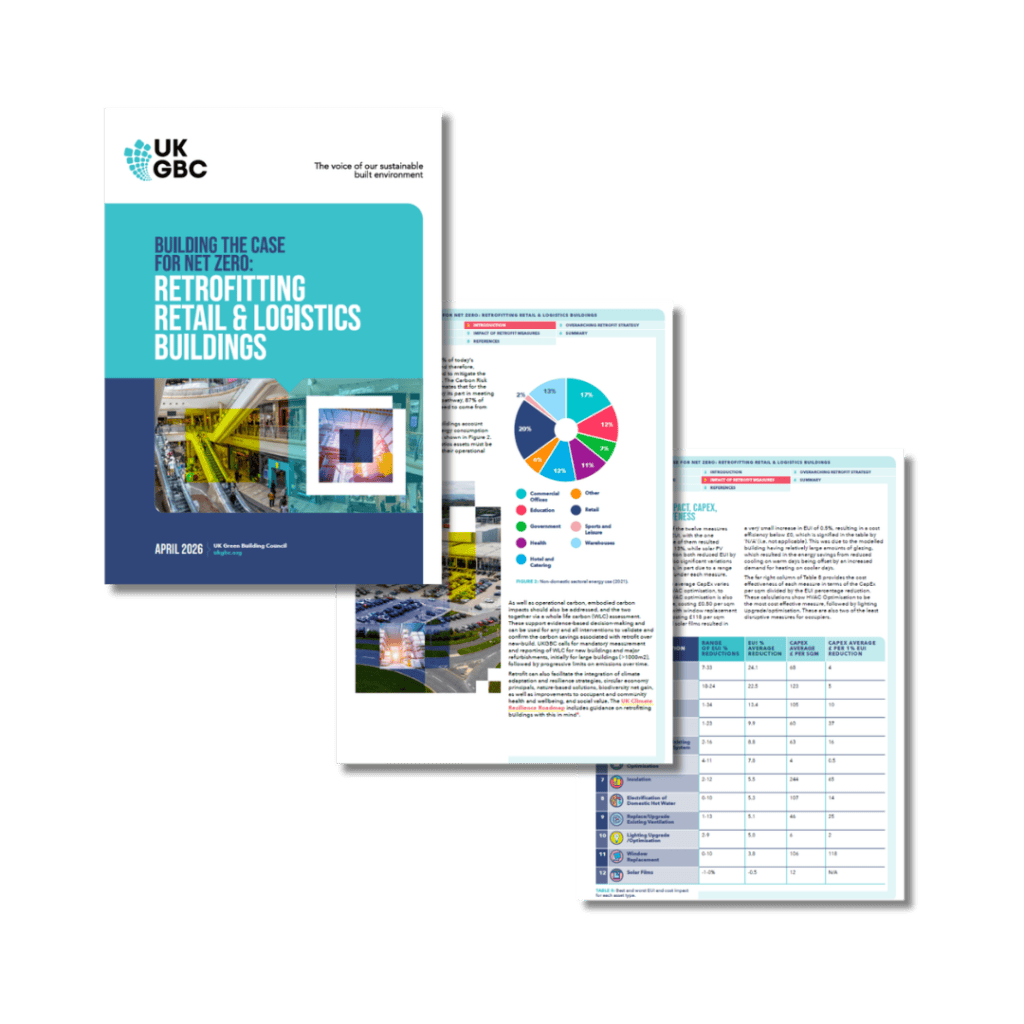
Part of the Building the Case for Zero Series, the latest in the suite covering retrofit of retail and logistic buildings, the report provides practical, evidence-based guidance for owners, landlords, occupiers and designers. It outlines measures such as HVAC and lighting optimisation, electrification, and on-site renewables alongside cost considerations, while emphasising tailored, portfolio-wide approaches rather than one-size-fits-all solutions. It also highlights the importance of integrating resilience, climate adaptation and social value to create healthy, future-ready buildings.
Retail and logistics buildings are fundamental to the UK’s economy. They also represent one of our greatest opportunities for decarbonisation. With most of today’s assets still in use by 2050, the route to net zero depends on retrofit, not replacement. This report provides guidance to help the industry act now and invest wisely.”
Yetunde Abdul, Director of Industry Transformation at UKGBC
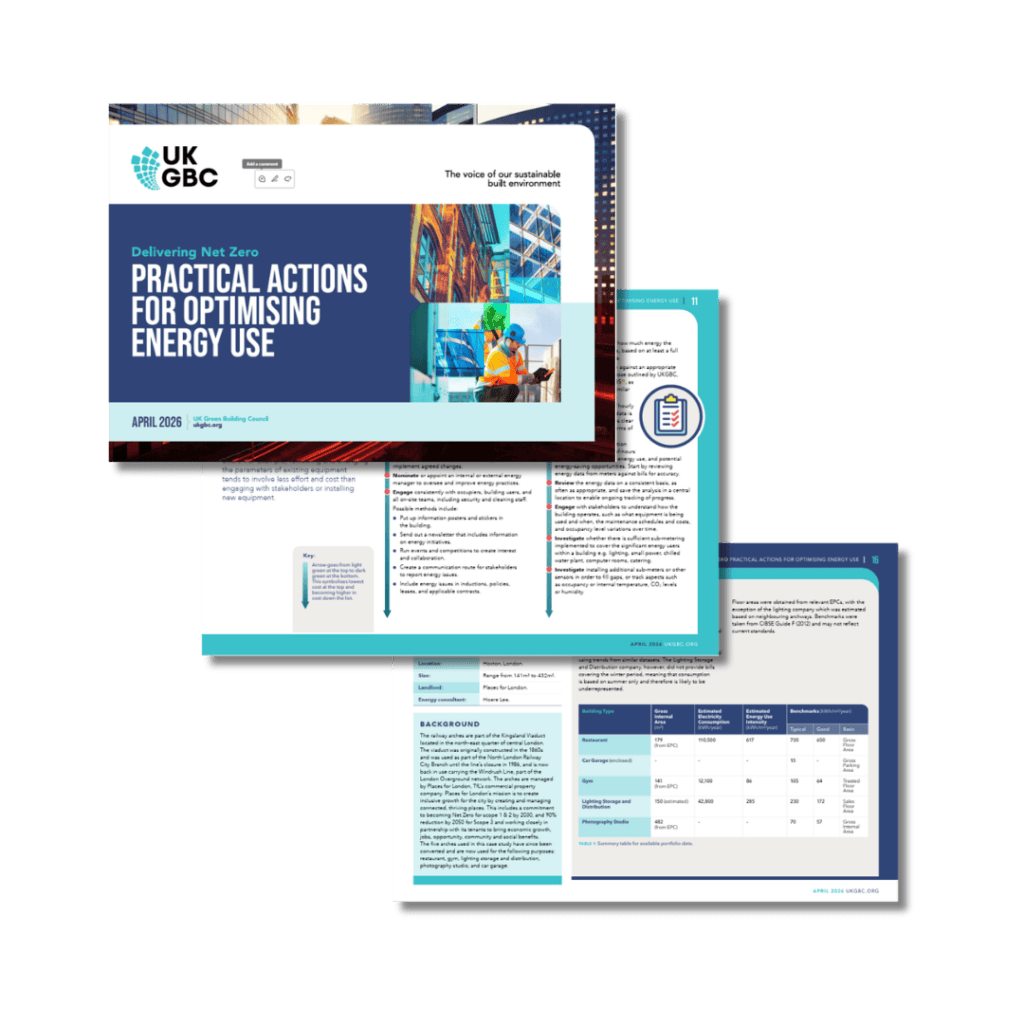
Also released, a report focuses on energy optimisation across non-domestic buildings, which account for 23% of built environment emissions from operational energy use. It sets out a clear, iterative four-step approach: engaging stakeholders, aligning incentives, using data effectively, and taking action. Drawing on real-world experience, the guidance shows how organisations can unlock meaningful energy and carbon savings through lower-cost, lower-disruption interventions.
Nearly a quarter of built environment emissions come from operating non-domestic buildings. Energy optimisation is one of the fastest and most effective ways to cut carbon, without major investment.”
Philippa Birch-Wood, Head of Climate Action at UKGBC
UKGBC is calling on organisations across the built environment to act now, collaborate across the value chain, and use this guidance to reduce emissions, improve performance, and accelerate progress towards net zero.
Commercial Retrofit


Advancing Net Zero


Related
New report shows how innovation can help transform the UK’s existing commercial buildings


New framework to help reduce and manage carbon emissions launched by UKGBC


UKGBC responds to the CCC’s Scotland Progress Report


UKGBC launches a Commercial Retrofit Innovation map

