
Holyrood's Climate Test


The 2026 Scottish Parliament election has changed the political landscape, but not the scale of the challenge. The SNP remains the largest party, but without a majority. Reform has tied for second place, the Greens have grown and Labour has lost ground. The result points to a more fragmented Holyrood, with clear implications for climate action, housing and the built environment.
For UKGBC, the key question is what kind of political conditions now exist for delivering climate policy.
A More Fragmented Holyrood
This parliament will require more negotiation, more compromise and more cross-party working. That can make delivery harder, but it also creates an opportunity: in a more divided system, government is often more open to practical, industry-backed ideas that can command wider support.
The SNP still leads, but without a majority it will need to work issue by issue. Reform’s rise suggests a more polarised debate around regulation and spending, while the Greens’ gains show that climate and nature still have political weight. Labour’s weaker showing reduces the prospect of a strong centre-left challenge, but it does not remove pressure on government to show that climate ambition can be matched by delivery.
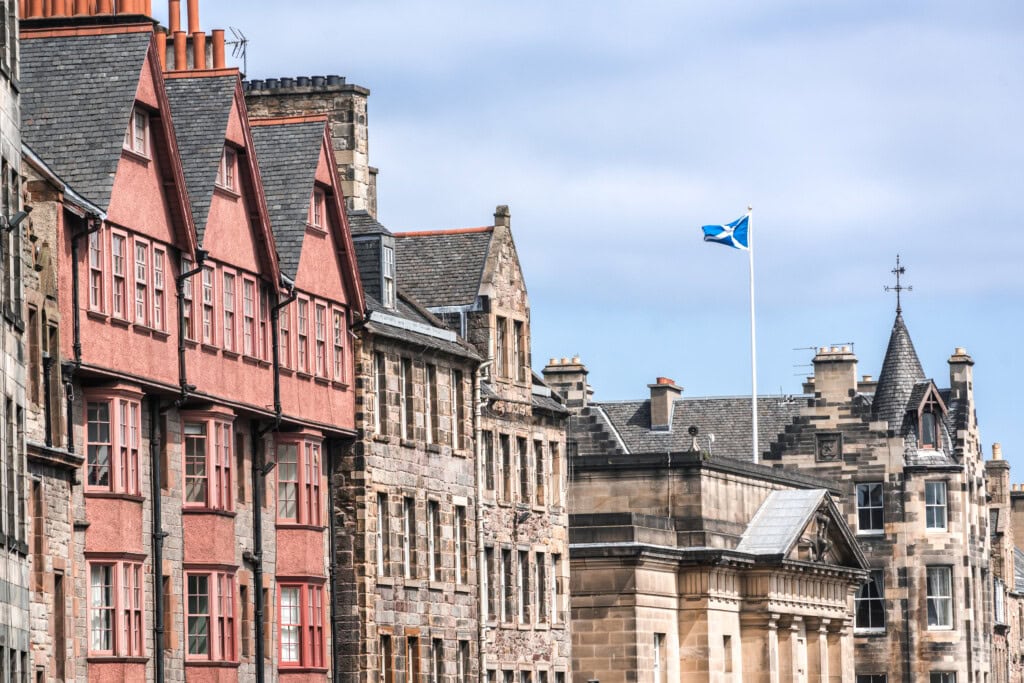
The built environment will be one of the clearest tests of whether scotland can still make progress.”
Why the Built Environment Matters
The built environment will be one of the clearest tests of whether Scotland can still make progress. Homes, workplaces, schools and public buildings are central to emissions, but they are also central to people’s lives, bills and wellbeing. Get this right, and Scotland can cut carbon, reduce fuel poverty, improve resilience and support skilled jobs at the same time.
That means the next phase of Scottish climate policy needs to focus on delivery, not just targets. Scotland needs a stronger, more stable framework for retrofit, low-carbon heat, planning and climate adaptation. It also needs to give industry the certainty to invest for the long term.
Why Industry Voices Count More in a Fragmented Landscape
In a more fragmented political environment, industry coalitions become even more valuable. Government is more likely to listen when it can see that a policy is backed by a broad cross-section of businesses, investors and built environment leaders. Our UKGBC network can help turn that collective voice into a practical case for action, showing where industry is already moving, where barriers remain, and what policies would unlock faster delivery.
That matters because climate policy is no longer primarily about setting ambition. It is about building trust that the sector can deliver. Our network is well placed to help government understand what is feasible, what is ready now, and what needs policy support to scale.

What the Next Government Should do
The next Scottish Government has a chance to show that climate action can still be practical, credible and politically durable. To do that, it needs to move quickly from ambition to implementation.
For UKGBC, that means three priorities: a clear and funded plan for decarbonising existing buildings, stronger policy certainty on building standards, heat and embodied carbon, and closer integration of climate mitigation, adaptation and nature recovery through planning and regulation.
Long-term delivery also needs long-term support. Short funding cycles and one-off announcements will not transform a sector that invests over decades. If Scotland wants to maintain climate credibility, it needs to create the conditions for public and private actors to invest with confidence.

A Chance to Reset Delivery
For UKGBC, the message is simple: Scotland should not slow down.”
The election result shows that climate and environment issues still matter to voters, but that support is now spread across a more complex political landscape. That makes the next Parliament more challenging, but it also makes stable, practical climate policy more valuable. For UKGBC, the message is simple: Scotland should not slow down. It should use this moment to sharpen delivery, strengthen collaboration and put the built environment at the centre of climate action.
Scotland still has a real chance to lead. In this more fragmented political landscape, the test will be whether ambition can be translated into action, with industry helping to make the case for what is workable and ready now.
UKGBC Scotland
Related
A year of UKGBC Scotland, what have we achieved?


Addressing fuel poverty with data-driven retrofits


Why UKGBC Scotland? Reflecting on the Scotland launch


Lessons from Conference Season 2026

