
COP 30 & UK Budget: 7 Key Insights Shaping the Built Environment

Our recent webinar brought together leaders across climate, finance, housing, and the built environment to unpack COP30, the UK Autumn budget, and the encircling tumultuous political context. Despite policy challenges and intransigence, and some critical gaps which were highlighted, the discussion lasered in on some areas of real momentum.
1. Global Climate Signals
COP30 highlighted a widening gap between climate ambition and action. Political signalling was muted – fewer than 25% of world leaders attended the opening – and negotiations failed to secure a credible fossil fuel phase-out. Simon McWhirter, CEO at UKGBC noted, “With little progress made in recent years, the path to net zero by 2050 is now steeper and harder to achieve. We need far more ambitious policy, but it’s not coming – instead we have foot-dragging and mixed messaging to the business and investment communities.”

The Climate Action Tracker projects warming of 2.6°C, far above the 1.5°C limit we need to frame our actions around, underscoring the gap between ambition and implementation. Yet the energy transition is advancing in some areas: renewables investment is surging, with solar alone attracting £554 billion globally in 2024, driven as much by energy security as decarbonisation. Increasingly, meaningful COP progress comes from sector-led coalitions and initiatives outside formal negotiations.
COP30 also spotlighted resilience, recognising that buildings must not only cut emissions but withstand climate impacts, driving a global push for sustainable and resilient design.
2. Buildings and the Action Agenda
Buildings were central to COP30’s Action Agenda. With a lot of progress on the aims to double and triple the deployment speed on energy efficiency and renewables , and 80% of updated national climate plans now include building-sector mitigation measures, underscoring the built environment’s critical role as a primary solution in global decarbonisation.

The UK, however, continues to lag. Early findings from the forthcoming update to the UKGBC Whole Life Carbon Roadmap suggest the UK is drifting off track for net zero by 2050, driven by policy reversals and stalled regulation since COP26. Built environment emissions have dropped 14% since 2018, but that’s far short of the 24% reduction needed to stay on course. While UKGBC members drove sector-led initiatives at COP, including linking finance and nature, domestic policy remains misaligned with rising international ambition.
3. UK Policy and Budget – reflections from the member webinar
The gap between the UK’s global climate narrative and domestic action is widening. Speaking during the webinar, David Adams, housing expert and Consultant for Policy & Places at UKGBC, highlighted the implications for housing: “Scrapping the long-running ECO programme was a major shock. Its £1.5 billion replacement is time-limited and leaves the sector without long-term stability.”

The Warm Homes Plan promises significant investment, but details remain scarce, and concerns are growing that it will continue to prioritise heat technologies over holistic energy efficiency; making later stage decarbonisation more challenging and more expensive in future years. Delays to the Future Homes Standard risk locking in more new homes that will need costly retrofits later. Electricity and gas price rebalancing is welcome, supporting heat pump uptake, but it does little to offset the broader uncertainty across the sector.
Investor Confidence and Market Trends
Despite political turbulence, long-term investors remain confident in the transition. There are strong expectations for sustainable asset growth, and major financial institutions continue to adjust strategies to reflect climate risks.
During the webinar, Simon Peacock, Head of Strategic Clients & UK Regions at JLL, observed, “Investors are focused on long-term risk. If you’re investing for 10–15 years and beyond, the data is clear, and capital is moving accordingly. Momentum feels strong.” Retrofit is emerging as a top investment priority, essential for future-proofing assets and cutting operational costs amid rising embodied carbon pressures. Capital is flowing back into UK offices, where energy and performance upgrades enhance resilience, though regional disparities persist without government support.

Politics and Regional Leadership
Climate policy is increasingly polarised. Upcoming devolution reforms will give regional leaders more power, some sceptical of national net zero goals. Yet this shift creates opportunities: reframing climate action around jobs, skills, investment, and energy security can build cross-party support.
Rt Hon Chris Skidmore OBE, Former UK Energy Minister and Chair of the Climate Action Coalition, emphasised the need for a new approach, “We need to reframe the narrative, finding common ground and shared language… skills, job security, and place-based approaches should anchor our messaging.” Local leadership is already outpacing national government in retrofit, skills, and resilience. One idea gaining traction is “Project 650”: a community-level retrofit or green investment project in every parliamentary constituency, creating visible, local, and politically durable climate benefits.
7. Demand-Side Flexibility, AI, and the Next Phase
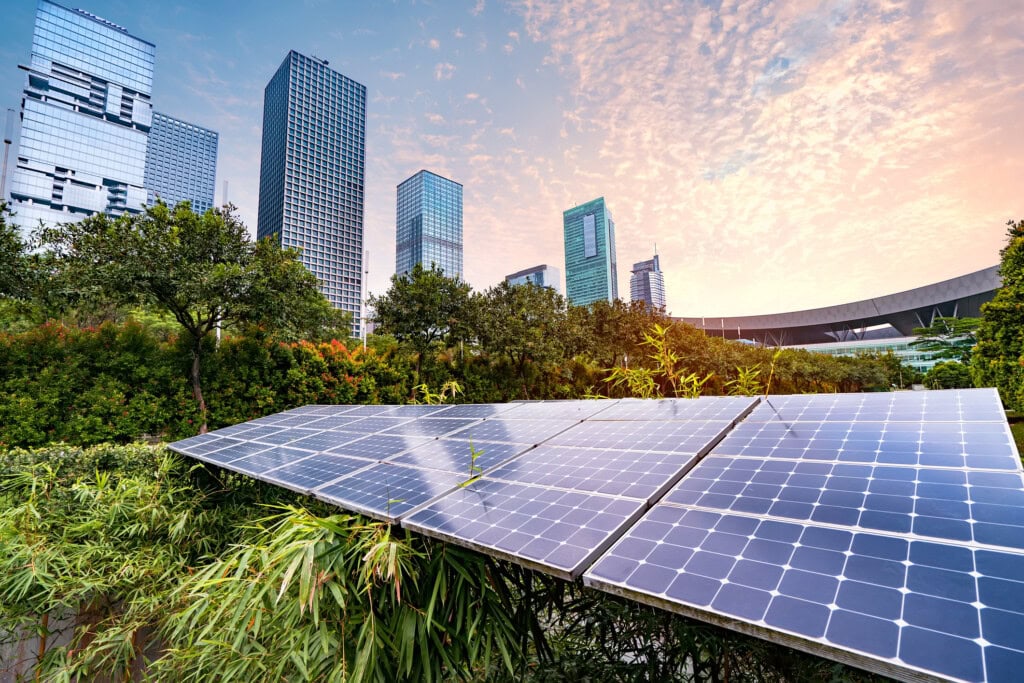
The discussion closed by highlighting where the next big opportunities lie. Demand-side action now accounts for over half of the net zero pathway, and innovations in AI, smart systems, and virtual power plants are transforming how buildings interact with the grid. Industrial estates and commercial sites are leading the way, with rooftop solar and EV infrastructure scaling rapidly.
Chris noted, “AI will consume energy, but its optimisation potential outweighs that… combining net zero, the energy transition, and AI creates a virtuous circle of change.” The convergence of net zero goals, clean energy deployment, and AI innovation could create a powerful feedback loop of investment and progress, positioning the UK to capture new momentum if policy and incentives align.
A Difficult Moment, but Real Momentum to Harness
One message came through loud and clear: global momentum is building. Sector-led coalitions are driving innovation, investors remain committed to climate-aligned assets, and local leadership is accelerating change. Yet the UK faces a widening gap between its international positioning and domestic delivery. Closing that gap, through consistency, clarity, and collaboration, will be critical to unlocking the economic and social benefits of the transition.
Take Action
Connect & Collaborate: Build relationships that drive real-world change.
- 13 Jan, Manchester: Regenerative Places Framework – Collaboration Cafe
- 20 Jan, Online: Innovation Forum: Risk, Insurance and Warranties
- 27 Jan, Online: Unpacking the Warm Homes Plan
- 3 Feb, Online: Innovation Showcase – Supply Chain Decarbonisation
Learn & Grow: Empower your people. Future-proof your organisation.
- 19 Jan, Online: UKGBC’s Learning: An Introductory Webinar
Lead & Influence: Shape the future of the built environment.
- Help UKGBC advocate for clear, consistent policies across housing, energy, and building standards to ensure the UK stays on track to net zero by 2050. Get in touch with Policy@ukgbc.org
- And if you’re not a UKGBC member yet; join us in our campaign for a more sustainable built environment.
Policy & Advocacy


Related
Membership Opportunities (October 2025-December 2025)


Building the Movement ahead of COP28


UKGBC signs letter in support of the BNG requirements for small sites

UKGBC Trends Report signals growing focus on resilience across the built environment

