
Building the Coalitions We Need to be Brave on Sustainability in Challenging Times
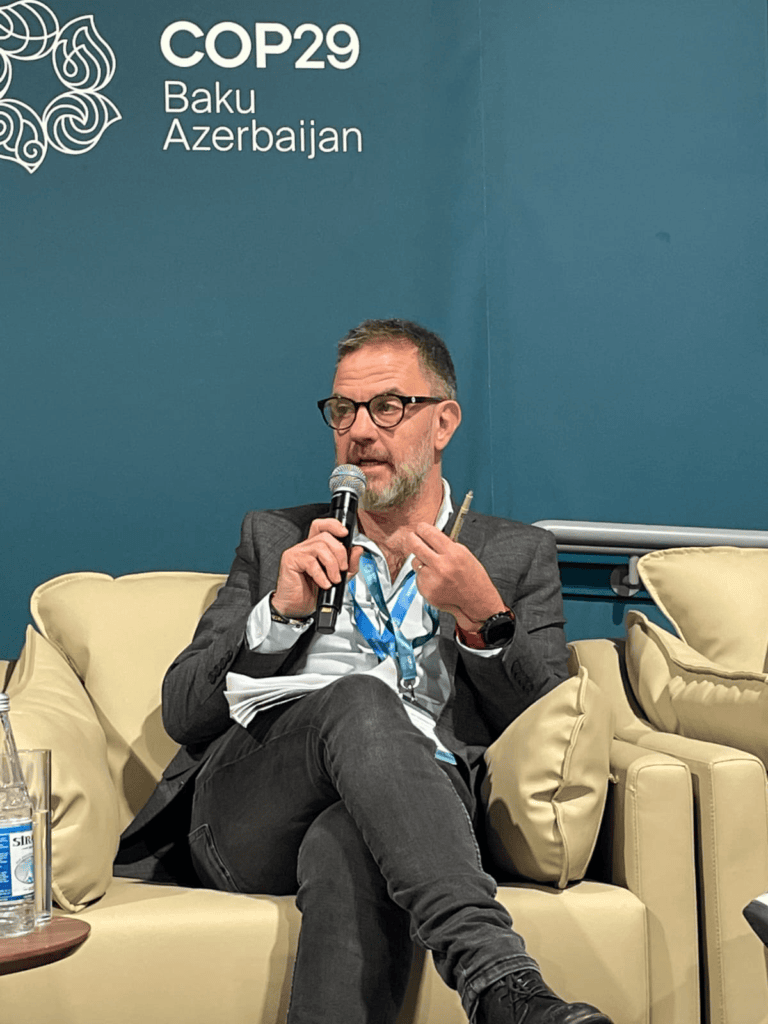
I’m approaching the end of my first year as Chief Executive of UKGBC, so I’m deep in reflective mode. Not just on the past twelve months, but on what must now change if we are to deliver the future our sector demands. It’s a hackneyed statement now from professional environmentalists, but the urgency is increasing apace in the face of the escalating crises; and all at a time where we face truly awful background contexts of strife and super-challenging market conditions.
That interlinked polycrisis that’s in front of us – of accelerating climate impacts, biodiversity collapse, and widening social inequality across the UK and beyond – demands a response that is equally far-reaching. And a response that is genuine, brave and cemented in a long-term vision.
Within that challenge lies a significant opportunity to shape and demonstrate that bravery and leadership – one that UKGBC – and our members – are uniquely positioned to lead. We do this by bringing our core superpower of convening and fostering best practice, and driving market collaborations to solve these big challenges.
From Pockets of Progress to Widespread Change
Across the UK, there is no shortage of ambition, and really good work. UKGBC members continue to lead –delivering exemplar buildings, pioneering low-carbon solutions, and shaping progressive policy across carbon, nature, planning regs and beyond.
But progress across the country remains overly fragmented, and we’re still seeing isolated pockets of excellence, rather than consistent, industry-wide and sector-wide transformation at pace. And that is the gap we must now close; and which occupies us at UKGBC.
Through our refreshed 2030 strategy, we’re sharpening our focus on moving the industry decisively from intent to action. That means scaling what works, aligning efforts across the sector, and embedding sustainability into the core of decision-making – from boardrooms to planning systems. Supporting the implementation and operationalisation of progressive actions by our members – and beyond – to ensure that we’re driving change ‘in the here and now’. And, crucially, helping make the business case for that accelerated action.


Turning Insight into Action
Over the past year, we’ve strengthened the foundations for this transition, working with our members to define not just what needs to change, but how to deliver it.
Our four-strong suite of foundational frameworks – our UKGBC tesseract – provides a clear and practical roadmap for the built environment:
- Net Zero Whole Life Carbon Roadmap – which has been refreshed with this year’s progress report – outlines how to measure and reduce carbon emissions across the full lifecycle of buildings and infrastructure on the path to a net zero built environment by 2050. Our upcoming Whole Life Carbon Framework, is the essential scaffolding that will enable industry to decarbonise.
- UK Climate Resilience Roadmap – sets out the urgent actions needed to prepare the built environment for current and future climate hazards and achieve long‑term resilience.
- Framework for a Nature‑Positive Built Environment – defines how the sector can move beyond minimising harm to actively restoring biodiversity through clear pathways and whole‑lifecycle action.
- Regenerative Places Framework (launching in September 2026) – explores how place‑based retrofit and development can deliver wider regenerative benefits for communities, ecosystems and local networks.
Individually, these are powerful tools. Together, they form a coherent system, helping organisations understand what action is needed, when, and by whom.
Our priority now is supporting widespread adoption – working with members to apply these approaches in practice, demonstrate their value, and scale them across assets, portfolios, places and supply chains.


This exemplifies Ukgbc’s role: not just identifying challenges, but defining, testing and delivering new models for the future.”
A More Holistic Model: Regenerative Places
One of the clearest signals of where the industry is heading is our work on Regenerative Places. Evolving from – and retaining – our work on large-scale housing retrofit, this approach reframes buildings not as isolated interventions, but as catalysts for broader societal benefit.
It connects decarbonisation with health and wellbeing outcomes, retrofit with local economic growth and skills, and developments with access to nature and community value.
And critically, it does so at a place-based, hyper-local level. This is how we move beyond sustainability as a compliance exercise, and towards a built environment that actively contributes to a thriving society.
This exemplifies UKGBC’s role: not just identifying challenges, but defining, testing and delivering new models for the future. Not just the long-range aspirational end-point, but the current reality of how to build the transition into business planning.
Policy Progress – but a residual Need for Long-Term Certainty
There are some encouraging signs of progress in policy. The government’s Warm Homes Plan signals growing recognition of the need for a long-term retrofit strategy, while the Future Homes Standard presents a real opportunity to raise the baseline for new development – improving energy efficiency and accelerating the deployment of renewables.
UKGBC and our members have helped shape these shifts – bringing evidence, insight and practical solutions into Ministerial policy discussions through our seats on the government’s expert panels. But we must go further. Especially within the area of commercial buildings, where policy clarity and ambition remain absent.
Along with policy, key to all of this is unlocking green finance, an area UKGBC is focussing on. What industry needs now is certainty, consistency and long-term commitment – policy frameworks that extend beyond electoral cycles and provide the confidence required to invest, innovate and scale.
This is where our role as a convener and critical friend to government is more important than ever.


Leadership: The Critical Enabler
Breaking the cycle of short-termism requires change at every level.”
If there is one consistent barrier to progress, it is not a lack of solutions, it’s a lack of brave leadership. Breaking the cycle of short-termism requires change at every level:
– political leadership that prioritises long-term outcomes
– organisational leadership that embeds sustainability into strategy
– individual leadership that drives change within businesses and across value chain
Over the coming years, UKGBC is updating and scaling its work to drive transition across this spectrum –equipping organisations and professionals with the skills, evidence and confidence to act.
Because ultimately, widespread and ultimately systemic change happens when leadership is distributed – and when people are empowered to act wherever they sit.
From Convening to Catalysing Change
UKGBC has long been known for its ability to convene. We bring together developers and designers, investors and local authorities, policymakers and practitioners – creating the conditions for collaboration across the built environment. But convening is only the starting point.
Our role is to catalyse action by:
- co-creating those policy solutions for – and with – government
- developing frameworks that guide industry practice
- showcasing what good looks like through real-world examples
- supporting members to implement change at scale
It is this combination – insight, collaboration and delivery – that defines our impact.
For UKGBC, the priority is to mobilise the action, voice and influence of our members – and to use that shared strength to drive systemic change.


What this Means for You
If there is a single ukgbc priority for the years ahead, it is ever-better harnessing of the collective strength of our membership.”
If there is a single UKGBC priority for the years ahead, it is ever-better harnessing of the collective strength of our membership.
If you’re already part of UKGBC, we thank you. Your role is critical – you can:
– Adopt and apply our frameworks and guidance across your projects and portfolios
– Share your experiences to help scale what works
– Engage in our programmes, working groups and forums to shape the next phase of industry transformation
– Add your voice to our policy engagement, helping us advocate for the changes needed.
And if you are not a member, now is the moment to get involved.
Join a network that is not only defining the future of the built environment, but actively delivering it. Because the transition ahead will not be delivered by any one organisation alone. It will be delivered by a coalition—aligned, ambitious, and committed to action.
That is the role UKGBC exists to play. And that is the opportunity in front of us.
Become a UKGBC Member


Get Involved


Related
High Hopes, Half Built: Starmer’s Built Environment Legacy


Joined-up by Design: Closing the Gap between Evidence and Action


A Domestic Heat Pump: A Year in Review


Membership Opportunities (April 2026-September 2026)

