
To succeed, the Warm Homes Plan must put resilience centre-stage


This week, the Government set out its Warm Homes Plan, representing the most significant investment in our housing for a generation. Its primary aim is clear: cut energy bills and carbon emissions by retrofitting the UK’s notoriously draughty homes. It also, encouragingly, acknowledges that upgrades must deliver ‘year-round comfort’ and begin to address overheating through low-cost, practical interventions. This signals a welcome recognition that Britain’s homes must work for people in every season and not only be cheaper to heat in winter. The challenge and opportunity now lie in ensuring these ambitions translate into tangible, resilient outcomes alongside deep decarbonisation.
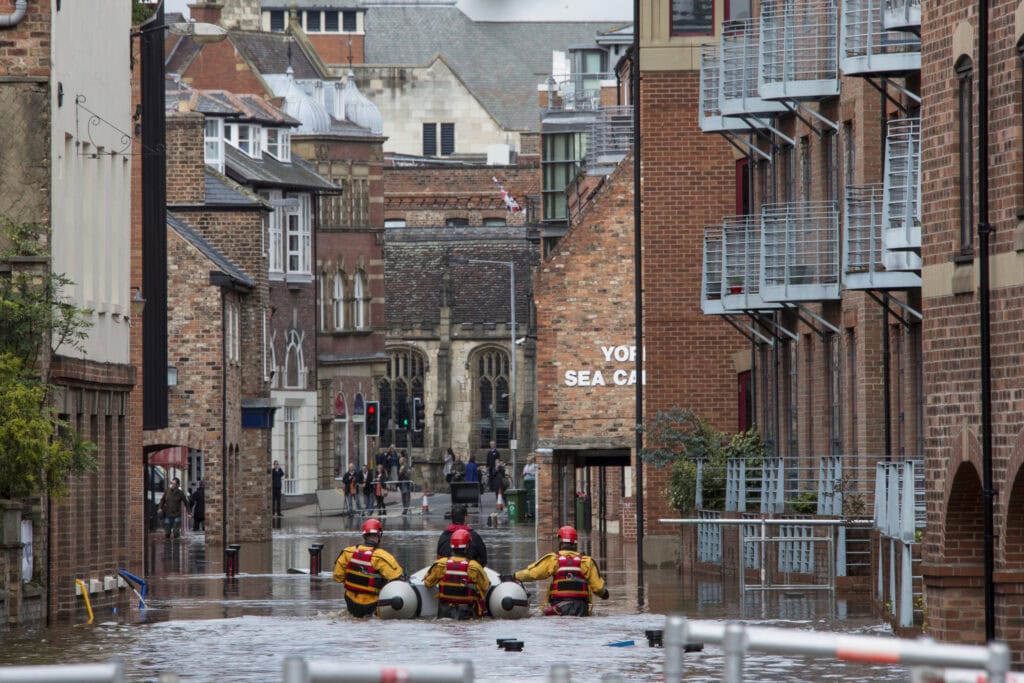
With Met Office figures showing 2025 as the UK’s warmest year on record, the evidence could not be clearer that the climate crisis is accelerating. Homes across the country are overheating in summer, flooding in winter, and suffering damp and mould all year round. These are not isolated issues, but parts of the escalating climate crisis.

As Emma Howard Boyd CBE, who led the London Climate Resilience Review, puts it:
Making our homes energy-efficient and low-carbon is a vital step toward a better future. By integrating climate resilience – like flood protection and cooling – directly into the Warm Homes Plan, we create a win-win scenario: homes that are safe and comfortable to live in while being more affordable to run.”
The risks are stark. The Climate Change Committee’s 2025 Adaptation Report projects that heat-related deaths could triple by mid-century without urgent action. Poorly ventilated airtight homes will trap heat. Inadequate moisture management will exacerbate damp and mould. And flooding will cause devastating disruption if we do not adapt homes to withstand it. These failures would undermine the very purpose of the retrofit programme: to improve comfort, health and security for households.
The solutions are well within reach. Practical, low-regret measures can be integrated seamlessly into retrofit: shading and ventilation to manage heat, flood resistance for homes in at-risk areas, and water efficiency to prepare for drought. It is heartening that the Warm Homes Plan outlines the inclusion of passive cooling measures, such as internal blinds, shutters, reflective window films, and effective building materials, especially within low-income and social housing schemes. This provides a foundation we can build on together, while also integrating nature-based solutions such as green roofs, rain gardens and street trees that reduce both flood and heat risks while boosting biodiversity and wellbeing. As Howard Boyd says: “Resilience is not an add-on. It’s about creating homes that actually work for people all year round, being cool in summer, warm in winter, and dry when it floods.”
The Government’s commitment to exploring overheating metrics within Energy Performance Certificates marks constructive progress. The next step is to embed adaptation considerations systematically within retrofit programmes so that every funded upgrade supports adaptation as well as efficiency. Doing so would unlock far more than energy savings. It would cut NHS costs, protect the most vulnerable, and help communities withstand the physical shocks that climate change will continue to bring. It would also deliver wider social benefits including cleaner air, greener streets, and stronger, healthier communities.
Delivering on this shared ambition will require government, local authorities, industry and civil society to work together.
What’s needed now is coordinated action and sustained collaboration.”
We know the risks, and we know the solutions. What’s needed now is coordinated action and sustained collaboration. The Warm Homes Plan provides the right foundation to future-proof Britain’s housing and safeguard people’s lives and livelihoods. By working together to integrate resilience fully into delivery, we can ensure that the retrofit revolution creates homes that are not only low carbon, but truly climate-ready.
Unpacking the Warm Homes Plan: Member Town Hall and Discussion
UK Climate Resilience Roadmap

The Warm Homes and Buildings Plan: UKGBC Policy Team Analysis
Related
BuildingLife Campaign: How to Move from Climate Risk to Climate Resilience


UKGBC responds to Ed Miliband’s UN General Assembly Statement


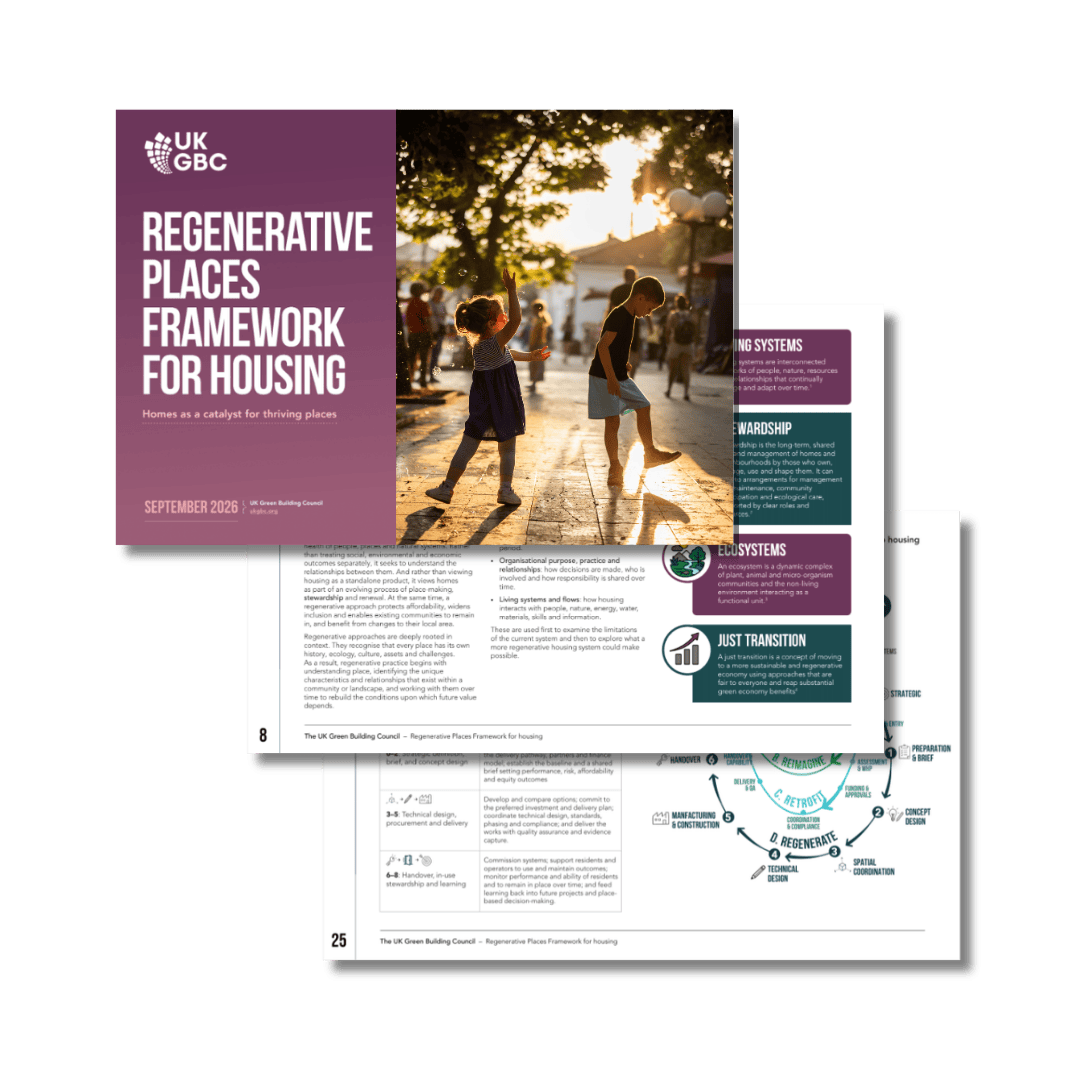
UKGBC launches Regenerative Places Framework for Housing

New Term, Fresh Start: What we need from the new government’s first year

