
New UKGBC report highlights barriers to scaling sustainable solutions and sets out practical steps to accelerate adoption
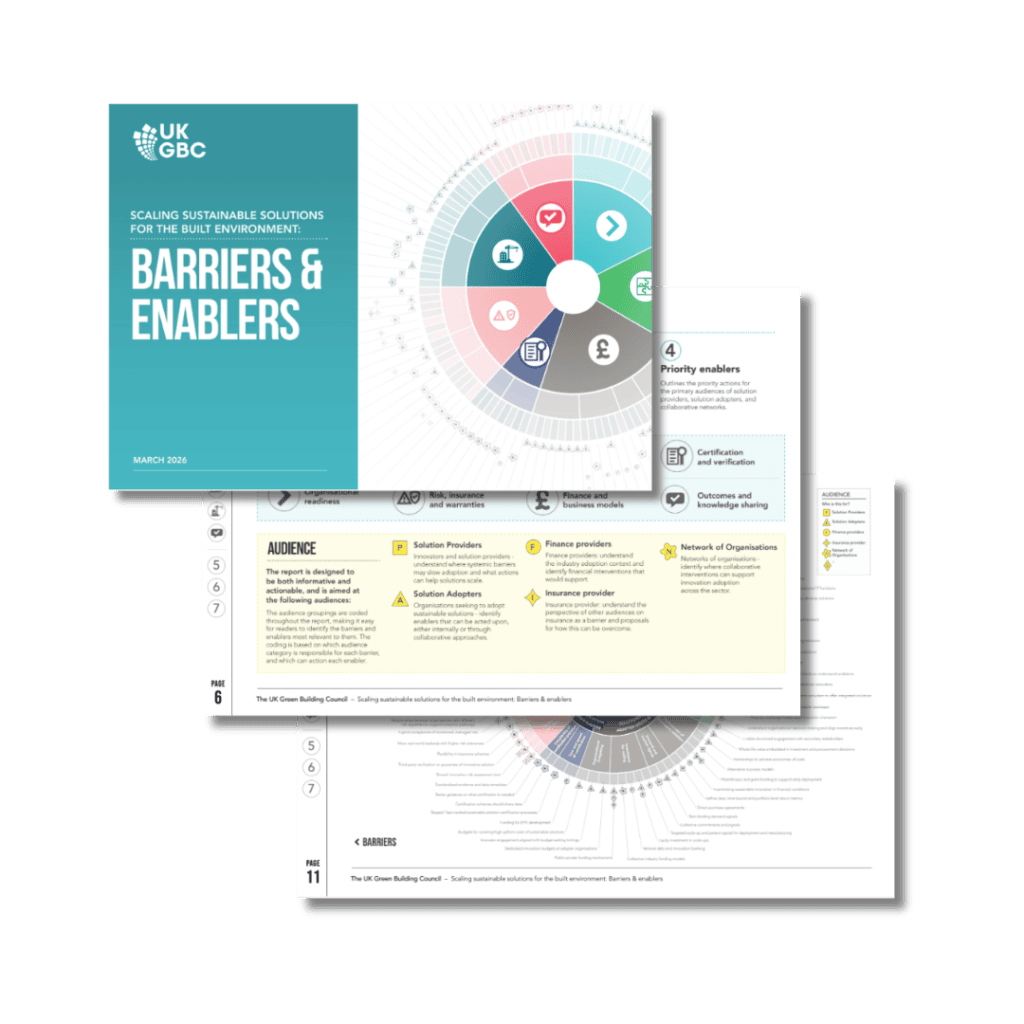
Many of the sustainable solutions needed to deliver a net zero, nature-positive and climate-resilient built environment already exist, but systemic barriers are preventing them from scaling, our new report warns. Without faster action, the industry risks higher long-term costs, missed opportunities, and slower progress towards net zero and more resilient places.
The report, Scaling Sustainable Solutions for the Built Environment: Barriers & Enablers, finds that innovations across materials, digital technologies, construction systems and business models are often held back by fragmented decision-making, risk-averse cultures, misaligned procurement models and limited access to scale-up finance.
The report is the first output of UKGBC’s Scaling Sustainable Solutions Initiative, which aims to accelerate the widespread adoption of sustainable solutions across the built environment.
The report draws on insights from a broad range of stakeholders, built environment practitioners and industry experts, identifying seven key themes: organisational readiness; adopter needs and solution fit; finance and business models; certification and verification; risk, insurance and warranties; delivery and implementation; and outcomes and knowledge sharing. Across these, it sets out 77 actionable enablers, providing practical guidance to accelerate adoption.
Key findings from the report include
- Barriers to scaling are largely systemic rather than technical: Organisational processes, procurement practices, financing structures and risk frameworks often slow adoption more than technological limitations.
- “Pilotisation” is slowing progress: Pilots are often not designed with clear routes to portfolio-wide adoption. Without defined success criteria, scaling pathways and procurement alignment, innovation stalls.
- Clear demand signals and better alignment between adopters and solution providers are critical: Solutions are more likely to scale when they meet the operational, financial and delivery needs of organisations implementing them.
- Evidence, certification and risk frameworks build market confidence: Demonstration projects, trusted verification systems and clearer approaches to insurance and warranties can help reduce perceived risk.
- Collaboration is key: Scaling sustainable solutions requires coordinated action across the value chain. Collaboration between developers, asset owners, contractors, manufacturers, investors, insurers and policymakers is essential to unlock widespread adoption.

The report highlights a number of initiatives already helping to address these challenges, including collaborative programmes, demonstration projects and regional initiatives aimed at strengthening supply chains and supporting innovation adoption.
UKGBC is calling on organisations in across the built environment to work together to create the conditions needed to scale sustainable solutions more rapidly.
Yetunde Abdul, Director of Industry Transformation at UKGBC, said:
At a time of rapid change, the built environment must be able to adapt quickly to advances in materials, technologies and ways of working. In the context of the climate and ecological crises, increasing the widespread adoption of sustainable solutions is now critical. The Scaling Sustainable Solutions Initiative is seeking to leverage UKGBC’s network, influence and expertise to unlock the conditions needed for widespread adoption.”
Emily-Rose Garnett, Senior Advisor – Solutions & Innovation at UKGBC, said:
Many of the solutions we need already exist, but are not scaling at the pace required. The report shows the sector doesn’t need more isolated pilots, it needs coordinated action to bring proven solutions into mainstream use. The next phase of this work will bring industry together to test practical ways to overcome these barriers and create clear pathways for scaling sustainable solutions across portfolios, projects and supply chains.”
UKGBC, in collaboration with Innovate UK and the University of the Build Environment, has secured some resource to fund the next phase of this work but is also looking for commercial partners. The report was developed as part of the UKGBC Scaling Initiative, supported by partners: Buro Happold, Hoare Lea, Landsec, Lloyds Banking Group, OneClickLCA, Ramboll, TFT
Solutions & Innovation


Related
UKGBC responds to Ed Miliband’s UN General Assembly Statement


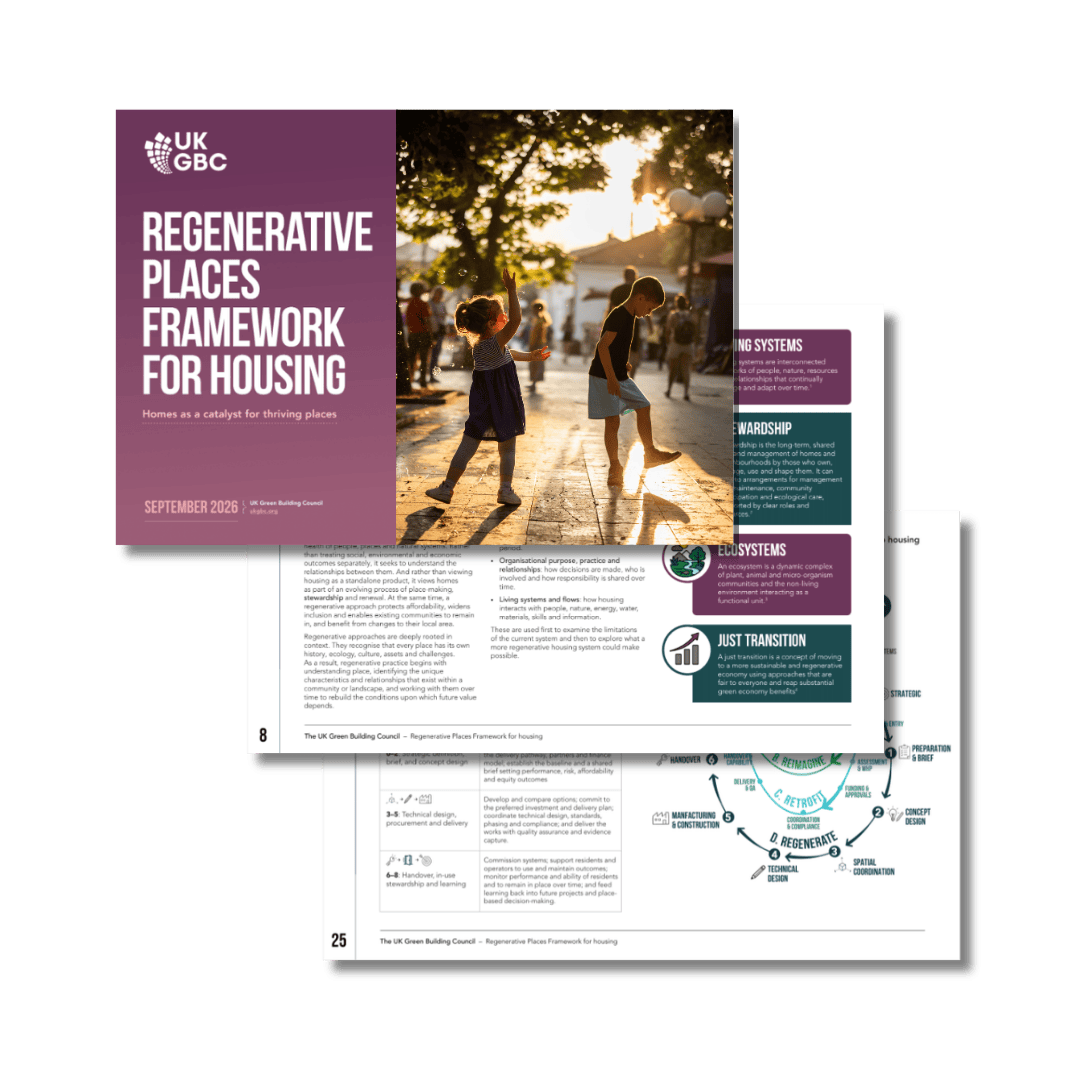
UKGBC launches Regenerative Places Framework for Housing

Basil Demeroutis announced as UKGBC’s Deputy Chair of Trustees


New report shows how innovation can help transform the UK’s existing commercial buildings

