
UKGBC launches Framework to accelerate a nature-positive built environment


Today, we launched the Framework for a Nature Positive Built Environment, providing the sector long-needed clarity on how to translate the global ambition to halt and reverse nature loss into practical, scalable action.
The launch comes at a moment of escalating urgency. The UK Government’s National Security Assessment has identified biodiversity loss and ecosystem breakdown as a national security risk, with implications for economic stability, supply chains, food security and community resilience. Against this backdrop, the role of the built environment in protecting and restoring nature is one of the front-line solutions to the crisis.
While “nature positive” is now a widely recognised goal, the sector has lacked a shared, credible definition and a consistent approach to delivery. This has led to fragmented action and uncertainty about what good looks like in practice. The new Framework addresses this gap, aligning the built environment with the global nature-positive goal and setting out clear pathways for action across organisational strategy, asset management and development activity.
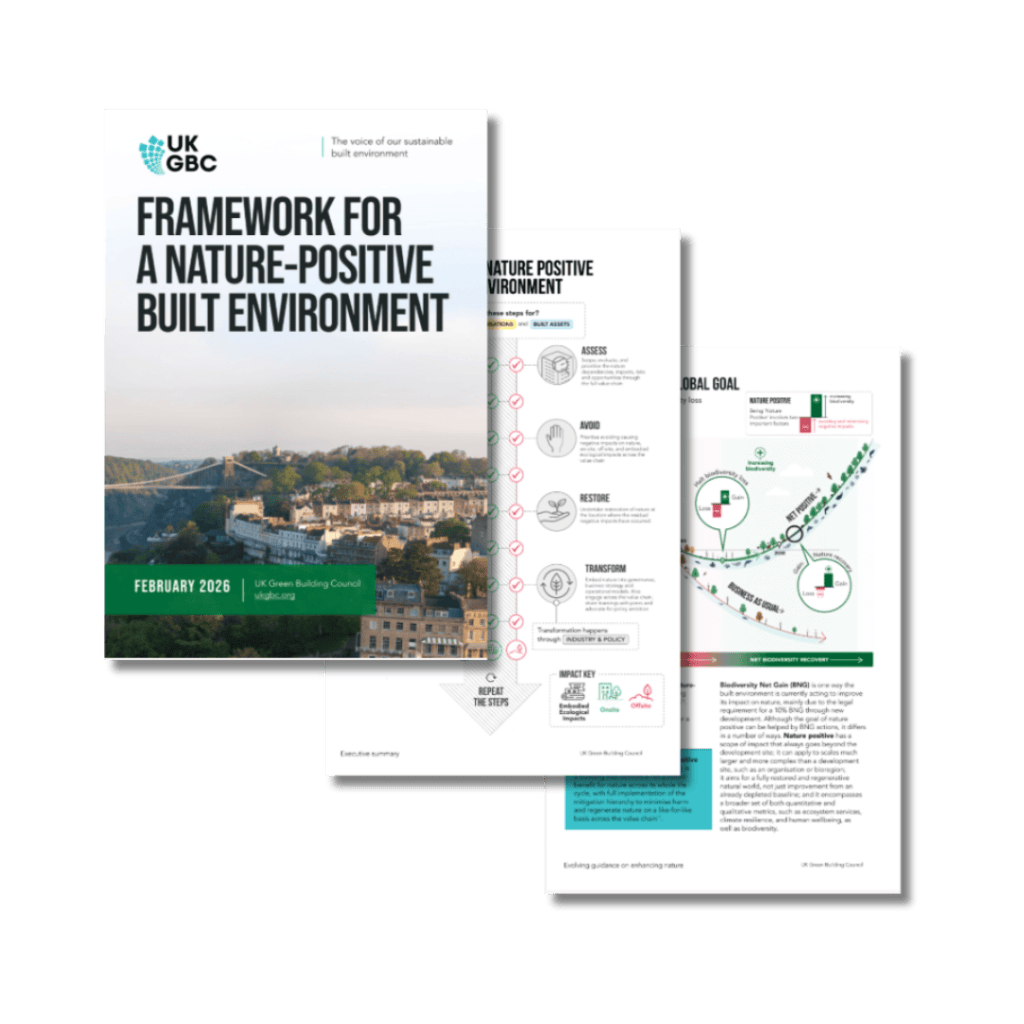
The Framework positions nature as a core consideration for resilience, value creation and long-term asset, financial and operational performance. From land use and construction to supply chains and materials, the built environment both depends on and impacts nature. As climate and nature risks intensify, ecosystems are now recognised as critical infrastructure – they provide essential services – reducing flood and heat risk, strengthening supply chains and supporting health and wellbeing.
Simon McWhirter, Chief Executive of UKGBC, said:
“Nature is the very foundation that underpins our economy, our safety and our wellbeing, not just an optional extra for the built environment. The impacts of nature loss are already visible in rising operational and insurance costs, disrupted supply chains and mounting climate risk.
This Framework gives the sector the clarity it has been missing. It sets out what ‘nature-positive’ means in practical terms and how organisations can act now, embedding nature into decision-making, investment and delivery, rather than treating it as a nice-to-have.
Nature-positive action also drives enhanced finance and value. There is a growing opportunity to mobilise investment at scale into homes and places that work better for people, nature and the economy.”
Yetunde Abdul, Director of Industry Transformation at UKGBC, said:
“This Framework is designed to support real-world decision-making across the built environment. It shows how organisations can embed nature-positive outcomes into strategy, governance and investment, while also guiding project teams through the practical actions needed at asset and development level.
By taking a whole-lifecycle approach, the Framework helps the sector move beyond isolated efforts towards consistent, credible action that restores and regenerates nature at scale, while complementing greater resilience and adaptive capacity overall.”
What the framework delivers
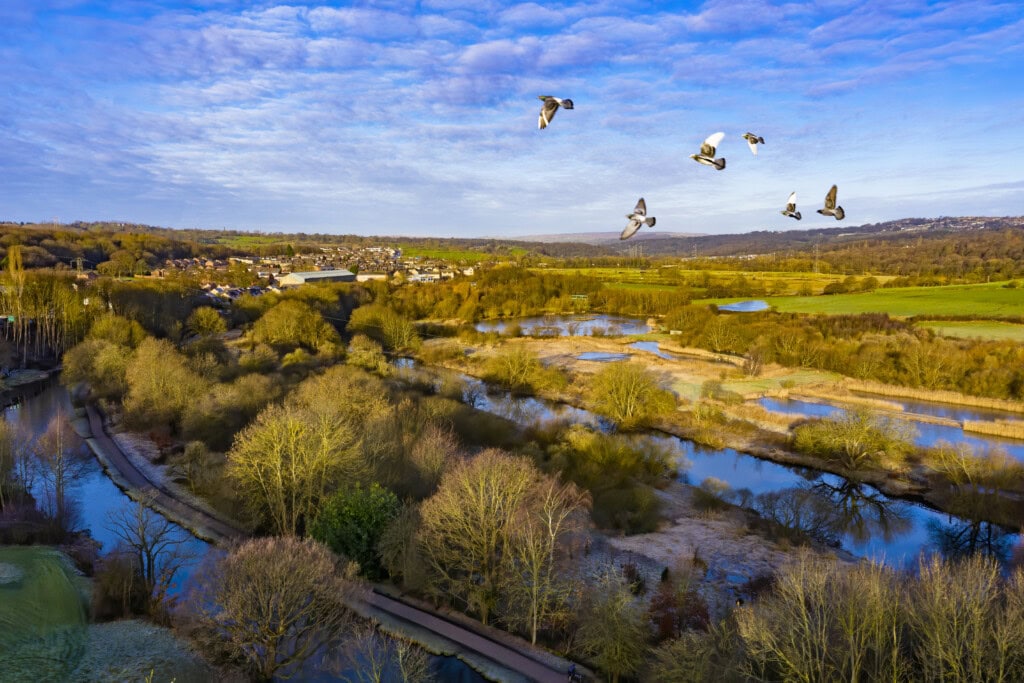
It supports action at both organisational level and at asset and development level, guiding teams to avoid irreversible harm, minimise impacts and deliver net-positive outcomes for nature.
The Framework was co-developed by UKGBC and an expert Task Group of 33 organisations from across the built environment, supported by wider industry engagement through workshops and formal consultation. The result is a robust, credible and sector-owned approach designed to support leadership, reduce greenwashing risk and enable action at any starting point.
UKGBC is calling on developers, asset owners, designers, consultants and the wider supply chain to use the Framework to integrate nature recovery into mainstream planning, design and operations, and to help shape the policy and market conditions needed to deliver nature-positive outcomes at scale.

Resilience & Nature Partners
Our climate change adaptation work is supported by our Resilience & Nature Partners.



Framework for a Nature-Positive Built Environment Project Partners
Thank you to the generous support of our project partner.


Related
A Domestic Heat Pump: A Year in Review


Membership Opportunities (April 2026-September 2026)


CCC Progress Report 2026: Buildings are Now the UK’s Biggest Climate Test


UKGBC responds to the MEES uplift

