
What the Local Election Results Could Mean for a Sustainable Built Environment


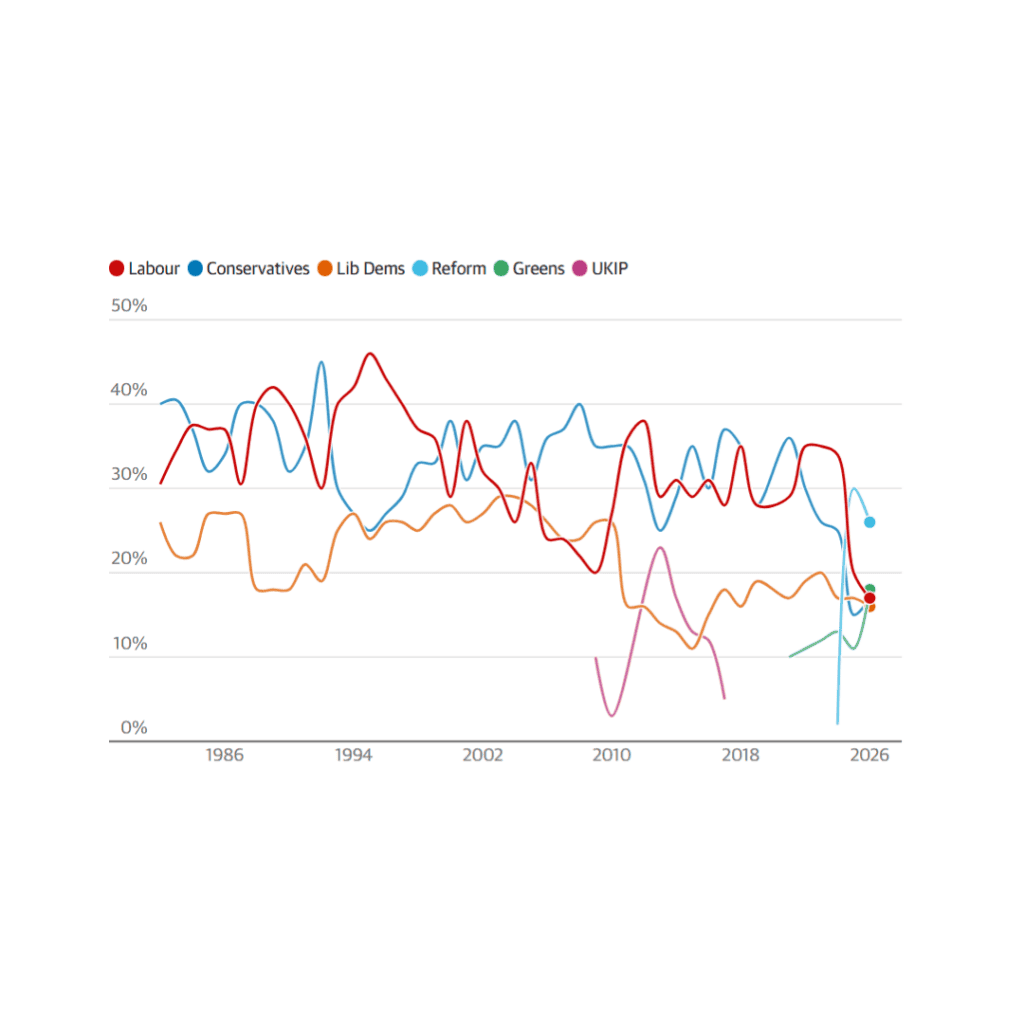
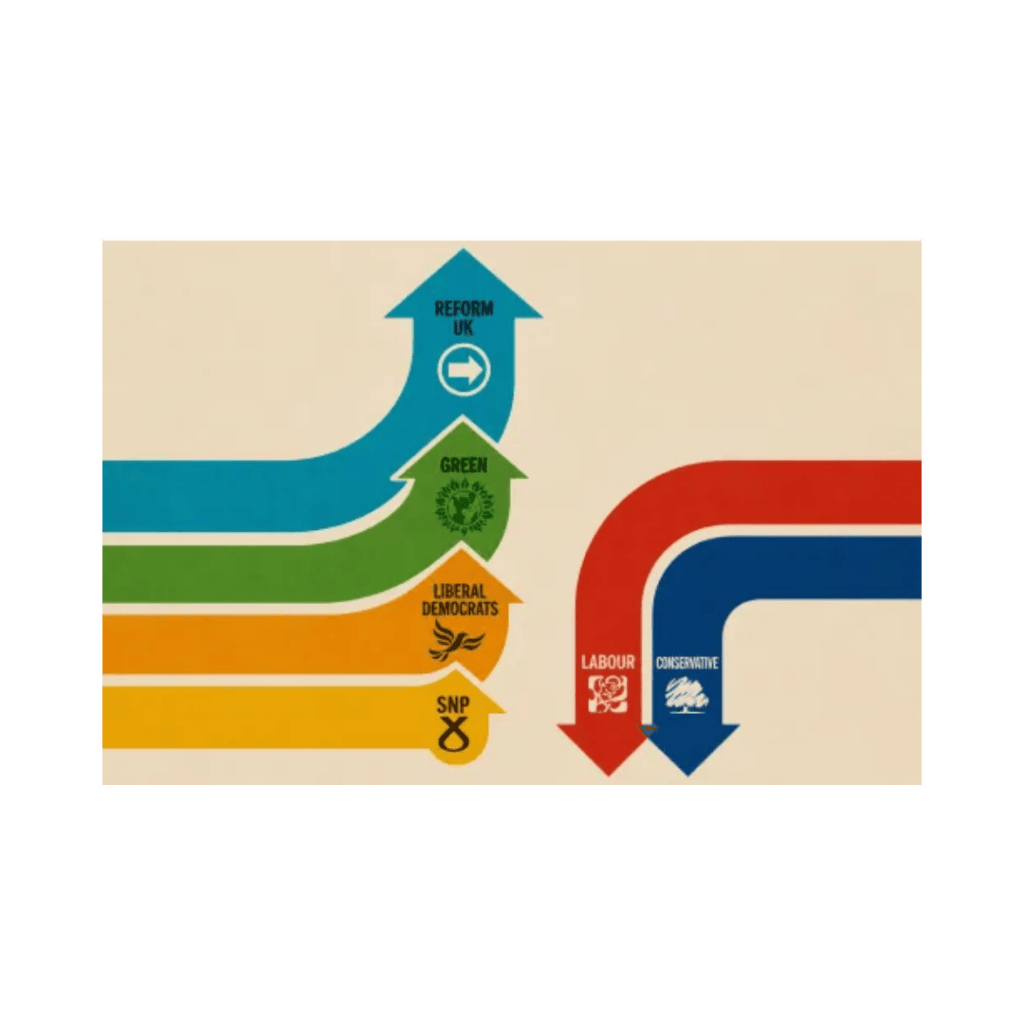
Reform UK emerged as the biggest winner across much of England, making major gains in former Labour and Conservative heartlands. At the same time, the Green Party recorded its strongest local election performance to date, alongside further seats for the Liberal Democrats. The result is a far more fragmented political landscape – one that is no longer tied to the traditional two-party system, which could have multiple impacts for the future of housing, planning and climate action.
For the built environment sector, these results are important not simply because councils shape planning and housing policy, but because local authorities increasingly play a leading role in delivering warm homes and retrofit programmes, as well as climate adaptation and nature recovery initiatives. It is important for industry to understand how the rise of Reform and Green councillors within local councils might play out, and what greater fragmentation might require from industry.
Image source: The Guardian (https://www.theguardian.com/politics/ng-interactive/2026/may/08/2026-elections-mapped-labour-reform-uk-greens-scotland-wales-england-local), data from BBC PNS series.
Differences emerge around how development is delivered, how strongly environmental requirements are prioritised, and how communities are engaged in decision-making.”
The delivery of retrofit programmes is a good example of where differences in approach might occur. In areas where Green administrations have gained ground, there is evidence of growing support for retrofit-first approaches. Mid-Suffolk’s backing for free retrofit assessments and grant-supported upgrades, alongside similar approaches emerging in other councils, point towards stronger support from ‘Greener’ councils for home decarbonisation, fabric-first upgrades and refurbishment over demolition.
By contrast, Reform-controlled councils over the past year have shown greater scepticism towards formal climate governance which has extended to the provision of electric heating technologies, such as heat pumps. Research from the Grantham Research Institute found that several councils under Reform control rolled back climate targets, rescinded climate emergency declarations or weakened climate-related reporting structures. While this might not actually translate into direct opposition to retrofit activity itself, it does suggest that where policies are associated with net zero, they may become more politically exposed in some areas.
Across parties there remains broad agreement on the need for more homes, particularly affordable homes. Differences emerge around how development is delivered, how strongly environmental requirements are prioritised, and how communities are engaged in decision-making. Reform representatives have generally remained supportive of growth, infrastructure investment and housing delivery, particularly where developments are framed around affordability, regeneration and local economic benefit. With the Greens placing even more emphasis on truly affordable housing developments and higher sustainability credentials. The response to the National Planning Policy Framework (NPPF) will provide clarity on how these divergent approaches might play out in councils across the country.
However, as councils become more politically fragmented – with more coalition administrations and ‘no overall control’ authorities – navigating local politics is likely to become more complex. Planning committees may become less predictable, and developers, investors and local partners may need to place greater emphasis on community engagement, and demonstrating tangible local value – signalling the importance of UKGBC’s upcoming Regenerative Places Framework in supporting place-based approaches to development.
What is important to note is that these election results do not point to an outright rejection of climate action. Polling from More in Common and the Energy and Climate Intelligence Unit (ECIU) found that 68% of voters still believe the UK should at least try to meet its net zero targets, while support for renewable energy remains consistently high across the political spectrum (including among many Reform voters). Instead, the election results appear to reflect broader concerns around the cost of living, public services, economic insecurity and trust in politics – with energy bills, housing affordability and local economic decline featured far more prominently in voter priorities than climate policy itself.
Image Source: Architects Journal (https://www.architectsjournal.co.uk/news/architects-fear-planning-chaos-after-local-election-shake-up)
For the built environment industry, the implication is not that climate ambition disappears, but rather the language and framing around it may need to evolve.”
For the built environment industry, the implication is not that climate ambition disappears, but rather the language and framing around it may need to evolve. The results reinforce the importance of connecting climate action to people’s everyday priorities: warmer homes, lower bills, better health, cleaner air and stronger local economies. Local elections can shift political narratives quickly, but more meaningful signals will come in the months ahead through council leadership appointments, committee structures, local plans and early policy decisions.
The political landscape may be changing rapidly, but the underlying need for healthy, affordable, resilient and low-carbon places remains unchanged, and UKGBC will continue to advocate for their delivery.
Policy & Advocacy


Related
High Hopes, Half Built: Starmer’s Built Environment Legacy


Membership Opportunities (April 2026-September 2026)


Takeaways from the King’s Speech 2026


Holyrood’s Climate Test

